

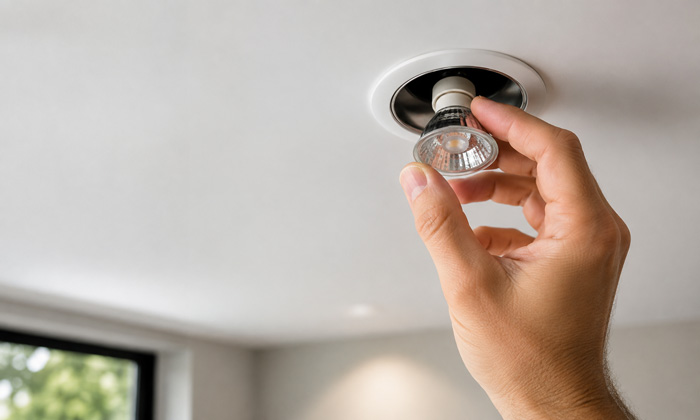
Turn Off Power Before Removing the Bulb
Identify the Recessed Spotlight Bulb Type
Remove a GU10 Recessed Spotlight Bulb Without Clips
Remove a Screw-In Recessed Spotlight Bulb
Replace a Push-Fit Spotlight Bulb
Common Problems When Removing Clip-Free Recessed Bulbs
Check After Installing the New Bulb
FAQs
Replacing a recessed spotlight bulb without clips is usually a simple task once the bulb type and fixing method are identified. Many recessed spotlights use screw-in, twist-lock, or push-fit designs instead of visible clips. The key is to remove the old bulb carefully and install a compatible replacement without damaging the socket or fixture.
Turn Off Power Before Removing the Bulb
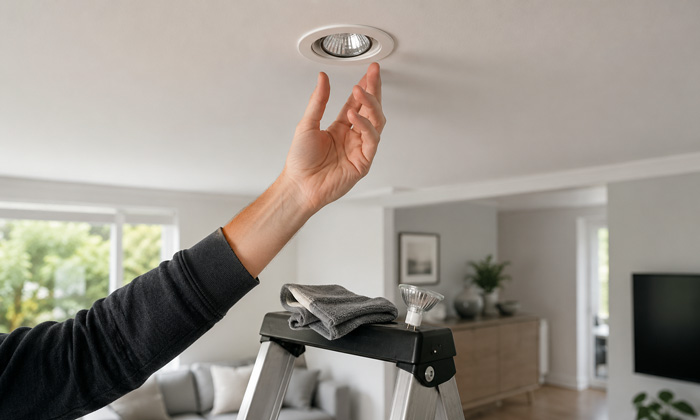
Before touching the recessed spotlight, switch off the light and allow the bulb to cool completely. This prevents burns and reduces the risk of damaging the fixture. For extra safety, turning off the circuit breaker connected to the light is a suitable option when working on ceiling fixtures.
Prepare a stable ladder, a dry cloth, and a replacement bulb with the correct base type and specifications. Besides brightness and size, check the wattage of the light bulb against the fixture requirements, since it affects power consumption and compatibility. Choosing a bulb within the appropriate rating helps ensure reliable operation after replacement.
Identify the Recessed Spotlight Bulb Type
Without clips, recessed spotlight bulbs are commonly held by different mechanisms. Identifying the design makes removal much easier.
| Bulb Type | Removal Method | Installation Method |
|---|---|---|
| GU10 Twist-Lock Bulb | Turn the bulb counterclockwise and pull it down | Insert and turn clockwise until locked |
| E27 Screw Bulb | Rotate the bulb counterclockwise to unscrew | Screw the new bulb clockwise into the socket |
| MR16 Push-Fit Bulb | Pull the bulb straight downward from the socket | Push the new bulb firmly into place |
| Integrated LED Spotlight | Replace the entire LED module or trim unit | Connect and secure the new fixture |
Understanding the socket style helps prevent forcing the bulb in the wrong direction. E27 screw bases are common in many homes, but factors like bulb size, voltage, and fixture design still affect compatibility. Choosing the right replacement becomes easier when considering details related to are E27 socket light bulbs universal.
Remove a GU10 Recessed Spotlight Bulb Without Clips
GU10 bulbs are among the most common clip-free recessed spotlights. They are secured by a twist-lock mechanism rather than a retaining ring.
- Hold the bulb gently around the outer edge.
- Turn it counterclockwise about a quarter turn.
- Pull the bulb straight down from the socket.
- Insert the replacement bulb and rotate it clockwise until it locks.
If the bulb is difficult to grip, a suction cup bulb remover can provide extra support without applying pressure to the glass surface.
Remove a Screw-In Recessed Spotlight Bulb
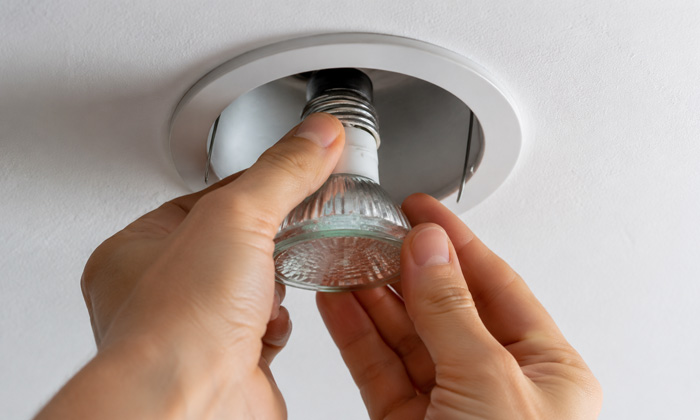
Some recessed spotlights use traditional screw bases. These bulbs can be removed by rotating them counterclockwise.
Hold the bulb near its base rather than applying force to the glass. Turn slowly until the bulb separates from the socket. Install the new bulb by turning it clockwise until it is secure, but avoid overtightening because excessive pressure can damage the socket.
When replacing with LED bulbs, make sure the new bulb matches the fixture’s recommended specifications. A higher-powered option does not always provide better performance, and using an unsuitable replacement can affect heat management and lifespan.
Replace a Push-Fit Spotlight Bulb
Push-fit bulbs, such as some MR16 models, do not use clips or twisting mechanisms. They are usually connected with two pins that fit directly into the socket.
To remove this type:
- Grip the bulb base carefully.
- Pull it straight downward.
- Avoid pulling at an angle, which may bend the pins.
- Align the new bulb pins with the socket openings.
- Push upward until the bulb is firmly connected.
Common Problems When Removing Clip-Free Recessed Bulbs
| Problem | Possible Cause | Solution |
|---|---|---|
| Bulb will not turn | Bulb is stuck in the socket | Use gentle pressure and avoid forcing it |
| Bulb cannot be gripped | Fixture opening is narrow | Use a suction tool or rubber grip |
| New bulb does not fit | Incorrect base type | Check the socket specification before buying |
| Light flickers after replacement | Poor connection or incompatible bulb | Reinstall the bulb or choose a suitable model |
LED replacements are popular because they use less energy and offer longer service life. However, choosing the right brightness, size, and power rating is still important to maintain safe and reliable performance. Factors such as wattage limits should be considered when selecting an LED replacement, especially when deciding can you use a higher wattage LED bulb than recommended for a specific fixture.
Check After Installing the New Bulb
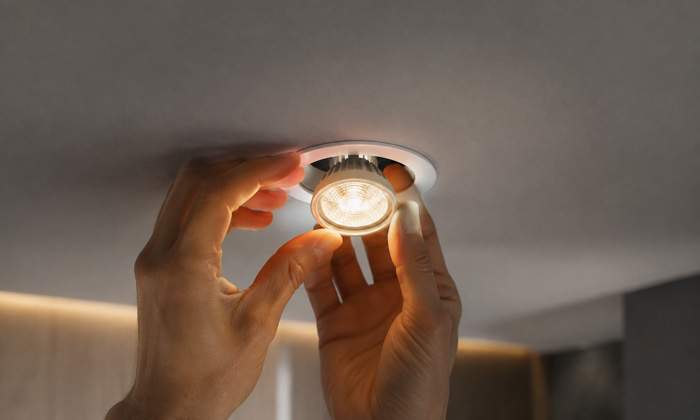
After installing the replacement bulb, make sure it sits evenly inside the recessed housing. Turn the power back on and check whether the spotlight works normally. A properly fitted bulb should remain stable without flickering, unusual heat, or loose movement.
Changing a recessed spotlight bulb without clips mainly requires identifying the bulb base, using the correct removal method, and choosing a compatible replacement. With the right approach, most clip-free recessed spotlights can be replaced quickly without professional assistance. For additional lighting knowledge, the history and interesting details behind everyday lighting products are also covered in fun facts about light bulbs.
FAQs
Why is my recessed spotlight bulb stuck even without clips?
A recessed spotlight bulb may become stuck because of heat exposure, dust buildup, or a tight connection between the bulb and socket.
Allowing the fixture to cool completely and gently rotating or pulling the bulb with the correct technique can help prevent damage.
Can a recessed spotlight fixture be upgraded from halogen to LED?
Yes, many recessed spotlight fixtures can be upgraded from halogen bulbs to LED alternatives, but the replacement must match the existing socket type, voltage, and fixture requirements.
Some low-voltage systems may require checking the compatibility of transformers or drivers before switching to LED.
How often should recessed spotlight bulbs be replaced?
The replacement frequency depends on the bulb type, usage time, and operating conditions.
LED spotlights usually last much longer than traditional halogen bulbs, while excessive heat, poor ventilation, or unsuitable power ratings can shorten bulb lifespan.
Why does a new recessed spotlight bulb flicker after installation?
A new spotlight bulb may flicker due to an incompatible bulb type, loose socket connection, unsuitable dimmer compatibility, or issues with low-voltage components.
Checking that the replacement matches the fixture specifications can help identify the cause.
Can the recessed spotlight housing be replaced instead of only changing the bulb?
Yes, the housing or entire fixture can be replaced when the socket is damaged, the light design needs upgrading, or the unit uses an integrated LED module.
Unlike replaceable bulb fixtures, integrated LED spotlights usually require replacing the complete light unit when the LED source reaches the end of its lifespan.
