

What Is a Fragmented Beam Pattern in Wall Lighting?
How Are Fragmented Light Patterns Created?
Architectural Effects Created by Fragmented Beams
Fragmented Beam Lighting vs. Wall Washing and Wall Grazing
How to Plan a Fragmented Beam Lighting Design
Common Design Mistakes to Avoid
FAQs
A wall can become a striking architectural feature without changing its materials or structure. Carefully arranged light can introduce geometry, reveal texture, and draw attention to details that disappear after sunset.
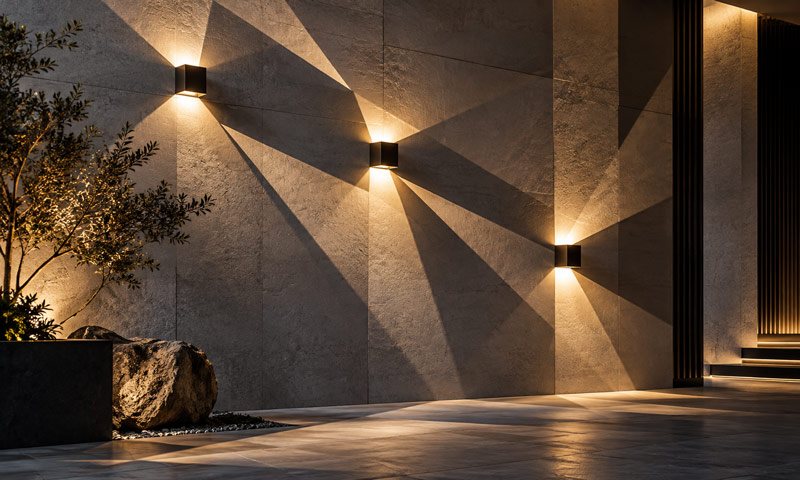
A fragmented beam pattern in wall lighting creates these effects through distinct areas of illumination separated by shadow. Depending on the fixture and its placement, the result may appear as narrow rays, repeated wedges, intersecting lines, or separate pools of light.
The strongest designs connect these patterns to the architecture. Light follows a column, frames an entrance, or establishes a rhythm across a courtyard wall, giving the building a deliberate nighttime appearance.
What Is a Fragmented Beam Pattern in Wall Lighting?
In this article, “fragmented beam pattern” describes a visual effect rather than a standardized lighting classification. It means that the illumination appears divided into recognizable sections instead of spreading evenly across the entire wall.
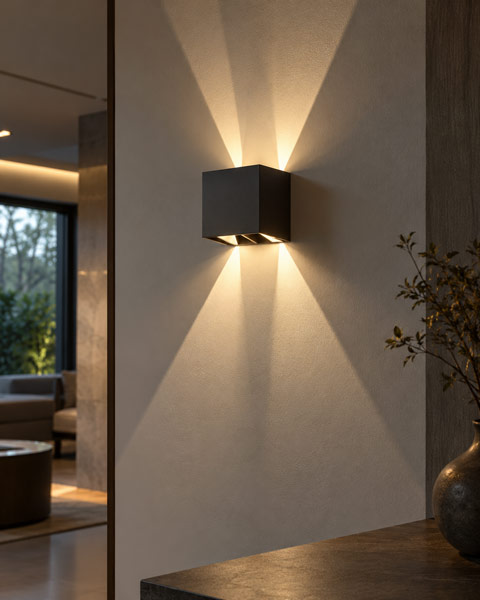
The pattern can come from a single fixture with several controlled outputs or from multiple fixtures arranged together. For example, a four-direction wall light can project separate narrow beams around its housing, producing a distinct graphic effect on the mounting surface.
The spaces between the beams matter as much as the illuminated sections. Without enough separation, individual shapes merge and the fragmented effect becomes less visible.
Intentional fragmentation also differs from uneven lighting caused by poor installation. A successful pattern looks organized: its direction, spacing, and scale have a clear relationship to the wall.
How Are Fragmented Light Patterns Created?
Separate Light Outputs
Some wall lights use multiple optical compartments or apertures to direct light in different directions. Each output creates part of the overall pattern.
An up-and-down fixture may form two opposing wedges. A multi-direction fixture may create several narrow rays. The final appearance depends on the actual light distribution, so the number of openings alone does not tell you how the wall will look.
Optical Control and Projection
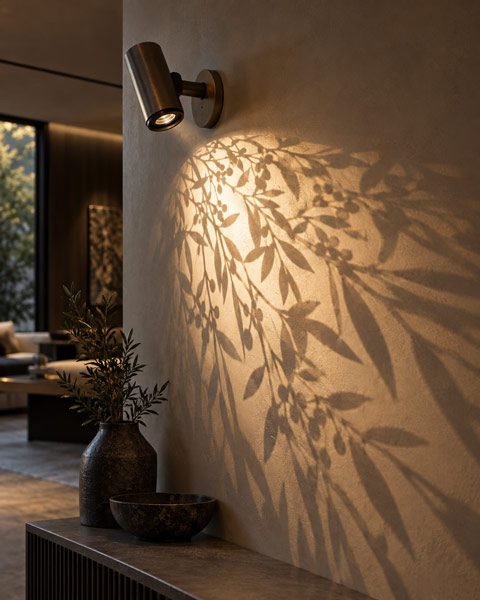
Lenses and reflectors control how light spreads. Selecting different optical distributions allows designers to move between concentrated accents and broader illumination.
For more detailed shapes, a suitable projection fixture can use a gobo—a patterned insert—to project an image or texture. This is a different approach from an ordinary decorative wall sconce and requires compatible projection optics.
Arrangements of Multiple Fixtures
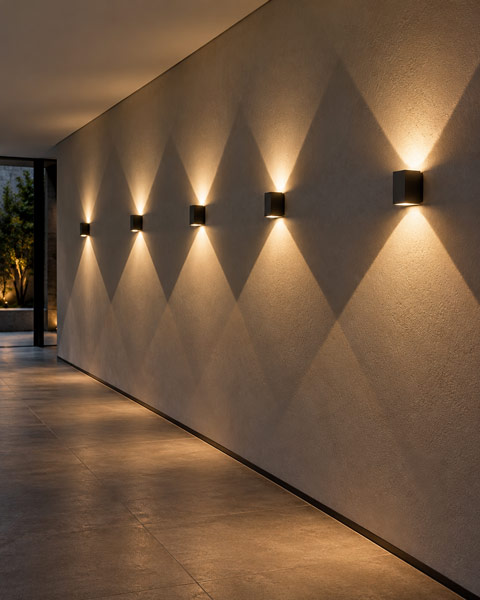
Separate fixtures can create a larger composition across the wall. Repeated beams may remain independent, meet at their edges, or overlap deliberately.
This approach makes installation accuracy particularly important. A small change in mounting position can become obvious when the same shape repeats across a long surface.
Architectural Effects Created by Fragmented Beams
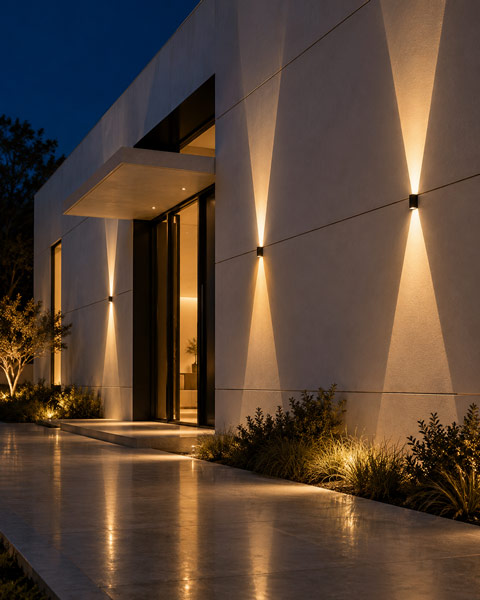
Giving Plain Walls a Geometric Identity
A smooth wall provides a relatively clear background for light patterns. Repeated wedges or narrow rays can introduce a visual structure without adding physical ornament.
For a restrained contemporary facade, consider a small number of consistent shapes aligned with the building’s existing divisions. For a decorative courtyard feature, a more expressive arrangement may be appropriate.
The pattern should have a reason to be there. Aligning it with panel joints, wall bays, or an entrance makes the effect feel connected to the building.
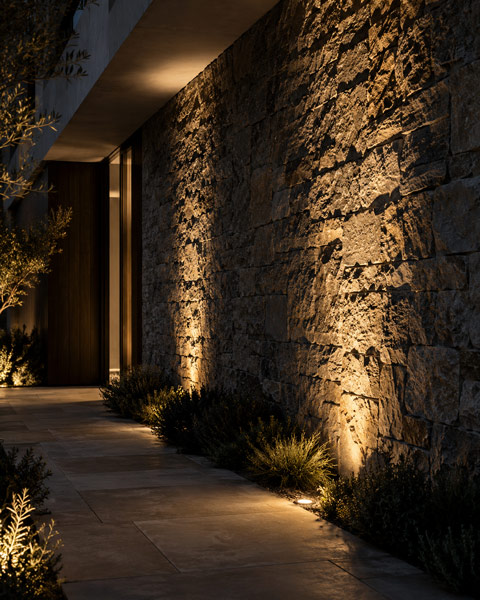
Bringing Out Texture and Relief
When light travels close to a textured wall, raised areas catch illumination while recessed areas fall into shadow. This grazing effect makes the surface relief more visible.
Fragmented illumination adds another layer: some areas receive concentrated light while others remain quieter.
On stone, this can emphasize selected edges and irregularities. On brick, it can draw attention to the relationship between masonry faces and mortar joints. However, a heavily textured surface may interrupt a precise projected pattern.
Decide which should dominate—the graphic shape of the light or the texture of the material.
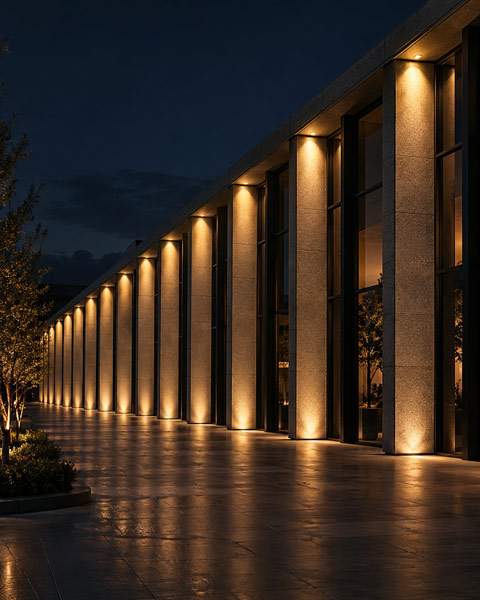
Establishing Rhythm Along a Facade
Repeated light shapes can organize a long wall into a sequence of visual intervals.
A useful design approach is to follow existing architectural repetition. Positioning a beam within each structural bay, for example, gives the lighting a clear relationship to the facade.
Random spacing can make the same fixtures appear disconnected. Consistent spacing is usually easier to read, although deliberate variation can work when it follows changes in the architecture.
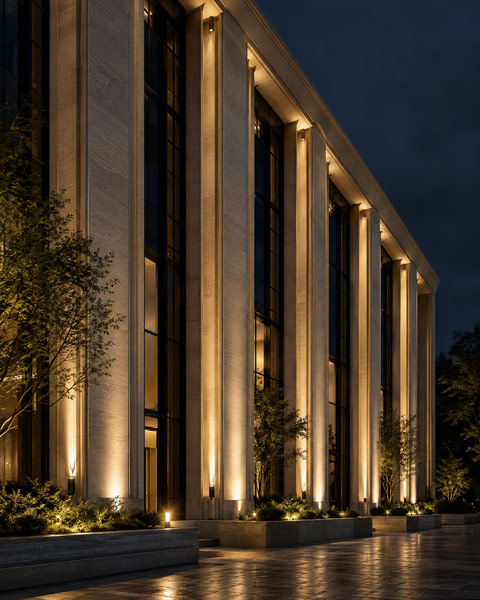
Emphasizing Height and Proportion
Vertical accents can reinforce tall, narrow features such as columns, piers, and slender wall sections. Broader patterns can emphasize the horizontal arrangement of a facade.
These are visual effects rather than physical changes. Their success depends on what is illuminated, the surrounding darkness, and the main viewing position.
A beam that follows a column supports its form. A beam that cuts awkwardly across several unrelated features can weaken the composition.
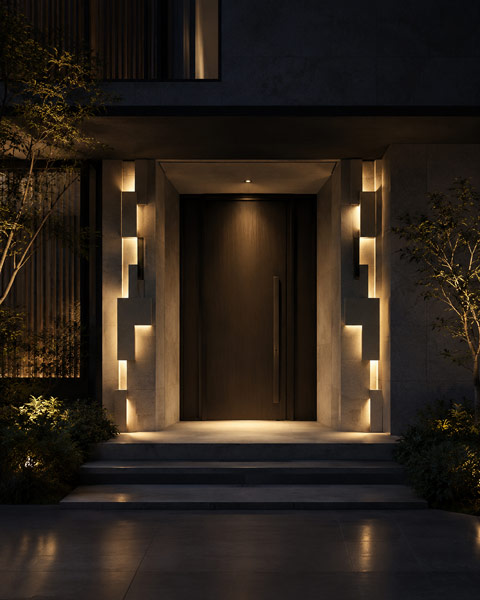
Creating a Clear Focal Point
Fragmented lighting can help distinguish an entrance, a recessed doorway, or a feature wall from its surroundings.
For example, a pair of controlled patterns beside a doorway can create a visual frame. The surrounding facade can remain quieter so that the entrance receives attention without requiring every surface to be equally bright.
Architectural lighting guidance supports this use of selective illumination to establish a hierarchy between entrances, structural details, and background surfaces.
Fragmented Beam Lighting vs. Wall Washing and Wall Grazing
These approaches serve different design purposes, although they can be combined.
| Lighting approach | Primary effect | Suitable design goal |
|---|---|---|
| Fragmented beam lighting | Separate illuminated shapes with visible gaps | Introduce geometry, repetition, or a focal point |
| Wall washing | Broad, relatively even illumination | Present a wall as a continuous surface |
| Wall grazing | Strong highlights and shadows across surface relief | Reveal texture in stone, brick, or other uneven materials |
A wall washer light fixture is useful when the goal is broad coverage. Fragmented lighting is more appropriate when the light pattern itself should remain visible.
Wall grazing describes how light strikes the surface, while fragmentation describes the visible distribution. A fragmented pattern can therefore also graze a textured wall.
How to Plan a Fragmented Beam Lighting Design
Start With One Architectural Objective
Choose the main feature you want people to notice.
For an entrance, that might be the doorway’s outline. For a courtyard, it might be a central wall panel. For a colonnade, it might be the repeated vertical structure.
This decision helps determine whether you need narrow accents, broader wedges, or a more decorative pattern.
Match the Beam to the Available Surface
A narrow beam angle creates concentrated accents, while a wider angle produces broader patches of light on the wall.
However, beam angle alone does not describe a complete wall pattern. Fixture orientation, optical design, and the angle at which light reaches the wall also matter. A circular spotlight aimed obliquely at a wall will not produce the same footprint as one aimed directly at it.
Ask for a light-distribution diagram or an installation photograph that shows conditions similar to your project.
Plan the Gaps as Carefully as the Beams
Decide whether adjacent patterns should remain separate or intersect.
Keeping a visible dark interval can preserve each fixture’s identity. Controlled overlap can create a larger composition, but excessive overlap may fill the gaps and obscure the original shapes.
Do not select fixture spacing from wall length alone. Test the actual pattern at the intended mounting position before repeating it across the installation.
Evaluate the Wall Finish
A pale matte surface is a useful starting point when you want to assess the shape clearly. Dark surfaces may make the effect more subdued, while glossy finishes can introduce reflections that compete with the pattern.
For rough masonry, inspect both the overall design from a distance and the local shadows close up. A convincing distant composition can still reveal unwanted surface irregularities nearby.
Choose a Consistent Light Color
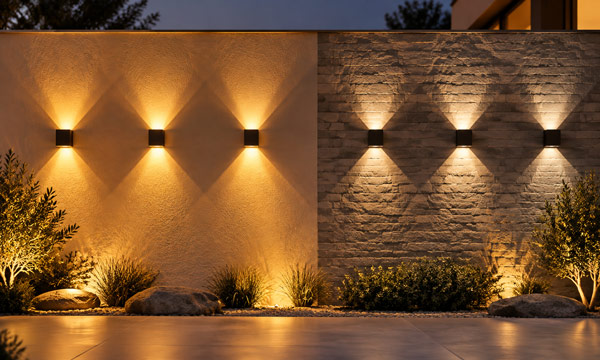
Color temperature influences the atmosphere of the illuminated wall.
When comparing 2700K vs 3000K landscape lighting, 2700K generally offers a warmer appearance, while 3000K looks slightly more neutral. Neither automatically produces a sharper pattern or greater light output.
Test the light against the actual paint, stone, or brick. Using one consistent color temperature across a repeated pattern usually makes the composition easier to read.
Check the Effect From Real Viewing Positions
Review the installation from the entrance approach, nearby seating, and other places where people will regularly see it.
Shield the source where necessary and keep the beam on the intended surface. Outdoor patterns should avoid spilling beyond the wall or into neighboring windows. Precise aiming and glare control are central to effective facade lighting.
Common Design Mistakes to Avoid
- Using too many pattern types: Establish one dominant visual language before adding variation.
- Ignoring architectural alignment: Relate fixtures to doors, columns, wall panels, or other meaningful features.
- Assuming more brightness improves the pattern: Excessive surrounding illumination can make the dark intervals less distinct.
- Expecting every wall to reproduce the same effect: Surface texture, finish, and geometry change the result.
- Approving the design from fixture photographs alone: Test a sample on the actual wall before completing the layout.
A successful fragmented beam pattern gives light a clear architectural role. The shapes should support the wall’s proportions, materials, and focal points, creating an intentional composition after dark.
FAQs
1. Can I Create a Fragmented Beam Pattern by Replacing the Bulb in an Existing Wall Light?
Usually, a bulb replacement alone cannot reproduce a precise multi-beam pattern. The fixture’s apertures, housing, and optics largely determine the light distribution. A different bulb may change the effect, but predictable geometric patterns generally require a fixture designed to produce them.
2. Can Fragmented Beam Wall Lights Be Dimmed?
Yes, if the light source and driver support dimming and are compatible with the chosen control. Dimming generally changes intensity rather than the physical beam geometry, although faint edges may become less visible at lower output. Check compatibility and the usable dimming range before installation.
3. What Weather Protection Should Outdoor Patterned Wall Lights Have?
Choose a fixture with ingress protection suited to its exposure to rain and dust. Corrosion resistance and mounting orientation also affect outdoor suitability, so check the manufacturer’s specifications and installation instructions.
4. How Do You Maintain a Clear Wall Lighting Pattern?
Keep accessible optical surfaces clean according to the manufacturer’s instructions. Dirt, mineral deposits, and insect debris can reduce output or interfere with the effect. Switch off power and allow the fixture to cool before cleaning, and avoid abrasive materials or opening sealed optical compartments.
5. Does Fragmented Beam Lighting Use More Electricity Than Ordinary Wall Lighting?
The pattern itself does not determine electricity use. Energy consumption depends on total input power and operating time. For example, four 6-watt fixtures running for five hours consume approximately 0.12 kWh.
Appropriate timer controls for landscape lighting systems can reduce unnecessary operating hours.
