
What Is Modern Organic Lighting?
What Makes a Fixture Feel Modern Organic?
Which Materials Work Best?
How to Get the Light Quality Right
How to Layer Modern Organic Lighting
Modern Organic Lighting Ideas for Different Rooms
How to Choose the Right Fixture Before Buying
FAQs
Lighting changes how a room feels long before you notice the fixture itself. It reveals the grain of a wooden table, brings depth to a textured wall, and makes a seating area feel inviting after sunset.
Modern organic lighting brings those effects together with simple forms and natural character. Whether you are furnishing an entire home or updating one corner, the goal is to choose fixtures that look balanced during the day and provide comfortable, useful light at night.
What Is Modern Organic Lighting?
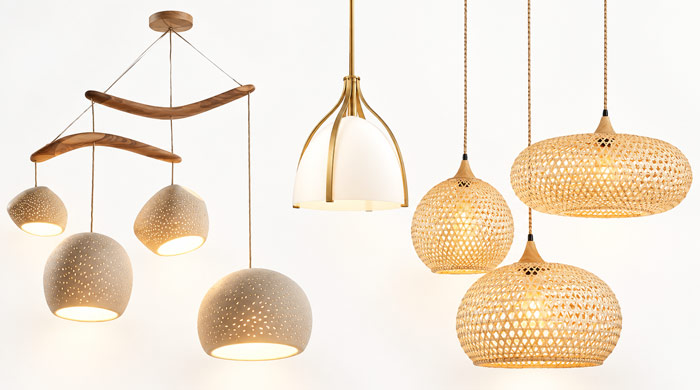
Modern organic lighting combines contemporary simplicity with textures and shapes associated with nature. Rounded shades, irregular contours, visible wood grain, and earthy finishes help soften clean architectural lines.
The terms “modern organic lighting” and “organic modern lighting” generally describe the same aesthetic. Typical examples include a curved ceramic table lamp, a restrained woven pendant, or a sculptural fixture with a stone base.
The shape does not need to imitate a leaf or flower. A gently uneven silhouette can suggest natural movement without becoming decorative or literal. Handmade variation can also contribute character, particularly when the surrounding furniture is simple.
What Makes a Fixture Feel Modern Organic?
Three elements help establish the look:
- A clear silhouette: The overall form is easy to read, even when its outline is irregular.
- Tactile detail: Grain, weave, mineral variation, or a matte surface adds interest.
- A considered relationship with the room: The fixture complements nearby finishes without copying all of them.
A neutral palette is common, but it does not have to mean an entirely beige interior. Cream, clay, warm gray, wood tones, and charcoal can work together. Dark metal can provide definition, while a pale shade keeps a fixture visually light.
For a balanced composition, choose one prominent texture and let the other fixtures play supporting roles. A deeply textured pendant, heavily patterned lamps, and several sculptural sconces can compete when placed in the same view.
Which Materials Work Best?
Choose materials for both their appearance and their role in the fixture. A textured base changes the visual character of a lamp, while a shade directly affects where light travels.
| Material | Visual character | What to consider |
|---|---|---|
| Wood | Warm grain and subtle variation | A wooden base adds texture; an opaque wooden shade directs light through its openings. |
| Rattan and woven fibers | Airy structure and visible craftsmanship | Open weaves can reveal the bulb and produce patterned shadows. |
| Linen and paper | Soft surfaces and lightweight forms | Shade density, color, and construction influence diffusion and brightness. |
| Ceramic and plaster | Matte finishes and sculptural volume | Opaque shades generally direct light rather than glow throughout. |
| Alabaster and other stone | Mineral patterns and visual weight | Translucent alabaster can glow; opaque stone usually functions as a base or housing. |
| Frosted or textured glass | Gentle contours and varying translucency | The finish determines how clearly the light source remains visible. |
These materials appear throughout organic modern lighting collections, but they are not interchangeable. A stone table lamp and a woven pendant can share a style while producing very different lighting effects.
Ask to see a fixture illuminated whenever possible. Product photographs taken with the light switched off rarely show how visible the bulb will be or how strongly the shade will project shadows.
How to Get the Light Quality Right
Choose a Comfortable Color Temperature
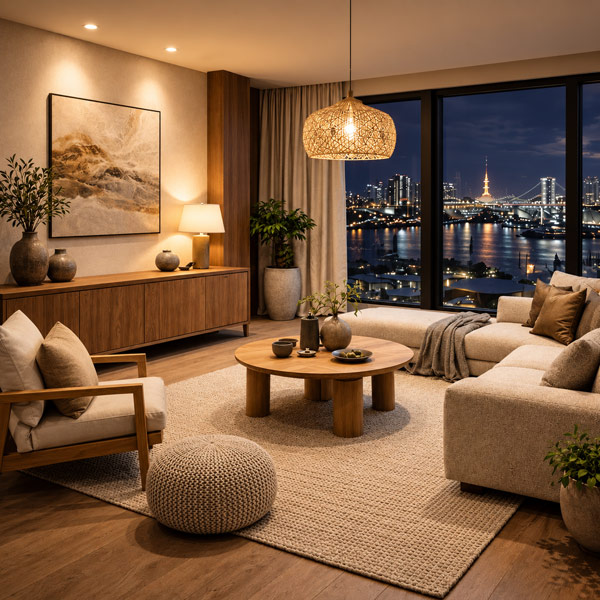
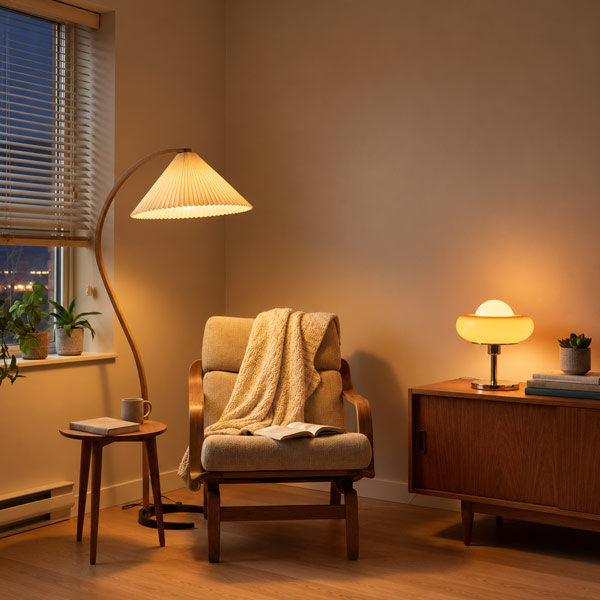
For a warm residential scheme, 2700K to 3000K is a useful starting range. A 2700K source often suits relaxed evening settings, while 3000K can provide a slightly crisper appearance.
Use this range as a design preference rather than a rule for every task. Compare a sample bulb against your walls, furniture, and shade before buying several matching lamps.
Color temperature describes the appearance of the light, not how bright it is. A warm lamp can still provide substantial illumination.
Compare Brightness in Lumens
When comparing bulbs, use lumens rather than wattage to judge light output. Watts describe electrical power consumption.
The amount of light reaching a surface also depends on the shade, beam direction, mounting height, and surrounding finishes. Two bulbs with the same lumen rating can feel different when one sits behind dense fabric and the other shines through an open shade.
Avoid selecting one brightness level for every fixture. A reading lamp and a decorative console lamp have different jobs.
Consider Color Rendering
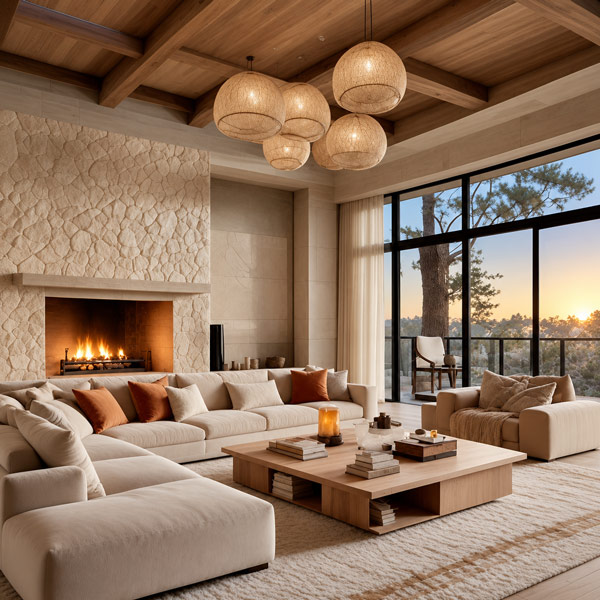
Color rendering affects how objects appear under artificial light. It matters when your room relies on subtle differences between linen, wood, stone, and painted surfaces.
For these interiors, CRI 90 or higher is a useful shopping preference. It is one specification to consider alongside glare, output, and the actual appearance of your materials.
Check How the Light Dims
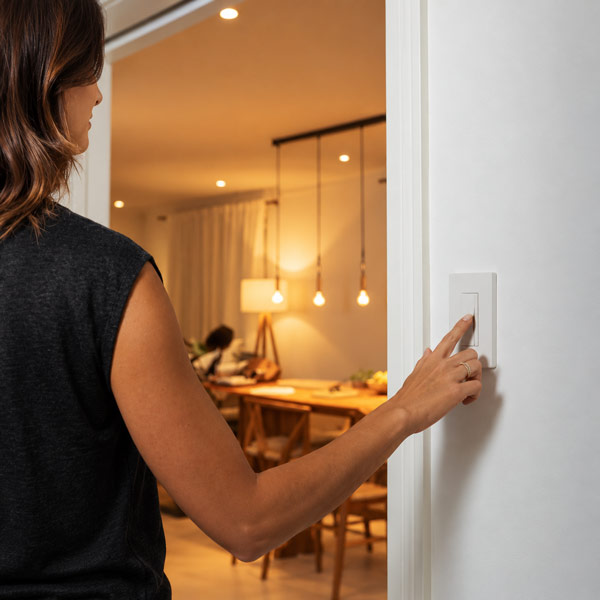
Confirm compatibility between the light source and its controls. A dimmable fixture does not automatically work well with every dimmer.
If you want the light to become warmer as it dims, look specifically for a dim-to-warm product. Standard dimming and color-temperature adjustment are different capabilities.
How to Layer Modern Organic Lighting
A useful scheme gives each source a purpose:
- Ambient lighting provides general illumination for moving through the room.
- Task lighting supports activities such as reading, cooking, or working.
- Accent lighting draws attention to a wall, object, or architectural detail.
A living room might combine a softly shaded ceiling fixture, a reading lamp beside an armchair, and a smaller light near a cabinet. Separate controls allow the room to change with the activity.
Think about the view from where you actually sit. A lamp that looks attractive from the doorway may expose a bright bulb when viewed from the sofa. Move it, adjust the shade, or choose a different light distribution before simply reducing the brightness.
Modern Organic Lighting Ideas for Different Rooms
The following combinations are starting points you can adapt to your layout.
Living Room
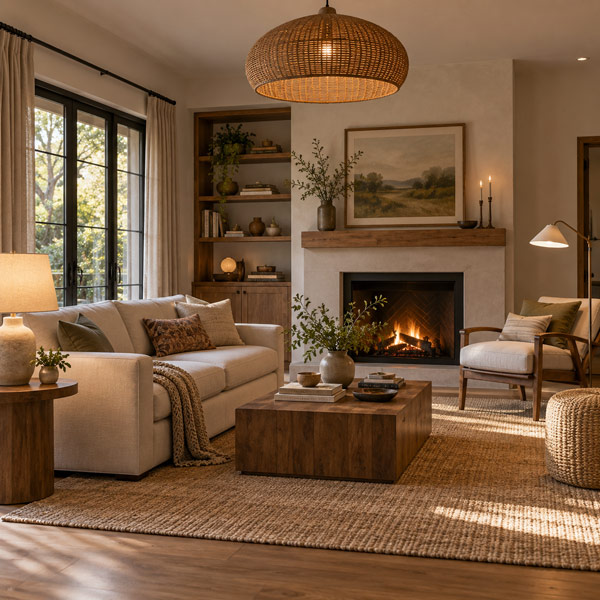
Try a ceramic table lamp beside a straight-lined sofa, with a slim floor lamp near a reading chair. If the ceiling fixture has a strong woven texture, keep the smaller lamps simpler.
Place light where people spend time. A lamp close to a seat is usually more useful than an extra decorative fixture in an already bright corner.
Dining Room
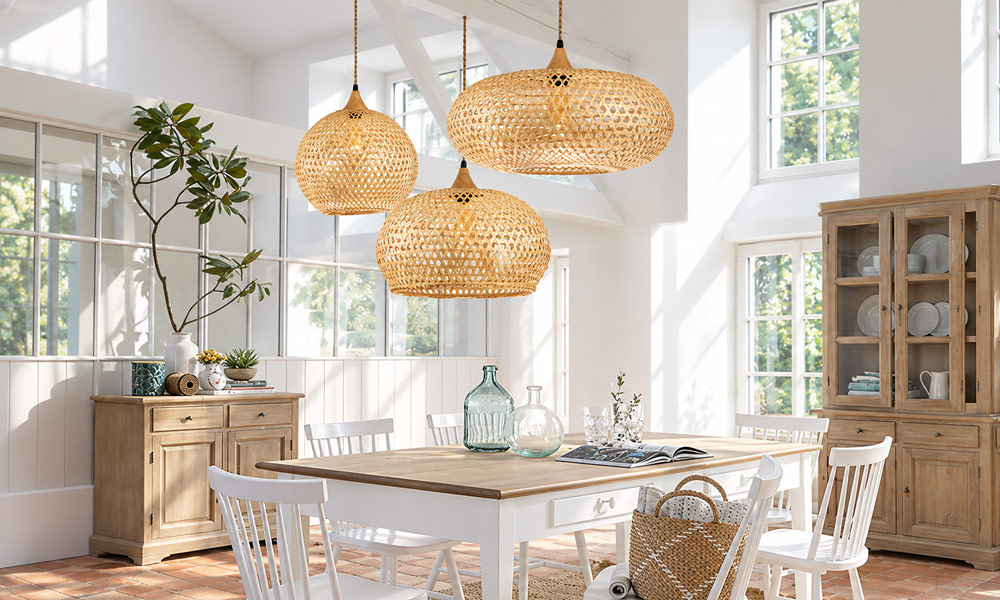
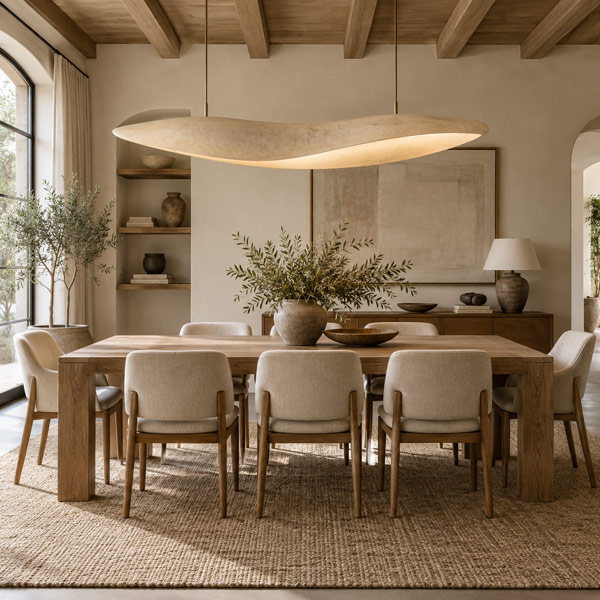
Use the table as the reference point for the pendant or chandelier. An elongated fixture can follow a rectangular table, while a rounded shade can echo a circular tabletop.
Leave enough space around a sculptural fixture for its shape to remain visible. Nearby shelving, artwork, and accessories should not crowd it.
Kitchen
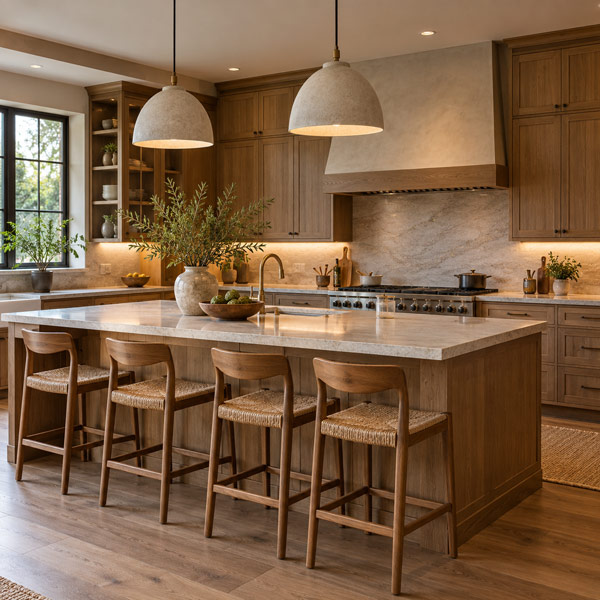
Combine decorative pendants with lighting that clearly illuminates preparation surfaces. A pendant can establish the style while under-cabinet lighting supports practical work.
Plan pendant height above the island around the fixture’s dimensions, sightlines, and the people using the space. Confirm the final position from both seated and standing viewpoints before installation.
Bedroom
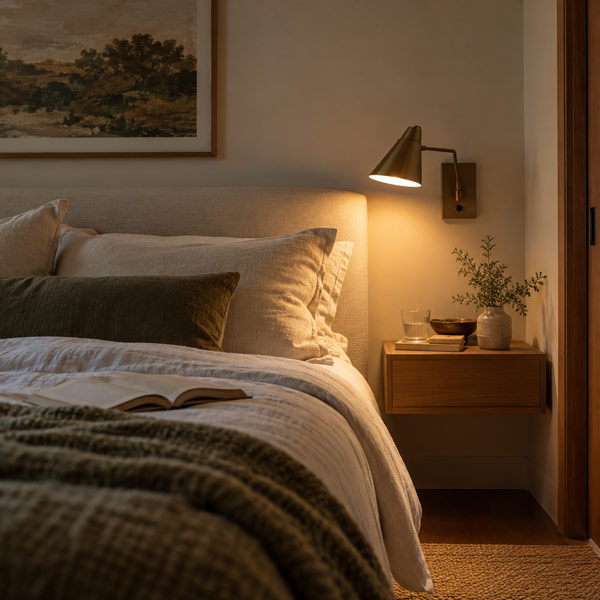
Choose bedside lighting around your evening routine. Someone who reads regularly may need a more directional source than someone who primarily wants a gentle background glow.
In a compact bedroom, a wall-mounted light can free bedside surface space. Keep switches accessible from the bed.
Entryway and Hallway
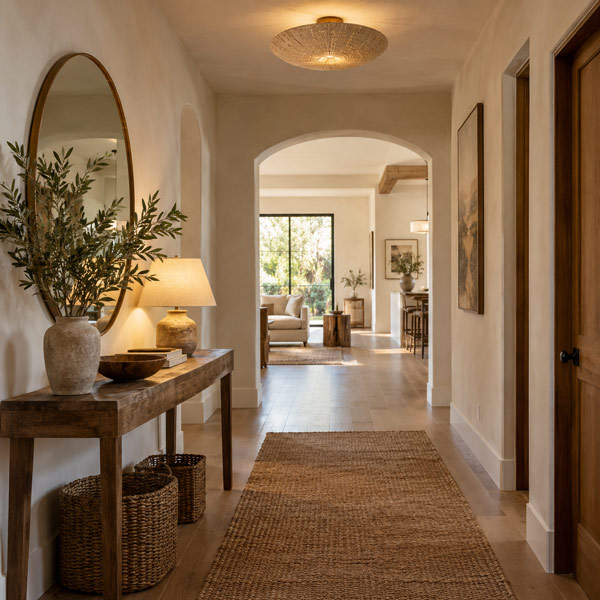
A low-profile ceiling fixture can introduce texture without making a passage feel crowded. Where space allows, a small lamp on a console adds a second point of light.
View the arrangement from the entrance and from adjoining rooms. The fixture should feel connected to the home beyond the hallway.
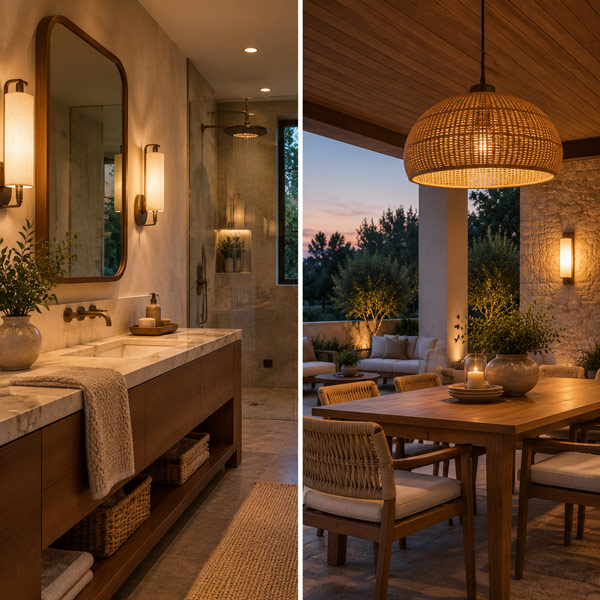
Bathroom and Covered Outdoor Areas
Carry the style through rounded forms, restrained finishes, and appropriate materials. Choose fixtures explicitly suitable for the moisture and exposure conditions of their installation location. Appearance alone does not establish suitability.
When evaluating outdoor fixtures, understand the distinction between IP44 and IP65 protection. An IP rating describes specified ingress protection; it does not by itself confirm resistance to corrosion or every outdoor condition.
How to Choose the Right Fixture Before Buying
Start with the room’s unresolved need. Does it need better reading light, more illumination over a table, or a softer evening atmosphere? That answer narrows the fixture type before you compare finishes.
Next, measure the available space. Record the furniture dimensions, ceiling height, and intended drop. A wide, opaque shade may occupy more visual space than an open frame of the same diameter.
Then evaluate the fixture from several angles. Consider what you will see while seated, approaching the room, or looking across an adjoining space. For a large pendant, a simple cardboard outline can help you judge its scale.
Finally, confirm the product specifications: dimensions, weight, suspension range, voltage, light output, and mounting requirements. Have the installer review the selected fixture before electrical work is finalized.
FAQs
1. Is Modern Organic Lighting Environmentally Friendly?
The style alone does not establish environmental performance. A natural-looking fixture may contain synthetic components, and a natural material does not guarantee responsible sourcing.
Look for documented material origins, durable construction, efficient operation, and access to replacement parts. Evaluate the specific product rather than relying on the word “organic.”
2. Can Modern Organic Pendants Be Installed on a Sloped Ceiling?
Some can, but the mounting system must explicitly support the ceiling angle. A flexible cord does not automatically make the canopy suitable for an angled installation.
Confirm slope compatibility, any required adapter, and the available suspension length before ordering. The fixture should hang correctly without placing unintended strain on its components.
3. How Do You Clean Woven, Fabric, or Stone Lighting?
Switch off the power and allow the fixture to cool. Follow the care instructions for the exact material and finish.
For routine dust, a gentle dry method is generally the best starting point. Do not assume that paper, woven fibers, fabric, and stone can tolerate the same cleaner. Avoid spraying liquid onto electrical components, and confirm whether a shade is removable before taking it apart.
4. Should I Choose Integrated LED or Replaceable Bulbs?
Replaceable bulbs offer straightforward changes to brightness and light color, provided the replacements meet the fixture’s requirements.
An integrated LED fixture incorporates the LED light source into its design, which can allow slimmer or more unusual forms. Before purchasing, ask whether the LED module and driver are serviceable, whether replacement components are available, and what the warranty covers. Repairability depends on the model.
5. Can I Create a Modern Organic Lighting Scheme in a Rental?
Yes. Start with portable table and floor lamps that use existing outlets. A sculptural lamp beside a sofa or a softly shaded light on a dresser can introduce the style without changing ceiling wiring.
Choose pieces that will also suit a future home. Position cords clear of walkways, and check your rental agreement before installing wall fixtures or replacing hardwired lighting.