
Why Copper Garden Lights Are Durable
How Copper Compares With Other Materials
The Housing Is Not the Only Factor
Solid Copper Versus Copper-Plated Lights
Weather Resistance and Installation Quality
Maintenance Requirements
Are Copper Garden Lights Worth the Higher Price?
FAQs
Copper garden lights are often considered more durable than standard outdoor lights, but the answer depends on what “lasting longer” means. A copper fixture can remain structurally sound and visually attractive for many years. However, the complete light also contains LEDs, wiring, batteries, seals, and solar panels, which may wear out before the copper housing does.
In general, well-made copper garden lights can last longer than regular garden lights, especially when compared with inexpensive fixtures made from plastic, thin steel, or low-quality aluminum. Their longevity, however, still depends on construction quality, weather protection, installation, and maintenance.
Why Copper Garden Lights Are Durable
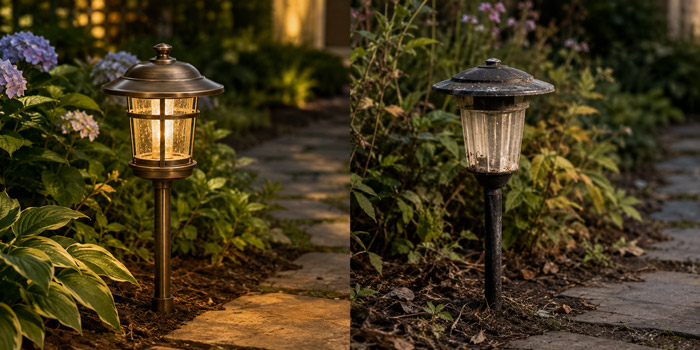
Copper is naturally resistant to many forms of outdoor deterioration. Unlike ordinary steel, it does not develop destructive red rust. When exposed to air and moisture, copper gradually forms a protective surface layer called a patina.
At first, new copper usually has a warm reddish-brown appearance. Over time, it darkens and may eventually develop green or blue-green tones. This change is not usually a sign that the fixture is failing. The patina helps protect the metal underneath from further corrosion.
Because of this natural protection, solid copper fixtures can perform well in rain, humidity, strong sunlight, and changing temperatures. They are particularly suitable for garden environments where lights are continuously exposed to moisture, soil, sprinklers, and plant debris.
How Copper Compares With Other Materials
Regular garden lights can be made from several materials, and their durability varies significantly.
Plastic
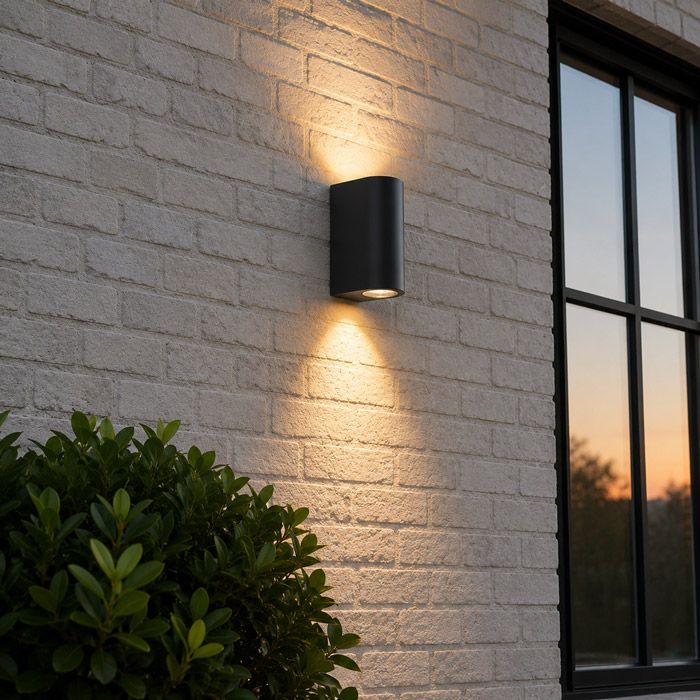
Plastic garden lights are affordable and lightweight, but they are generally less durable than copper fixtures. Long-term exposure to ultraviolet radiation can cause plastic to fade, become brittle, or crack.
Thin plastic stakes and mounting parts may also break when exposed to wind, garden tools, or accidental impact.
Copper does not become brittle from sunlight, making it a better option for long-term outdoor installation.
Steel
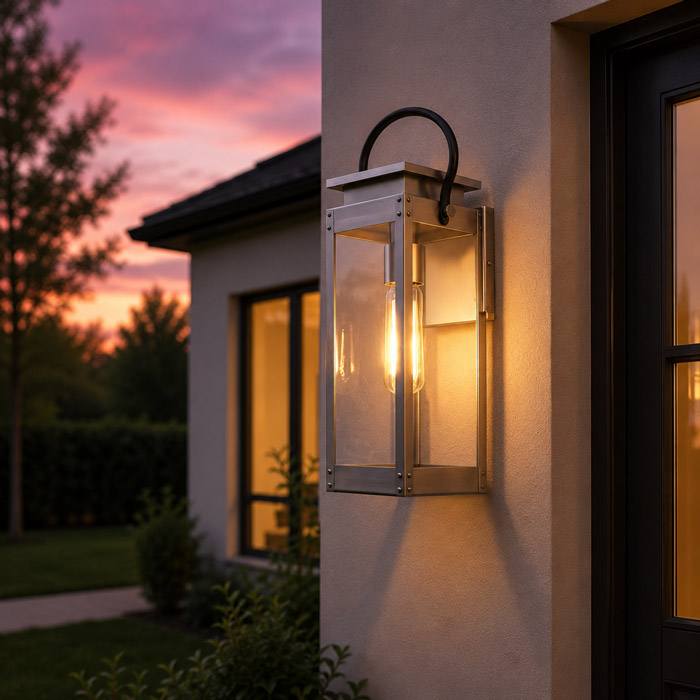
Standard steel fixtures can be strong, but they require a protective coating to prevent rust. Once paint or powder coating becomes scratched, moisture can reach the metal underneath.
Stainless steel offers better corrosion resistance than ordinary steel, but lower-grade stainless steel may still develop surface corrosion.
Copper usually ages more gracefully because its patina is protective rather than destructive.
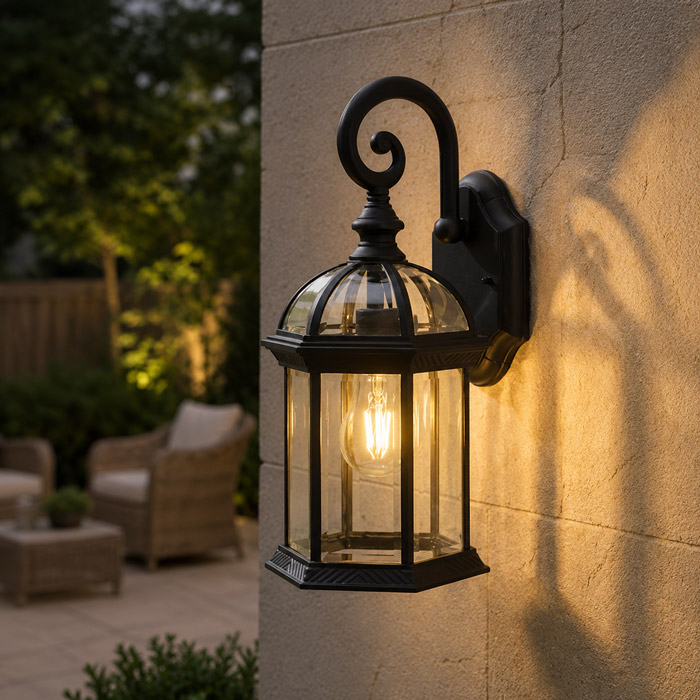
Aluminum
Aluminum is commonly used for outdoor lighting because it is lightweight and does not rust like steel. High-quality cast aluminum fixtures can last for many years.
Inexpensive aluminum lights may have thin housings or weak surface finishes. Their coatings may peel, fade, or develop a chalky appearance.
A premium aluminum light may last as long as a copper light, but copper usually outperforms low-cost aluminum products.
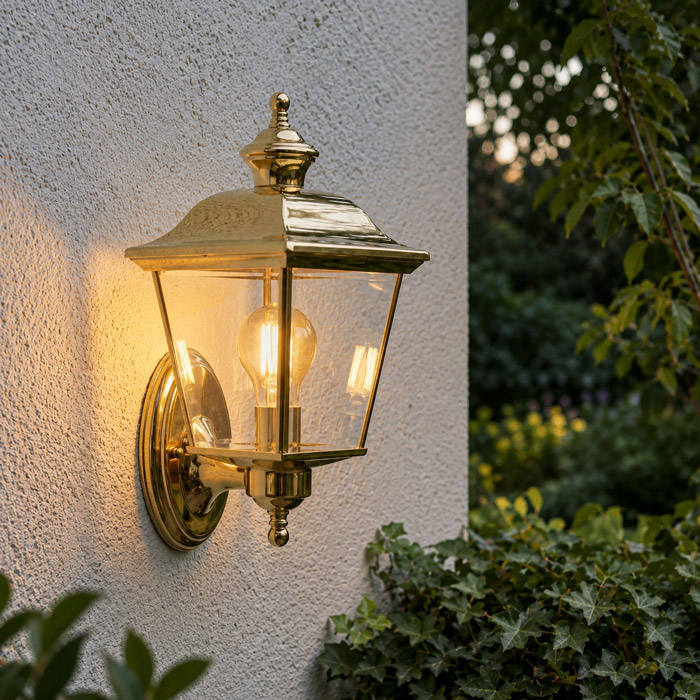
Brass
Brass is another durable material used in landscape lighting. Because it contains copper, it offers good corrosion resistance and develops an aged finish over time.
High-quality brass and copper fixtures can have similar service lives.
Copper develops a distinctive natural patina, while brass usually ages into a darker brown finish.
The Housing Is Not the Only Factor
A durable copper body does not guarantee that every component will last equally long. The electrical parts often determine the practical lifespan of a garden light.
Important components include:
- LED modules or bulbs
- Wiring and connectors
- Rubber seals and gaskets
- Drivers or transformers
- Rechargeable batteries
- Solar panels
- Motion or daylight sensors
In solar-powered copper lights, the rechargeable battery may need replacement long before the copper fixture itself. Solar panels can also lose efficiency because of dirt, clouding, moisture intrusion, or prolonged weather exposure.
For low-voltage wired lights, poor connectors and unprotected cable joints are common failure points. Even an excellent copper fixture can stop working if water enters the wiring system.
Therefore, copper garden lights last longest when they also include replaceable components, sealed connections, quality LEDs, and effective water protection.
Solid Copper Versus Copper-Plated Lights
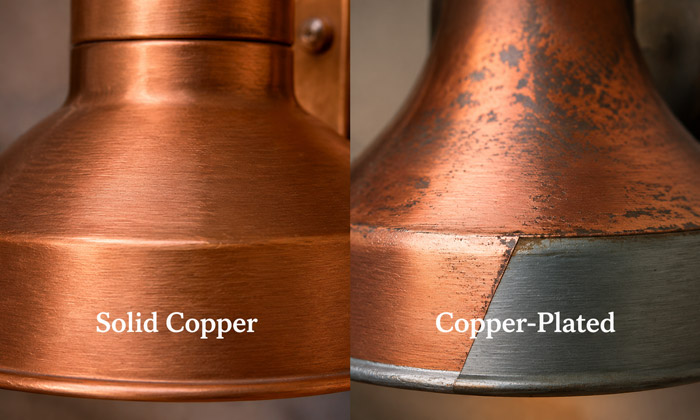
Not every product advertised as a copper garden light is made from solid copper. Some fixtures use a thin copper-colored coating over aluminum, steel, or plastic.
Copper-plated lights may provide the appearance of copper at a lower price, but they do not offer the same durability. The surface layer can scratch, peel, or wear away, exposing the base material underneath. If the base is steel, corrosion may develop after the coating is damaged.
Before purchasing, check whether the product is described as solid copper, heavy-gauge copper, copper-plated, or copper-finished. Solid copper fixtures usually provide the strongest long-term performance.
Weather Resistance and Installation Quality
Water resistance is just as important as the housing material. A garden light should be designed for outdoor use and have suitable protection against rain, irrigation, dust, and temporary water exposure.
Installation also affects longevity. Fixtures should not be placed where water constantly collects around electrical connections. Cable joints should use outdoor-rated waterproof connectors, and solar panels should be positioned where they can receive sufficient sunlight.
In coastal environments, salt exposure can accelerate corrosion in connectors, screws, and internal components. A copper housing may remain stable while lower-quality fasteners deteriorate. Fixtures with compatible, corrosion-resistant hardware are therefore a better choice.
Copper garden lights require relatively little structural maintenance. Owners can either allow the natural patina to develop or preserve the brighter copper appearance through periodic cleaning and polishing.
Allowing the fixture to age naturally is usually the lowest-maintenance option. The patina does not normally need to be removed.
Other maintenance tasks may include:
- Cleaning dirt from lenses and solar panels
- Removing leaves and plant growth around fixtures
- Inspecting seals and cable connections
- Replacing rechargeable batteries when necessary
- Checking for moisture inside the lens
Routine inspection can prevent small problems from damaging electrical components.
Are Copper Garden Lights Worth the Higher Price?
Copper garden lights are usually more expensive than mass-produced plastic, steel, or aluminum alternatives. However, their longer-lasting housings can reduce the need for frequent replacement.
They may offer better long-term value when used in permanent landscape designs, frequently irrigated gardens, humid climates, or areas where replacing fixtures would be difficult. Their natural aging process also means that cosmetic weathering can improve their appearance instead of making them look worn out.
The higher price is less justified when the fixture uses non-replaceable batteries, low-quality electronics, weak seals, or only a thin copper coating. Material quality should always be considered together with the overall design.
What Color Temperature Is Best for Copper Garden Lights?
Warm white light between 2700K and 3000K is usually the best choice for copper garden fixtures. It complements copper’s reddish-brown tones and creates a comfortable, natural-looking atmosphere.
Cooler light above 4000K may provide greater visibility, but it can make gardens appear less inviting and may not match the traditional appearance of copper.
Do Copper Garden Lights Attract Insects?
The copper housing itself does not attract insects. Insect activity is mainly influenced by the light’s wavelength and color temperature.
Warm white or amber LEDs generally attract fewer insects than cool white or blue-toned lights. Choosing lower-intensity, downward-facing fixtures can further reduce insect attraction.
See also: What Impact Do Garden Lights Have on Plants and Animals?
Can Copper Garden Lights Be Connected to Smart Lighting Systems?
Many low-voltage copper garden lights can be integrated with smart transformers, timers, motion sensors, or app-controlled outdoor lighting systems.
Compatibility depends on the fixture’s voltage and power requirements. Before installation, confirm that the transformer and smart controller support the total wattage of the lighting circuit.
How Far Apart Should Copper Garden Lights Be Installed?
Spacing depends on the fixture type and lighting purpose. Path lights are commonly installed approximately 6 to 10 feet apart, while accent lights may require different spacing based on beam angle and the size of the object being illuminated.
Lights should be positioned to create balanced coverage without producing excessive brightness or overlapping beams.
Are Copper Garden Lights Safe Around Plants and Trees?
Properly installed LED copper garden lights are generally safe around plants because LEDs produce less heat than traditional incandescent or halogen bulbs.
Fixtures should still be placed far enough from leaves, roots, and irrigation outlets to prevent heat buildup, physical damage, or excessive moisture exposure. Low-voltage systems are usually the preferred option for residential gardens.
