
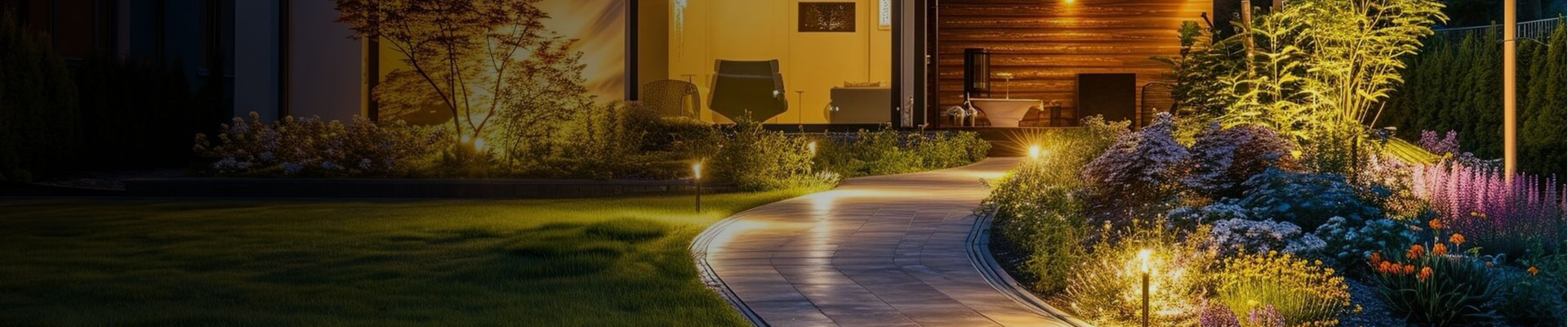
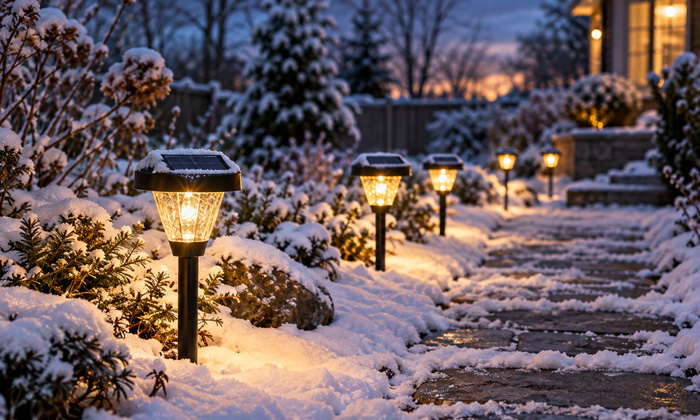
For most outdoor solar lights, removing them during winter is not necessary if they are weather-resistant and designed for outdoor use. Leaving them outside allows them to continue charging whenever sunlight is available. However, winter conditions can affect how well they charge and how long they operate at night. Snow accumulation, shorter daylight hours, lower temperatures, and reduced battery efficiency can all influence solar light performance.
Winter Conditions That Affect Solar Light Performance
The main challenge for solar lights in winter is the reduced amount of usable sunlight. During colder months, the sun stays lower in the sky and daylight hours become shorter, meaning solar panels have less time to collect energy compared with spring and summer.
Snow can make this problem worse. In regions with frequent snowfall, solar panels are often covered by snow, which blocks sunlight from reaching the photovoltaic cells. When the panel is buried under snow, the solar light may receive little or no energy during the day, causing the battery to charge slowly or fail to provide enough power at night.
After snowfall, removing snow and ice from the solar panel is important to restore charging performance. Even a small amount of buildup can reduce the amount of sunlight the panel receives. Regular cleaning also helps prevent dirt, frost, and debris from reducing the panel’s efficiency over time.
Proper Placement Helps Maintain Charging Efficiency
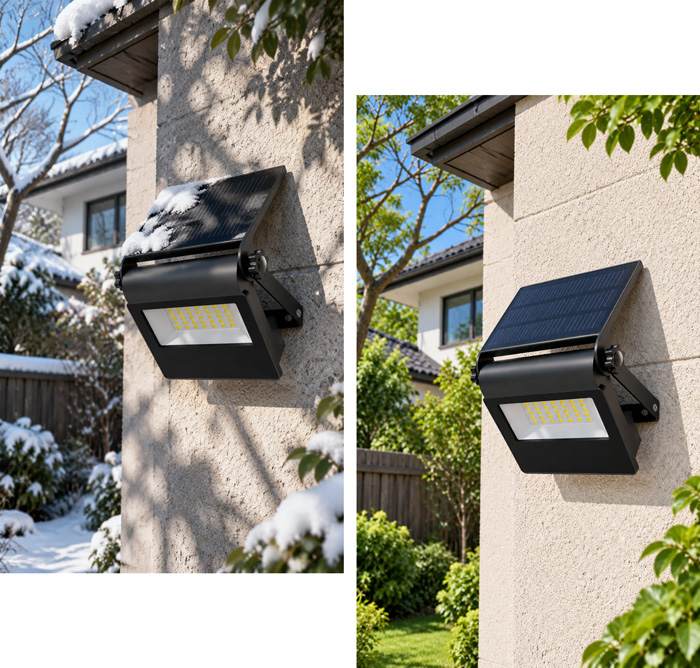
Where solar lights are installed becomes especially important during winter. A location that works well in summer may not receive enough sunlight in winter because the angle of the sun changes and shadows from trees, buildings, or snow-covered surroundings may become longer.
For reliable winter performance, solar lights should be placed in an open area where the panel can receive direct sunlight for several hours each day. Direct exposure is more effective than shaded or indirect light because solar panels generate energy based on the amount of sunlight that reaches their surface.
Most solar lights need approximately 6 to 8 hours of direct sunlight for a full charge under normal conditions. However, winter weather, cloudy days, and snow coverage can extend the required charging time and reduce the number of hours the light stays on at night.
How Cold Temperatures Affect Rechargeable Batteries
Low temperatures can also affect the rechargeable batteries inside solar lights. Cold conditions reduce battery efficiency, which means the battery may store less energy and provide shorter lighting times during freezing weather.
Frequent undercharging can also contribute to faster battery wear. When solar panels cannot collect enough energy because of limited sunlight or snow coverage, the battery may repeatedly operate without reaching a full charge. Over time, this can reduce its overall lifespan.
Most rechargeable batteries used in solar lights typically last around 2 to 4 years, depending on battery quality, weather exposure, charging conditions, and maintenance. Keeping the solar panel clean and allowing it to receive sufficient sunlight can help maximize battery performance.
When Should You Store Solar Lights Indoors?
Although most outdoor solar lights can remain outside during winter, there are some situations where storing them indoors may help protect the lights and extend their lifespan.
During Extreme Cold Weather
In areas with extremely low temperatures, freezing conditions may affect rechargeable batteries and internal components. If temperatures regularly drop below the operating range recommended by the manufacturer, bringing solar lights indoors can help prevent unnecessary battery stress.
When Snow Covers the Solar Panel for Long Periods
Occasional snow is usually not a problem, but continuous snow coverage can prevent the solar panel from receiving sunlight for days or weeks. If the lights cannot receive enough sunlight during the winter season, storing them temporarily may be a better option.
When Solar Lights Are Not Needed for Several Months
If outdoor lighting is not required during winter, storing solar lights can reduce exposure to harsh weather conditions. This is especially useful for decorative garden lights or seasonal outdoor decorations.
How to Store Solar Lights Properly
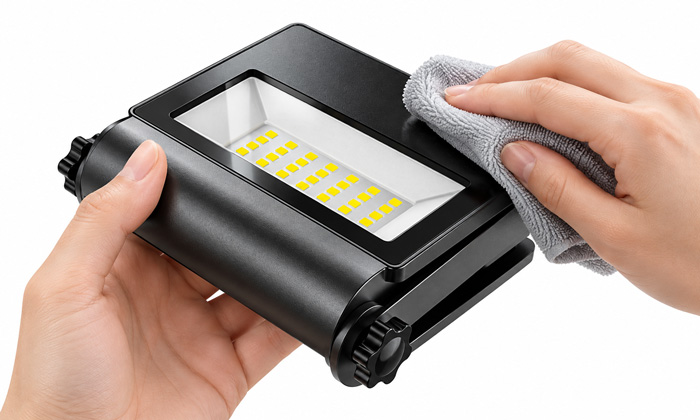
The LM-SP04 Model features a foldable design with a compact structure for easy storage and portability. It is convenient to carry, transport, clean, and maintain.
Before storing solar lights indoors:
- Clean the solar panel to remove dirt and debris
- Dry the light completely to prevent moisture damage
- Turn off the light if there is an on/off switch
- Store it in a cool, dry location
- Check the rechargeable battery before reinstalling in spring
Proper storage can help maintain battery performance and ensure the solar lights are ready when outdoor lighting is needed again.
FAQs
Do solar lights work on cloudy winter days?
Solar lights can still charge on cloudy winter days, but the charging efficiency is lower because solar panels receive less sunlight.
Multiple cloudy days in a row may reduce nighttime lighting duration.
Can freezing temperatures damage outdoor solar lights?
Most weather-resistant solar lights can handle freezing temperatures, but extreme cold may affect battery performance and shorten operating time.
Choosing models designed for cold climates can improve reliability.
How can I improve solar light performance during short winter days?
Positioning lights in an unobstructed area, adjusting the solar panel angle when possible, and reducing unnecessary shade can help maximize energy collection during limited winter daylight.
Why do solar lights turn off quickly in winter?
Short operating times are often caused by insufficient charging, reduced battery capacity in cold temperatures, or increased energy consumption during longer winter nights.
Should solar light batteries be replaced every winter?
Solar light batteries usually do not need seasonal replacement.
They should be replaced when they no longer hold enough charge or when the light performance remains poor despite proper sunlight exposure and maintenance.
