

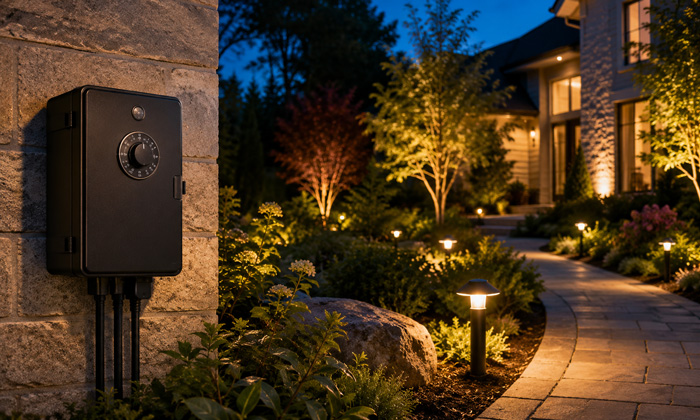
Can a 100W Landscape Lights Transformer Be Used Outside?
Outdoor Features of a 100W Landscape Transformer
How Does the Timer and Photocell Sensor Improve Outdoor Lighting?
Where Can a 100W Outdoor Transformer Be Installed?
What Should Be Considered During Outdoor Installation?
How Long Can a 100W Landscape Lights Transformer Last?
Common Problems with Outdoor Landscape Transformers
FAQs
A 100W landscape lights transformer with timer and photocell sensor is designed for outdoor low-voltage lighting systems, providing both power conversion and automatic control for exterior lighting installations. It is commonly used for gardens, walkways, patios, driveways, and other outdoor areas where reliable illumination is needed after sunset. Many residential and commercial properties use these transformers as part of complete landscape lighting applications that require efficient power management and convenient operation.
Unlike standard indoor power supplies, outdoor landscape transformers are built to handle environmental changes while delivering stable low-voltage power to LED fixtures. The integrated timer and photocell sensor allow the lighting system to operate automatically, reducing manual adjustments and improving daily convenience.
Can a 100W Landscape Lights Transformer Be Used Outside?
Yes, a 100W landscape lights transformer with timer and photocell sensor can be used outdoors when it is designed specifically for exterior applications. These transformers are commonly installed in outdoor lighting systems because they provide safer low-voltage power for landscape fixtures while supporting automatic on/off control.
Outdoor use requires more than simply placing the transformer outside. The installation location, wiring method, and surrounding environment all affect performance. A suitable position should provide ventilation, prevent direct contact with standing water, and allow easy access for future inspection or adjustments.
Weather protection is another factor that should be considered when building an outdoor lighting system. Components exposed to rain and humidity often require appropriate protection levels, and products with an IP65 waterproof rating for garden lights are commonly selected for areas where resistance against dust and water exposure is needed.
Outdoor Features of a 100W Landscape Transformer
A 100W transformer is suitable for many small and medium outdoor lighting projects. It can support multiple low-voltage LED fixtures as long as the total connected wattage remains within the transformer’s rated capacity.
| Feature | Description |
|---|---|
| 100W Power Capacity | Provides power for multiple low-voltage landscape fixtures |
| Timer Function | Allows scheduled lighting operation |
| Photocell Sensor | Detects daylight changes and controls automatic switching |
| Outdoor Housing | Helps protect internal components from environmental exposure |
| Low Voltage Output | Supports safer outdoor lighting installations |
| LED Compatibility | Works with energy-efficient landscape lighting products |
The transformer should always be matched with the requirements of the entire lighting system. The number of fixtures, cable length, and brightness requirements all influence the final setup. A balanced design helps prevent unnecessary power loss and creates more consistent illumination.
How Does the Timer and Photocell Sensor Improve Outdoor Lighting?
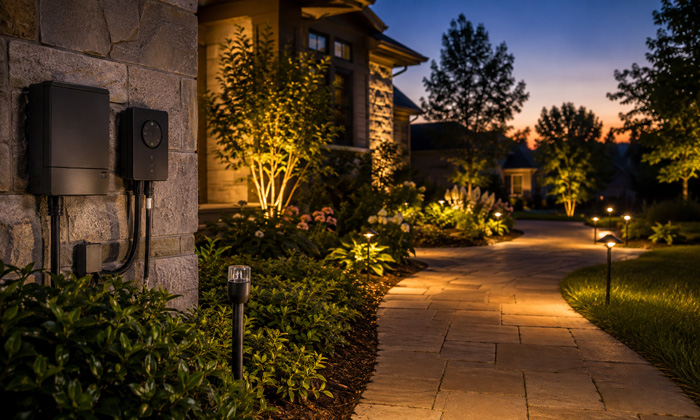
The timer and photocell sensor are two important features that make outdoor lighting easier to manage. The photocell sensor detects surrounding light conditions and automatically activates the lights when natural daylight decreases. When morning arrives, it can turn the system off without requiring manual operation.
The timer provides additional control by allowing users to define how long the lights should remain active. For example, pathway lighting may operate throughout evening hours but switch off automatically later at night to reduce energy use.
Choosing the right settings helps maintain a consistent lighting schedule. Many outdoor installations rely on a properly adjusted landscape lighting timer to balance visibility, convenience, and energy efficiency.
Where Can a 100W Outdoor Transformer Be Installed?
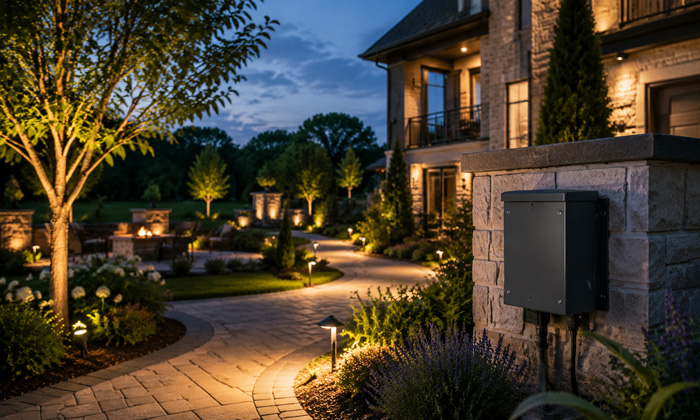
A 100W landscape transformer can be installed in many outdoor locations, including:
- Residential gardens
- Front yards and backyards
- Walkways and entrances
- Driveways
- Patios and outdoor entertainment areas
- Commercial landscaping projects
The transformer is usually mounted near the lighting system to reduce unnecessary cable distance and maintain efficient power delivery. A protected outdoor wall, post, or covered area is often preferred because it helps reduce exposure to extreme weather conditions.
The overall lighting arrangement also influences how effectively the transformer performs. Fixture spacing, beam direction, cable planning, and brightness distribution should be considered before installation. These factors are central to creating an efficient landscape lighting design that provides both functional and decorative lighting.
What Should Be Considered During Outdoor Installation?
A 100W landscape transformer is designed for outdoor use, but proper installation is necessary to maintain long-term reliability.
Select a Suitable Installation Location
The transformer should be installed in a place with good airflow and protection from excessive moisture. Avoid locations where rainwater can collect or where the unit may be exposed to constant water contact.
Avoid Overloading the Transformer
The combined wattage of all connected lights should stay within the transformer’s rated output. Excessive loads may increase heat, reduce efficiency, and shorten component life.
Use Proper Outdoor Wiring
Outdoor cables and connectors should be suitable for exterior environments. Secure connections help prevent issues such as flickering, voltage drops, or intermittent operation.
Plan the Lighting System Before Installation
A well-planned system reduces installation problems and improves lighting performance. The transformer, fixtures, and cables should work together as one complete system rather than being selected separately.
How Long Can a 100W Landscape Lights Transformer Last?
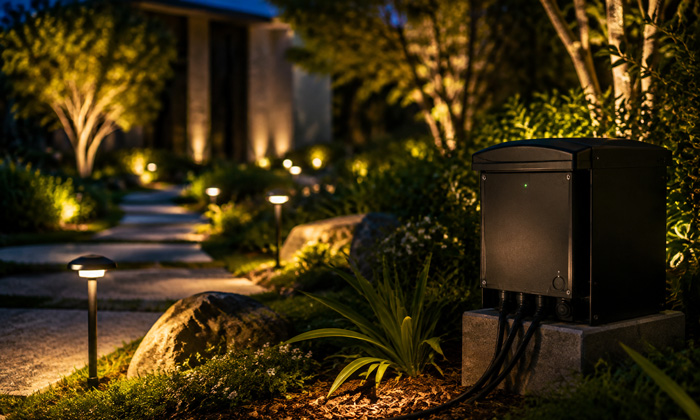
The lifespan of an outdoor landscape transformer depends on product quality, operating conditions, electrical load, and maintenance. A properly installed transformer that operates within its rated capacity can provide dependable service for many years.
Outdoor conditions such as high temperatures, excessive moisture, and poor ventilation may affect long-term performance. Regular inspection of cables, fixtures, and connections helps identify potential issues before they cause system failure.
For commercial properties where lighting operates for extended periods, durability is especially important. Factors such as installation quality, maintenance frequency, and component reliability all influence commercial electric landscape lighting lifespan.
Common Problems with Outdoor Landscape Transformers
Although outdoor transformers are designed for reliable operation, several issues may occur during long-term use.
| Problem | Possible Cause | Solution |
|---|---|---|
| Lights do not turn on | Power issue or incorrect settings | Check power connection and timer settings |
| Lights activate at the wrong time | Photocell sensor problem | Adjust sensor position or remove nearby light interference |
| Lights flicker | Loose wiring or voltage problems | Inspect connections and cables |
| Transformer shuts down | Excessive load or electrical protection | Reduce connected wattage |
| Lights become dim | Long cable distance or insufficient power | Review system design and power requirements |
Many outdoor lighting problems can be solved by checking the transformer, wiring, sensors, and fixtures step by step. Issues such as unexpected shutdowns or uneven lighting are often related to installation details, which can be addressed through a structured landscape lighting fixing process.
FAQs
Can a 100W landscape lights transformer run multiple outdoor lights at the same time?
Yes, a 100W landscape lights transformer can power multiple low-voltage LED landscape lights as long as the combined wattage of all connected fixtures stays within the transformer’s rated capacity.
Keeping the total load below the maximum output helps maintain stable performance and prevents overheating.
Does a photocell sensor need direct sunlight to work properly?
No, a photocell sensor does not need direct sunlight.
It detects surrounding ambient light levels to determine when the landscape lighting should turn on or off. The sensor should be installed in an open area away from artificial light sources, such as porch lights or the landscape fixtures themselves, to avoid incorrect activation.
Can a 100W landscape transformer be left outside during winter?
A properly designed outdoor landscape transformer can remain outdoors during winter conditions.
Weather-resistant housing helps protect internal components from rain, snow, and temperature changes, but the unit should still be installed in a suitable location with proper mounting and waterproof cable connections.
Why do my landscape lights stay on during the daytime with a photocell transformer?
Daytime operation is usually related to photocell positioning or sensor interference.
Nearby lighting, shadows, dirt on the sensor surface, or incorrect installation can affect how the photocell detects brightness. Checking the sensor location and keeping it clean can help restore normal automatic operation.
Can a 100W transformer with timer and photocell sensor be used with non-LED landscape lights?
Most modern 100W landscape transformers with timer and photocell controls are designed specifically for low-voltage LED landscape lighting.
Traditional incandescent or tungsten fixtures may not be compatible, so checking the transformer specifications before installation is necessary.
