
Start With How You Use Your Outdoor Space
1. Hang Warm String Lights Above the Dining Area
2. Use Shielded Wall Lights Beside Patio Doors
3. Light Garden Paths at Turns and Transitions
4. Make Changes in Level Clearly Visible
5. Add Concealed Light Beneath Built-In Benches
6. Bring One Garden Feature Into View
7. Give Retaining Walls a Subtle Glow
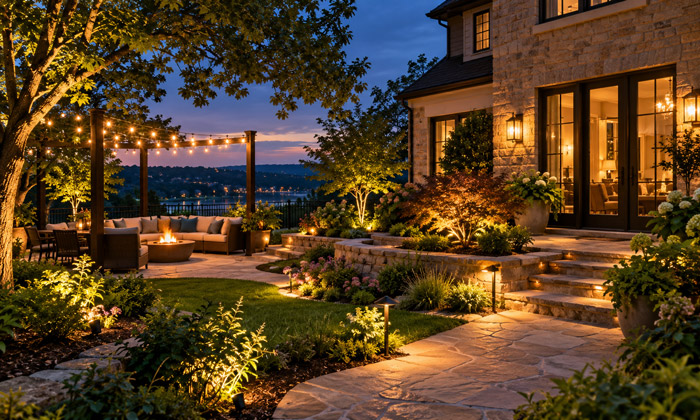
8. Keep Fire Pit Lighting Around the Seating Area
9. Use Portable Lanterns for Flexible Seating
10. Separate Everyday Lighting From Decorative Lighting
Should You Choose Low-Voltage, Solar, or Line-Voltage Lighting?
How to Choose Fixtures for a Comfortable Result
A Simple Patio and Garden Lighting Layout
FAQs
A patio should feel just as welcoming after sunset as it does during the day. You should be able to see the steps, enjoy dinner without a bright bulb in your eyes, and look out toward a garden that still has shape and depth.
The best Fort Thomas outdoor lighting ideas combine comfortable seating-area light, clear illumination along walking routes, and a few carefully chosen garden accents. Each fixture should serve a purpose, whether that means lighting a doorway, revealing a change in level, or bringing a favorite planting into view.
You do not need to illuminate every corner. A thoughtful arrangement of light and shadow can make even a small patio feel complete.
Start With How You Use Your Outdoor Space
Before choosing fixtures, walk from your back door to the places you use after dark. Notice where you step down, turn a corner, carry food, or move around furniture.
Then sit in your usual outdoor chair. A fixture that looks comfortable from the doorway may shine directly into your eyes from a lower position.
Build your plan around three needs:
- Movement: Doorways, paths, steps, and transitions between surfaces.
- Activities: Dining, cooking, reading, and conversation.
- Views: A planting bed, textured wall, ornamental tree, or other focal point.
For a terraced garden, begin with the route between levels. For a compact courtyard, concentrate on comfortable seating light and one attractive view beyond the table.
1. Hang Warm String Lights Above the Dining Area
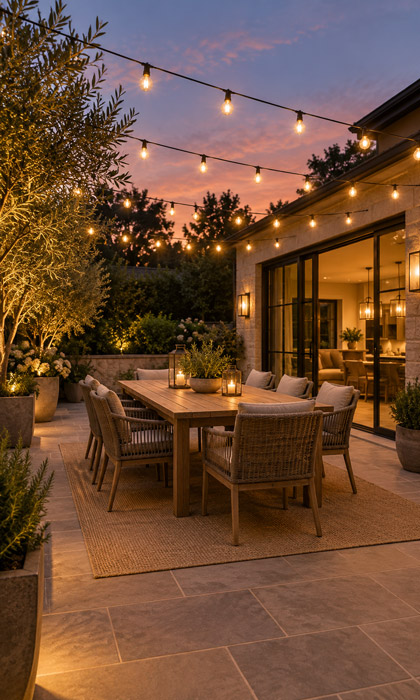
String lights can give an open patio a sense of enclosure without adding a roof. A simple arrangement over the dining table helps define the space and brings light closer to where people gather.
Choose a layout that suits the patio’s shape. Parallel runs can complement a rectangular terrace, while a single diagonal strand may be enough for a smaller seating area.
Keep the design restrained. Dense rows of exposed bulbs can become visually distracting, especially when viewed from indoors.
Use outdoor-rated products and follow the manufacturer’s support and span instructions. Where a support cable is required, let it carry the load instead of stretching the electrical cord between attachment points. Select a compatible dimmable system if you want to adjust the atmosphere after dinner.
2. Use Shielded Wall Lights Beside Patio Doors
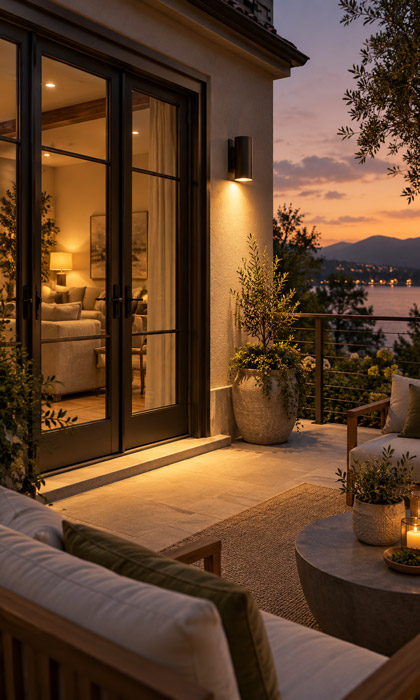
A wall light near the back door helps connect the house to the patio. It provides a useful transition when carrying plates outside or returning indoors after an evening in the garden.
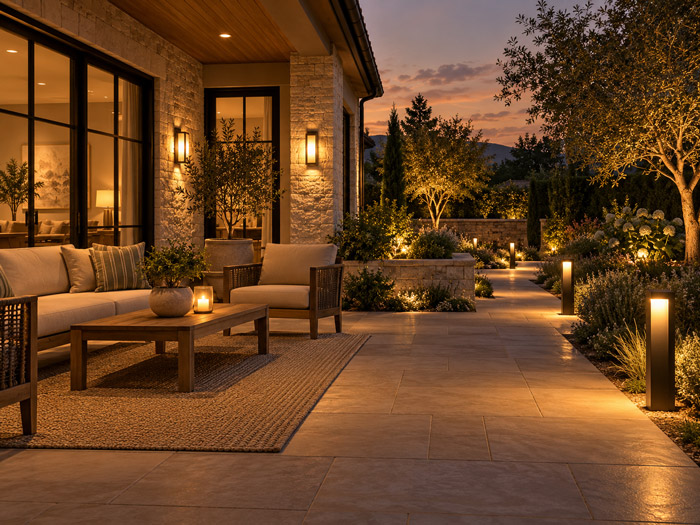
Look at the light distribution as closely as the fixture’s appearance. A shielded design that directs light toward the landing can be more comfortable than a clear lantern with a bright exposed bulb.
Position furniture with the fixture in mind. If the main seating area faces the house, check whether the light source will be visible at eye level.
For a coordinated appearance, repeat a finish already used on door hardware, railings, or nearby garden structures. The fixtures do not need to match perfectly, but they should feel related.
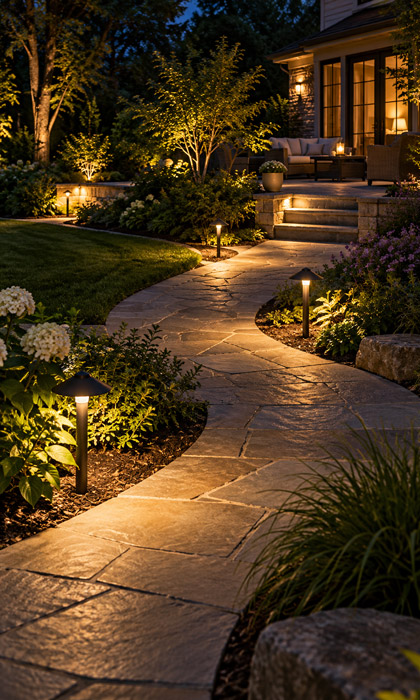
3. Light Garden Paths at Turns and Transitions
Path lighting works best when it makes the route easy to understand. Give priority to bends, junctions, and the point where a walkway meets a patio or steps.
Avoid deciding fixture positions solely by dividing the path into equal sections. The appropriate spacing between pathway lights depends on the beam pattern, mounting height, surrounding plants, and the surface being illuminated.
Set fixtures where foliage will not quickly cover them and where routine lawn or garden maintenance will not damage them.
Before fixing the positions, test the arrangement after dark. Walk the route in both directions and look for dark gaps or bright sources that make the next section harder to see.
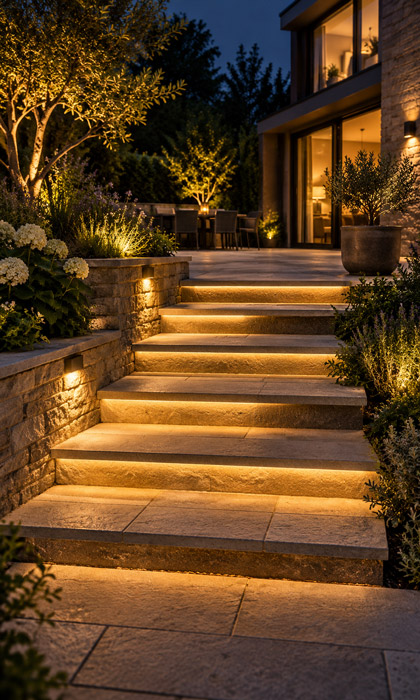
4. Make Changes in Level Clearly Visible
Where a garden includes steps or a raised patio, lighting the change in level deserves early attention.
Small shielded fixtures beneath stair nosings, along adjacent walls, or under suitable coping can direct light onto the walking surface. The aim is to make the edge and depth of each step readable.
A bright fixture at the top of a staircase may leave lower treads in shadow. Likewise, lighting only the sides can look attractive while providing little useful illumination underfoot.
Assess the steps from both directions. Check them while approaching from the garden as well as when leaving the house.
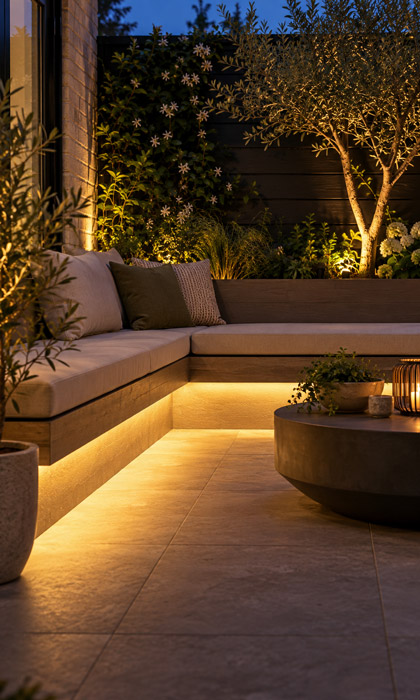
5. Add Concealed Light Beneath Built-In Benches
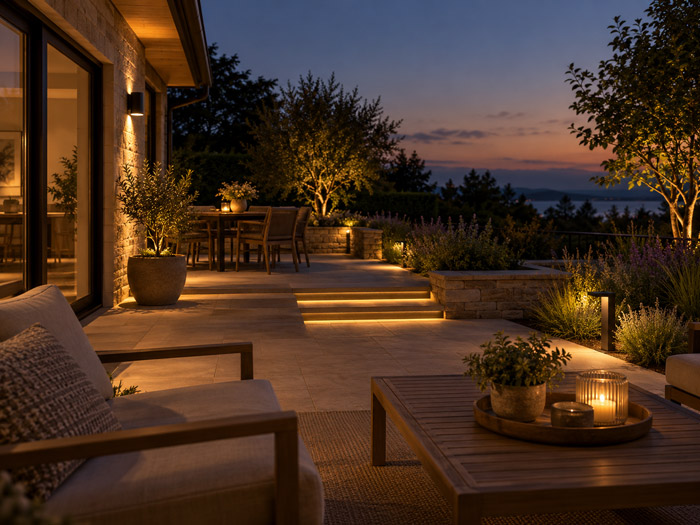
A built-in bench offers a useful place to hide a light source. A protected outdoor lighting system beneath the seat can cast a soft glow onto the paving and define the seating area.
This approach can suit a small patio where additional freestanding fixtures would take up space.
Keep the source concealed from normal seated and standing viewpoints. You want to see the illuminated surface, not a line of bright LED points.
Allow access for maintenance, and choose a complete system suited to the exposure. The strip, connections, power supply, and mounting arrangement all need to work together outdoors.
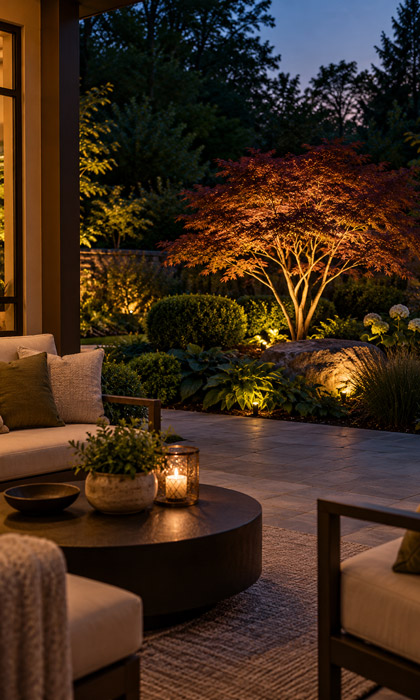
6. Bring One Garden Feature Into View
Choose a feature that you enjoy looking at from the patio: a sculptural shrub, a textured planter, or a section of stonework.
Begin with that single focal point. Adjust the fixture until the feature is visible without dominating the seating area.
Where practical, use a shielded downward beam and keep the light within the intended area. Leave neighboring planting less illuminated so the focal point has definition.
View the result from inside the house as well. A garden feature framed by a window can extend the evening view beyond the glass without requiring the whole yard to be lit.
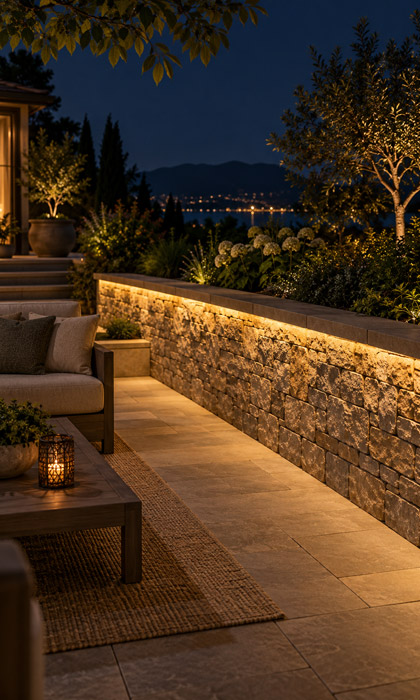
7. Give Retaining Walls a Subtle Glow
Hardscape lighting for retaining walls can help define the edge of an outdoor room. Small lights beneath a cap or other suitable overhang can reveal the wall’s surface while keeping the source hidden.
This is particularly useful beside a terrace, where an illuminated wall provides a visual boundary close to the seating area.
Textured stone may look dramatic under close directional light, but test the effect first. Strong shadows can emphasize uneven surfaces more than expected.
Keep the output modest and check the view from lower parts of the garden. A fixture concealed from the upper patio may still be visible from below.
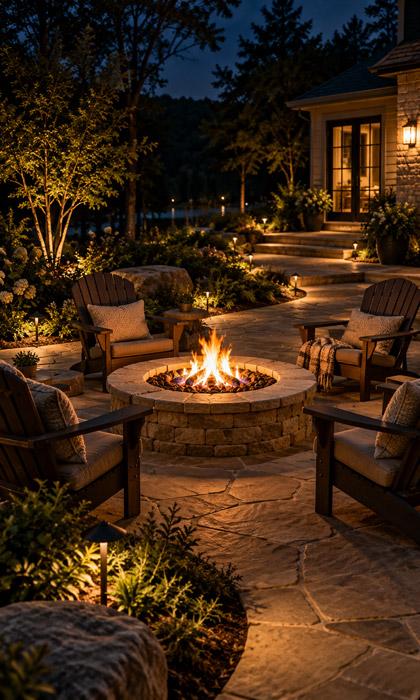
8. Keep Fire Pit Lighting Around the Seating Area
A fire already creates a strong visual center. Thoughtful fire pit lighting should help people reach their chairs, see nearby steps, and find the route back to the house.
Place gentle light around the outer edge of the gathering area. Low, shielded fixtures or a nearby wall light can provide useful visibility without competing with the flames.
Avoid positioning electrical lighting or cables where heat could affect them. Follow the fire feature’s clearance requirements when planning nearby fixtures.
Give the surrounding lights a separate control so you can lower the decorative lighting while keeping the access route visible.
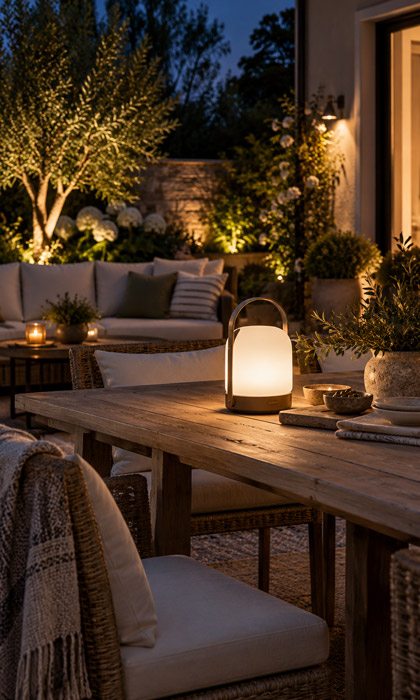
9. Use Portable Lanterns for Flexible Seating
An outdoor-rated rechargeable lantern can be useful when your seating arrangement changes. Place it on a dining table for supper, then move it to a side table for a quieter evening.
Choose a shaded or diffused design that feels comfortable at close range. An exposed bright source can become tiring when it sits between people.
Portable lights work especially well as finishing touches. Fixed lighting should still cover important steps and routes so that visibility does not depend on where a lantern was last placed.
Check whether the product is intended to remain outdoors or should be brought inside after use.
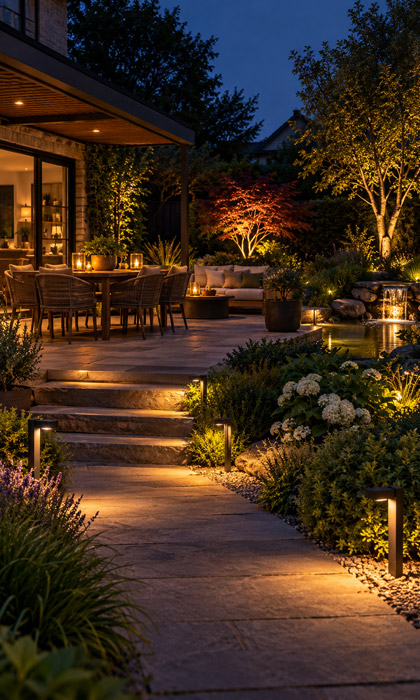
10. Separate Everyday Lighting From Decorative Lighting
Different parts of the garden rarely need the same operating schedule.
A practical arrangement might give you separate control over:
- Path and step lighting.
- Patio dining and seating lights.
- Decorative garden accents.
This lets you switch off a garden feature when you go indoors while retaining the lighting needed for movement.
A dusk-based control can help with seasonal changes, while an appropriate off-time prevents decorative lights from running unnecessarily. When setting a landscape lighting timer, match the schedule to how you actually use the space.
Should You Choose Low-Voltage, Solar, or Line-Voltage Lighting?
The right power source depends on the location and the job the light needs to perform.
| Power source | Where it can fit | Main consideration |
|---|---|---|
| Low-voltage wired lighting | Connected groups of path, step, and garden lights | Plan the transformer, cable routes, and compatible fixtures together |
| Solar lighting | Decorative accents where panels receive suitable sunlight | Performance depends on sunlight, battery condition, and operating settings |
| Line-voltage lighting | Permanent wall lights and other fixtures designed for mains power | Requires an appropriate electrical installation |
| Rechargeable lighting | Movable table and seating-area accents | Needs regular charging and suitable storage |
For a shaded garden, inspect the panel location before choosing solar fixtures. Solar lights can charge in shade, but reduced sunlight can limit the energy available for nighttime operation. Do not assume a light will perform under a tree canopy as it would in an open position.
For permanent electrical work, use a qualified installer where required. Have the system designed around the actual fixtures and site conditions.
How to Choose Fixtures for a Comfortable Result
Judge Brightness From Where You Sit
Start with the lowest output that does the job comfortably. A patio does not need the same light level everywhere.
Look for glare from exposed lamps, reflections in windows, and bright patches on pale paving. Dimming can help, but good shielding and placement should come first.
Keep the Light Color Consistent
Use a consistent warm-white appearance across adjoining patio and garden areas unless you have a deliberate reason to vary it.
Compare sample fixtures together before committing to a full installation. Differences in color can become more noticeable when lights illuminate the same wall or paving.
Match the Fixture to Its Exposure
An open garden bed, a sheltered porch, and a location near irrigation present different conditions.
Check the manufacturer’s intended use, installation position, and exposure rating. Consider the connections and power equipment as well as the visible fixture.
Plan for Maintenance
Leave room to clean lenses, adjust aiming, and reach replaceable components. Avoid burying fixtures behind planting that will make access difficult.
After seasonal garden maintenance, check that lights remain upright and that new growth has not blocked their beams.
A Simple Patio and Garden Lighting Layout
Imagine a patio with a dining table, a short path, two steps, and a planting bed.
Start with a shielded light near the back door. Add restrained overhead light for the table, then illuminate the two steps so their edges remain clear. Place path lights according to their coverage and the route’s changes in direction.
Finally, add one soft accent within the planting bed if the view needs more depth.
Test the arrangement before adding anything else. Sit at the table, walk the route, and look out from the house. If the space already feels comfortable and easy to navigate, additional fixtures may offer little benefit.
FAQs
What Affects the Cost of Outdoor Lighting Installation in Fort Thomas?
Installation costs depend on fixture quality, the number of lighting zones, cable distances, and access to power.
Routing cables beneath existing paving or reaching separate garden levels can add work. Request an itemized quote covering fixtures, wiring, controls, labor, and any surface restoration so you can compare proposals accurately.
How Do I Choose the Right Beam Angle for Garden Lighting?
Match the beam angle to the width of the feature and the distance between the fixture and the target.
A narrow beam works well for slender features or small details, while a wider beam can cover broader planting areas or wall surfaces. Test the fixture in position because changing its distance and angle affects both coverage and intensity.
What Size Transformer Do I Need for Landscape Lighting?
Add the electrical loads of all connected fixtures, then select a compatible transformer that operates within the manufacturer’s recommended loading limits.
Allow additional capacity for future expansion and consider cable length and voltage drop. Check whether the manufacturer specifies transformer sizing in watts or volt-amperes rather than selecting a transformer by fixture count alone.
Why Are the Landscape Lights at the End of a Cable Run Dimmer?
Voltage drop is one possible cause, particularly on long cable runs or circuits carrying a larger electrical load.
Cable size, wiring layout, and connection quality all affect the voltage reaching each fixture. An installer can measure voltage under load before recommending larger cable, shorter runs, or a revised wiring layout.
Can I Add More Garden Lights to an Existing Low-Voltage System?
Often, yes, but first check the transformer’s remaining capacity, cable loading, and the voltage requirements of the new fixtures.
Additional lights may require another cable run or a larger transformer. If the system uses dimming or specialized controls, confirm that the new fixtures are also compatible with those controls.
