
Warm White: The Best Choice for Most Homes
Neutral White for Functional Areas
Cool White for Security and Commercial Use
Amber Light for Gardens and Nighttime Comfort
Avoid Excessively Blue Outdoor Lighting
The Best Overall Approach
FAQs
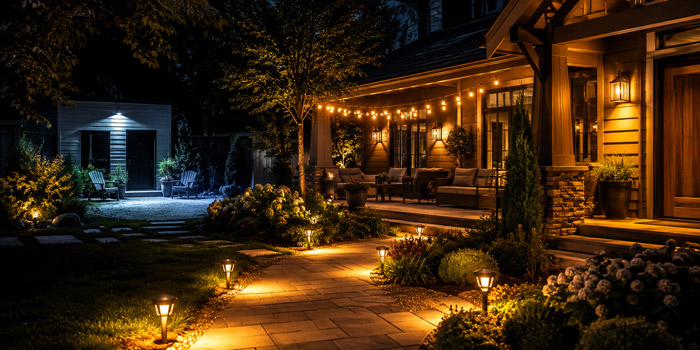
Choosing the right color for outdoor lighting affects visibility, comfort, safety, and the overall appearance of a property. In most residential settings, warm white light is the best general choice because it creates a welcoming atmosphere without producing excessive glare. However, different outdoor areas may benefit from different color temperatures(CCT).
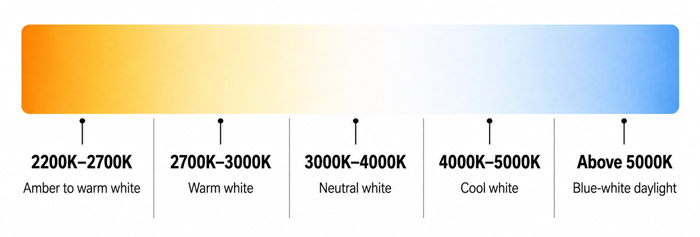
Light color is usually measured in Kelvin (K). Lower Kelvin values produce warmer, more yellow light, while higher values create cooler, whiter, or slightly blue light.
|
Color Temperature |
Appearance |
Best Uses |
Main Benefits |
|---|---|---|---|
|
2200K–2700K |
Amber to warm white |
Gardens, patios, decorative fixtures |
Relaxing, inviting, less disruptive at night |
|
2700K–3000K |
Warm white |
Entrances, porches, pathways, exterior walls |
Comfortable visibility and natural appearance |
|
3000K–4000K |
Neutral white |
Driveways, stairs, garages, work areas |
Clearer visibility and stronger contrast |
|
4000K–5000K |
Cool white |
Commercial spaces and security-focused areas |
Bright appearance and high visual clarity |
|
Above 5000K |
Blue-white daylight |
Limited specialized applications |
Very bright, but often harsh outdoors |
Warm White: The Best Choice for Most Homes
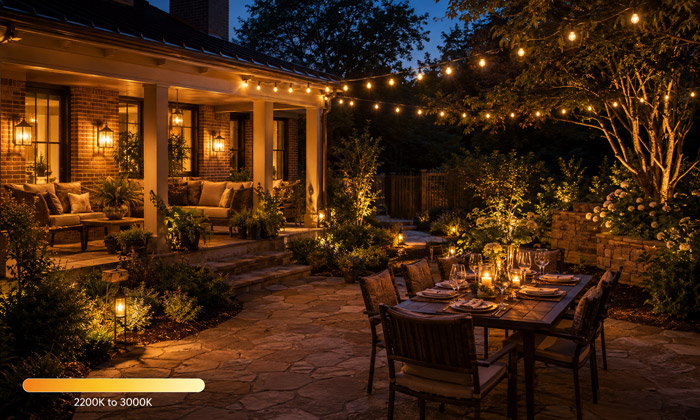
For patios, porches, gardens, and outdoor dining areas, lighting between 2200K and 3000K is usually the most effective. Its soft yellow tone resembles traditional incandescent light and creates a calm, comfortable environment.
Warm white light also complements natural materials such as wood, brick, stone, and plants. It makes landscaping appear richer and gives exterior spaces a more refined look. Because it feels less intense than cool white light, it can illuminate an area without making it look overly bright.
A color temperature of around 2700K is ideal for decorative and social spaces. For entrances and pathways that require slightly better visibility, 3000K provides a useful balance between warmth and clarity.
Neutral White for Functional Areas
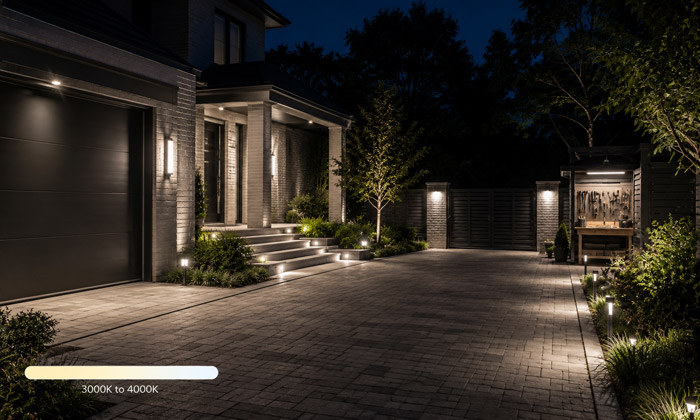
Neutral white lighting, usually between 3000K and 4000K, is suitable for areas where visibility is more important than atmosphere. It works well around driveways, steps, garages, gates, and outdoor workspaces.
This light produces stronger contrast than warm white, making edges, surface changes, and obstacles easier to identify. It can therefore improve safety in locations where people walk, park vehicles, or perform tasks after dark.
However, neutral white should be used carefully near seating areas or bedroom windows. If the fixtures are too bright or poorly directed, the light may feel uncomfortable and create unnecessary glare.
Cool White for Security and Commercial Use
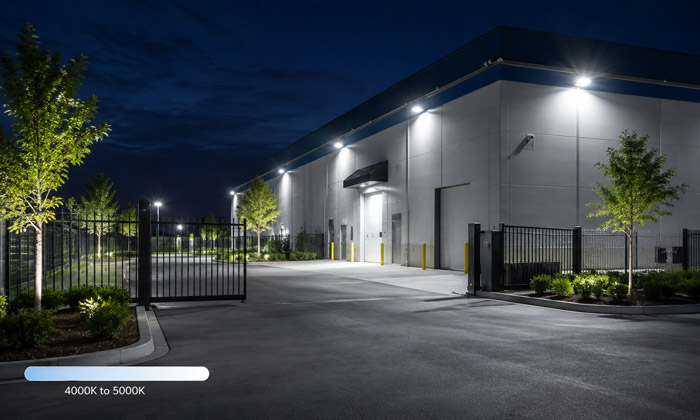
Cool white lighting between 4000K and 5000K creates a crisp, bright appearance. It is often used around warehouses, parking areas, building perimeters, and other locations that require broad illumination.
Although cool white light may improve visual alertness, it is not always the best choice for residential landscapes. Its blue-toned appearance can make gardens feel cold and reduce the relaxing character of patios or courtyards. Bright cool light can also become distracting when it shines into nearby homes or directly into people’s eyes.
For home security, good fixture placement is often more important than choosing the highest color temperature. A properly shielded 3000K or 4000K light can provide clear visibility while producing less glare than an extremely bright blue-white lamp.
Amber Light for Gardens and Nighttime Comfort
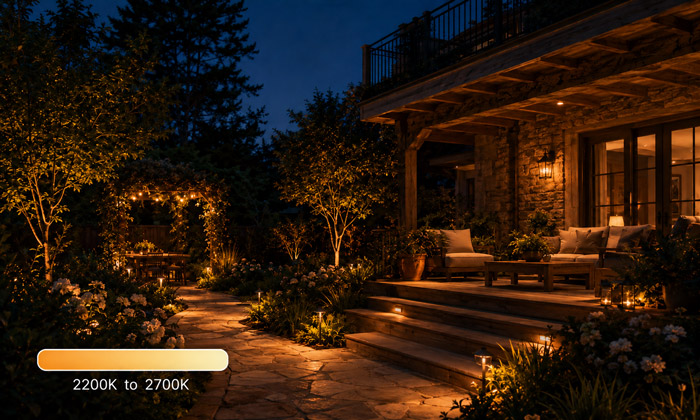
Amber-toned lighting between 2200K and 2700K is especially effective for gardens, balconies, and quiet outdoor spaces. It creates a subtle glow that highlights plants and architectural details without dominating the environment.
Because amber light contains less blue light, it generally feels gentler at night. It is a practical option for properties where outdoor lights remain on for several hours. It can also reduce visual disturbance compared with intense cool white lighting.
Amber light is less suitable for areas that require detailed visibility, such as workshops or large driveways. In those locations, it can be combined with brighter task lighting that is activated only when needed.
Avoid Excessively Blue Outdoor Lighting
Lighting above 5000K often appears harsh in residential environments. It may produce strong glare, make colors look unnatural, and create excessive contrast between illuminated and dark areas. This contrast can make it harder for the eyes to adjust when moving through the property.
Very cool lighting can also contribute to light pollution when fixtures are unshielded or aimed upward. Choosing warmer lamps, reducing unnecessary brightness, and directing light downward can create a safer and more attractive result.
For most homes, use 2700K lighting around patios, gardens, and decorative areas. Choose 3000K for entrances and pathways, and consider 3500K to 4000K only for driveways, garages, or security areas that need clearer visibility.
The best outdoor lighting is not simply the brightest option. It should provide enough light for the intended activity while controlling glare and preserving the natural nighttime atmosphere. Warm and neutral white colors usually offer the most effective combination of comfort, safety, and visual appeal.
How many lumens are needed for outdoor lighting?
The required brightness depends on the application. Path lights usually need 100–200 lumens per fixture, porch lights often require 400–800 lumens, and security floodlights may need 1,000–3,000 lumens.
Using several moderate-output fixtures generally creates more even lighting than relying on one extremely bright lamp.
What IP rating is best for outdoor lights?
Outdoor fixtures should have an IP44 rating or higher for covered areas such as porches.
Exposed wall lights, garden fixtures, and pathway lights usually need IP65 protection against rain and dust. Fixtures installed near pools, fountains, or locations vulnerable to temporary immersion may require IP67 or IP68 ratings.
Are low-voltage outdoor lights better than standard-voltage lights?
Low-voltage systems are often preferred for landscaping because they are safer, easier to install, and more flexible when fixtures need to be repositioned.
Standard-voltage lighting is better suited to powerful wall lights, floodlights, and permanent security installations but normally requires professional wiring.
See also: Low Voltage Pathway Lights vs. High Voltage Lighting: Which Is Better for Outdoor Use?
How long do outdoor LED lights usually last?
Quality outdoor LED fixtures commonly provide 25,000–50,000 operating hours.
Their actual lifespan depends on heat management, driver quality, weather protection, installation conditions, and daily operating time. Sealed fixtures with replaceable components can offer better long-term value.
Are solar outdoor lights reliable throughout the year?
Solar lights can perform well in locations receiving several hours of direct sunlight each day.
Their brightness and operating time may decrease during cloudy weather, winter, or when panels are shaded. They are suitable for decorative and pathway lighting, while wired systems are usually more dependable for entrances and security areas.
