
1. Elegant Minimalist Design
2. Precise Light Direction
3. Simple and Flexible Installation
4. Improved Outdoor Safety
5. Enhanced Landscape Atmosphere
6. Efficient Use of Space
7. Energy-Efficient Illumination
8. Weather-Resistant Performance
FAQs
Outdoor lighting should provide practical illumination without overwhelming the landscape. An outdoor spike light with a designer curved arm and minimalist appearance achieves this balance by combining flexible installation, controlled lighting, and modern visual appeal. It is especially suitable for gardens, pathways, lawns, flower beds, and architectural landscapes.
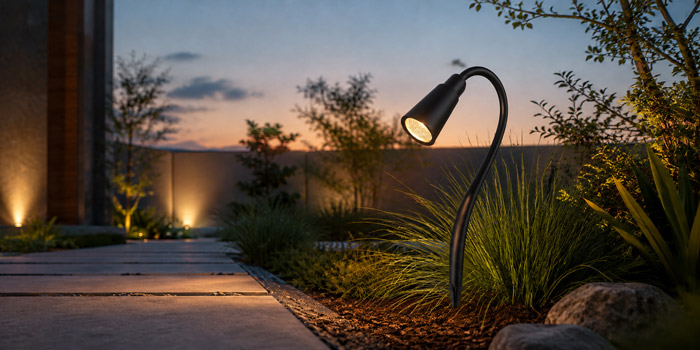
The clean shape and curved arm create a refined appearance that blends naturally with contemporary outdoor spaces. Unlike bulky landscape fixtures, a minimalist spike light adds visual interest without distracting from plants, pathways, or architectural features.
The curved arm also gives the fixture a softer and more distinctive silhouette. It can function as both a lighting product and a subtle decorative element during the daytime.
A curved-arm design positions the light source away from the mounting point, helping direct illumination toward a specific area. This makes the fixture effective for highlighting:
- Trees and shrubs
- Flowers and garden sculptures
- Pathway edges
- Exterior walls
- Landscape textures
More accurate positioning reduces unnecessary light spill and creates a cleaner, more intentional lighting effect.
3. Simple and Flexible Installation
The spike base can be inserted directly into soil, grass, gravel, or garden beds. Installation usually requires less structural work than wall-mounted or permanently embedded fixtures.
The light can also be repositioned when plants grow, landscaping changes, or a different lighting arrangement is needed. This flexibility makes it useful for both permanent landscapes and seasonal garden displays.
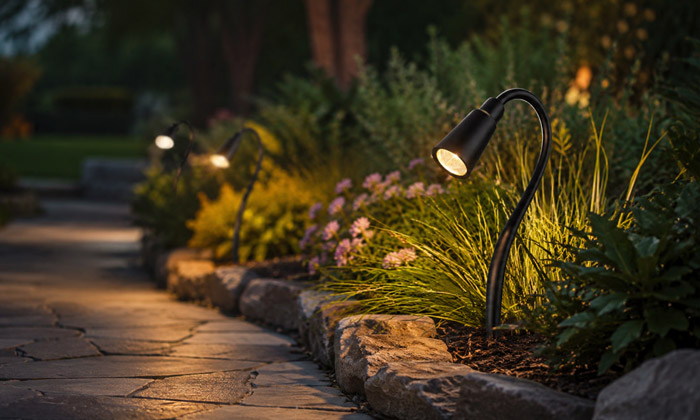
Strategically placed spike lights can illuminate pathway boundaries, steps, planting areas, and other potential obstacles. Better visibility helps people move through outdoor spaces more safely after dark.
Because the light can be aimed precisely, important areas can be illuminated without producing excessive glare.
5. Enhanced Landscape Atmosphere
Outdoor spike lights add depth and contrast to a garden at night. They can create focused pools of light, emphasize plant shapes, and produce attractive shadows.
A designer curved-arm model is particularly effective for creating a sophisticated atmosphere in residential gardens, hotel landscapes, restaurant terraces, courtyards, and commercial outdoor spaces.
The narrow spike and compact body require very little ground space. This is valuable in densely planted gardens or narrow landscape borders where larger fixtures would be difficult to install.
Its slim structure also helps the fixture remain visually unobtrusive during the day.
7. Energy-Efficient Illumination
Many modern outdoor spike lights use LED technology. LED light sources generally consume less electricity and last longer than traditional outdoor bulbs. This can reduce energy use, replacement frequency, and routine maintenance.
For the best results, the fixture should have an appropriate beam angle and brightness level for its intended purpose. Accent lighting usually requires less output than pathway or security lighting.
8. Weather-Resistant Performance
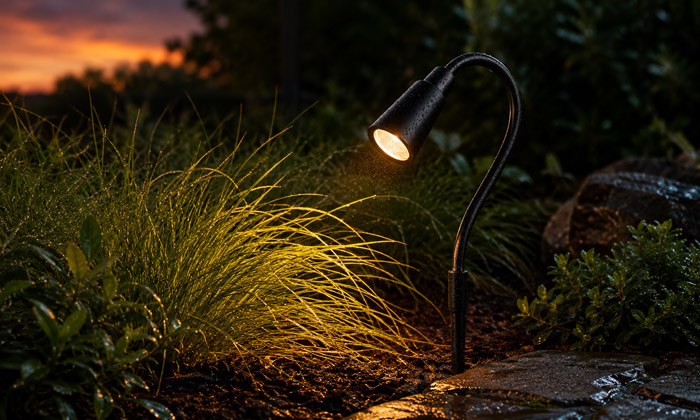
A properly designed outdoor spike light is made to withstand rain, dust, moisture, and temperature changes. Durable materials such as aluminum, stainless steel, or corrosion-resistant coated metal can support long-term outdoor use.
The fixture’s IP rating should always be checked before installation. A higher level of water and dust protection is important for exposed garden locations.
What color temperature is best for outdoor spike lights?
Warm white light between 2700K and 3000K is ideal for gardens, patios, and residential landscapes because it creates a comfortable atmosphere.
Neutral white between 3500K and 4000K is better for modern architecture and areas requiring clearer visibility.
See also: What Are CCT and CRI in Garden Lights?
How many lumens should an outdoor spike light have?
A decorative garden spike light generally requires 100 to 300 lumens, while trees, walls, and larger landscape features may need 300 to 700 lumens.
The appropriate output depends on the size of the illuminated object and the required brightness.
Are 12V outdoor spike lights safer than mains-voltage models?
Low-voltage 12V spike lights are widely used in gardens because they reduce electrical risk and are suitable for areas exposed to moisture.
However, they require a compatible outdoor transformer with sufficient capacity for the complete lighting system.
How far apart should outdoor spike lights be installed?
Spike lights are commonly positioned 1.5 to 3 metres apart, depending on brightness, landscape layout, and the desired visual effect.
Closer spacing creates continuous illumination, while wider spacing produces separate accent-lighting zones.
Are solar or wired spike lights better for landscape lighting?
Solar spike lights are convenient where electrical wiring is unavailable, but their brightness depends on sunlight and battery capacity.
Wired models generally provide more consistent output, longer operating times, and better performance for professional landscape projects.
