

Understanding the meaning of “Type A bulb”
Key characteristics of a Type A bulb
Common Type A bulb sizes
How Type A bulbs compare with other bulb shapes
Incandescent vs LED Type A bulbs
Typical uses of a Type A bulb
How to choose the right Type A bulb
Why the Type A bulb remains relevant
Common misconceptions about Type A bulbs
FAQs
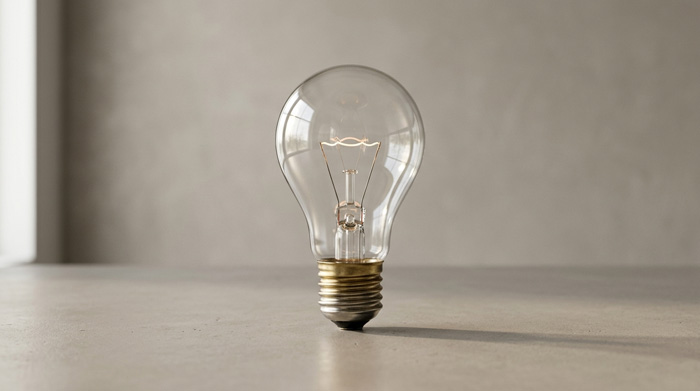
When people shop for light bulbs, they often notice letter-and-number combinations on packaging and product listings, such as A19, BR30, PAR38, or G25. Among these, the Type A bulb is one of the most familiar and widely used forms of electric lighting. It is the classic household bulb shape that most people picture when they hear the word “light bulb.” Even in an age dominated by LEDs, smart lighting, and specialty fixtures, the Type A bulb remains a standard reference point in homes, offices, hotels, and retail settings around the world.
A Type A bulb is defined primarily by its shape. The “A” stands for “Arbitrary” or, more practically in modern usage, the standard pear-shaped or teardrop-shaped bulb profile used in general lighting. This shape includes a rounded top that narrows toward the base, creating a simple form that fits a broad range of lamps, ceiling fixtures, sconces, vanity lights, and other everyday lighting applications. Because it is so common, many people use Type A bulbs without ever realizing that the shape itself has a technical classification.
The Type A bulb is important not only because of its shape, but because it represents the baseline of general-purpose lighting. For decades, incandescent Type A bulbs were the default bulb in residential settings. Today, LED versions of Type A bulbs have largely replaced incandescent and compact fluorescent models, offering better energy efficiency, longer lifespan, and lower maintenance costs while preserving the familiar appearance and light distribution people expect.
Understanding the meaning of “Type A bulb”
To understand what a Type A bulb is, it helps to break down the naming system used in lighting. In bulb terminology, the letter refers to the bulb’s shape, while the number usually refers to its diameter at the widest point. That diameter is commonly measured in eighths of an inch in the United States.
For example:
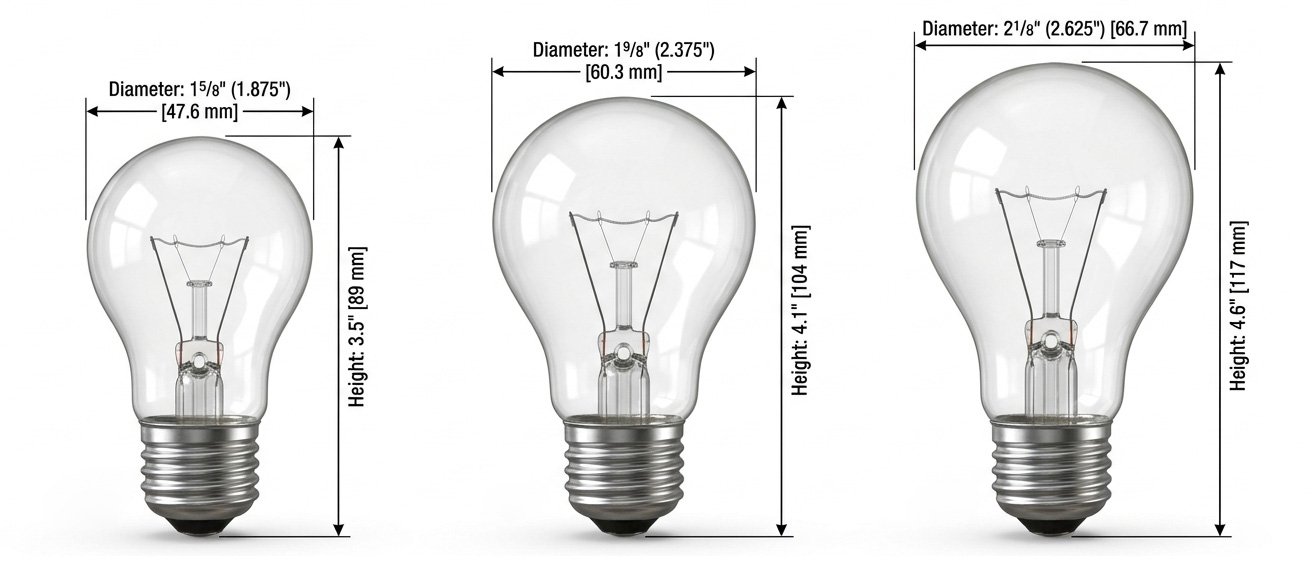
- A19 means a Type A bulb with a diameter of 19 eighths of an inch, or 2.375 inches.
- A15 means a smaller Type A bulb with a diameter of 15 eighths of an inch, or 1.875 inches.
- A21 means a larger Type A bulb with a diameter of 21 eighths of an inch, or 2.625 inches.
Among these, A19 is the most common general household bulb size. If you buy a standard LED bulb for a table lamp or ceiling light in many countries, there is a good chance it is an A19 bulb with a medium screw base.
Key characteristics of a Type A bulb
A Type A bulb is known for several practical characteristics that make it suitable for general illumination.
First, it has a versatile shape. The rounded, omnidirectional design allows it to spread light broadly rather than projecting it in a narrow beam. This makes it ideal for spaces where even, comfortable ambient lighting is preferred.
Second, it is compatible with many common fixtures. Type A bulbs are frequently used in table lamps, floor lamps, bedroom lamps, pendant fixtures, and basic ceiling-mounted sockets. Their popularity means they are available in a wide range of wattages, brightness levels, color temperatures, and technologies.
Third, Type A bulbs are available in multiple lighting technologies, including incandescent, halogen, compact fluorescent, and LED. Although LEDs now dominate the market, the shape category remains the same.
Fourth, they come with different base types. In many regions, the most common base for a Type A bulb is the medium Edison screw base, such as E26 in North America or E27 in many other markets. However, smaller Type A bulbs may also use candelabra or intermediate bases depending on the fixture.
See also: Are E27 Socket Light Bulbs Universal?
Common Type A bulb sizes
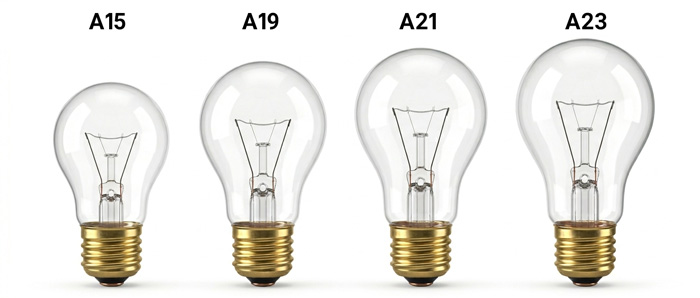
The table below shows some widely used Type A bulb sizes and their typical applications.
| Bulb Type | Diameter | Typical Uses | Notes |
|---|---|---|---|
| A15 | 1.875 inches | Ceiling fans, small lamps, appliances, decorative fixtures | Compact version of the standard shape |
| A19 | 2.375 inches | Table lamps, floor lamps, ceiling fixtures, general household lighting | Most common standard household bulb |
| A21 | 2.625 inches | Large lamps, high-output fixtures, areas needing more brightness | Larger bulb with higher light output potential |
| A23 | 2.875 inches | Specialty applications, some high-lumen fixtures | Less common in standard residential use |
Although size matters for fit and appearance, performance is not determined by size alone. A smaller LED bulb may outperform a larger incandescent bulb in brightness and efficiency. That is why consumers should look at lumen output, color temperature, and base type in addition to the bulb shape.
How Type A bulbs compare with other bulb shapes
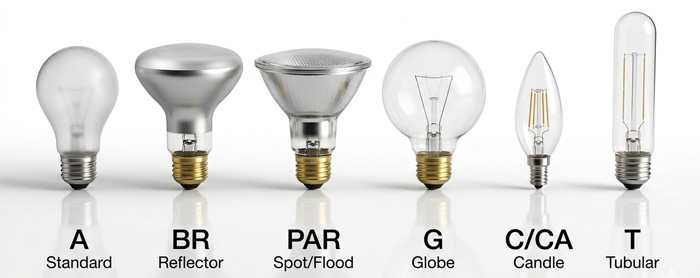
Type A bulbs are only one category in a larger lighting ecosystem. Different bulb shapes serve different purposes, and understanding the comparison helps explain why Type A bulbs are so widely used.
| Shape | Description | Best For | Light Pattern |
|---|---|---|---|
| A | Classic pear-shaped bulb | General household lighting | Broad, general illumination |
| BR | Bulged reflector bulb | Recessed cans, flood lighting | Wide directional beam |
| PAR | Parabolic aluminized reflector | Spotlights, outdoor lighting, accent lighting | Controlled directional beam |
| G | Globe bulb | Vanity mirrors, decorative fixtures | Soft, even light in a rounded form |
| C / CA | Candle or flame shape | Chandeliers, sconces, decorative lighting | Decorative ambient lighting |
| T | Tubular bulb | Appliances, picture lights, specialty fixtures | Varies by fixture |
Compared with reflector bulbs like BR and PAR, Type A bulbs are less specialized. They are designed for broad usefulness rather than tight beam control. That is one reason they remain the go-to choice for everyday rooms such as bedrooms, living rooms, hallways, and offices.
Incandescent vs LED Type A bulbs
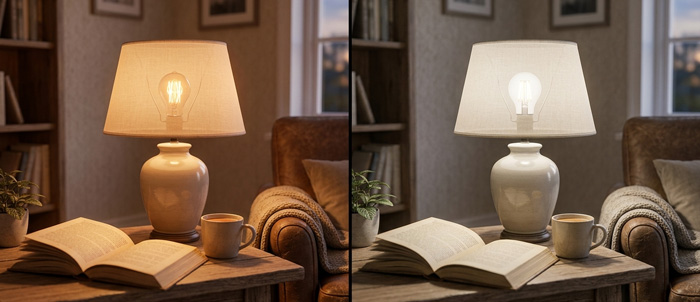
Historically, the Type A bulb was most often associated with incandescent lighting. These older bulbs generated light by heating a tungsten filament until it glowed. They were inexpensive and produced warm, pleasant light, but they were inefficient and had relatively short lifespans.
Modern LED Type A bulbs have changed the market dramatically. They mimic the familiar shape of old incandescent bulbs while using semiconductor technology to produce light far more efficiently. This shift has made Type A bulbs more economical and environmentally friendly.
Here is a simple comparison:
| Feature | Incandescent Type A Bulb | LED Type A Bulb |
|---|---|---|
| Energy Use | High | Low |
| Lifespan | Short | Long |
| Heat Output | High | Low |
| Upfront Cost | Lower | Higher |
| Long-Term Cost | Higher | Lower |
| Dimmability | Often natural and smooth | Common, but may require compatible dimmer |
| Environmental Impact | Less efficient | More efficient |
For most buyers today, the LED Type A bulb is the preferred option because it balances familiar form with modern performance.
Typical uses of a Type A bulb
The main reason Type A bulbs are so popular is that they fit into everyday life almost everywhere. In homes, they are used in bedside lamps, living room lamps, hall lights, and basic ceiling fixtures. In offices, they often appear in desk lamps and decorative ambient fixtures. In hospitality settings such as hotels and restaurants, they are common in guest room lighting and accent lamps. In retail and public spaces, Type A bulbs are often chosen when a warm, approachable, non-technical look is desired.
Their usefulness comes from the fact that they provide general illumination, which means they are not designed primarily for spotlighting or specialized task lighting. Instead, they create a comfortable overall lighting environment.
How to choose the right Type A bulb
Choosing the right Type A bulb involves more than selecting the correct shape. Consumers should consider several additional factors.
1. Check the bulb size
Even though A19 is the most common standard, not every fixture is designed for the same bulb dimensions. Ceiling fans, for instance, often need smaller bulbs such as A15.
2. Confirm the base type
The bulb must have the correct base to fit the socket. A common mistake is assuming that all standard-looking bulbs use the same base. E26, E27, E12, and other base types are not interchangeable in all fixtures.
3. Look at brightness in lumens
Older consumers often think in watts, but lumens are a better measure of actual brightness. A modern LED Type A bulb may use very little power while still producing strong illumination.
4. Choose the right color temperature
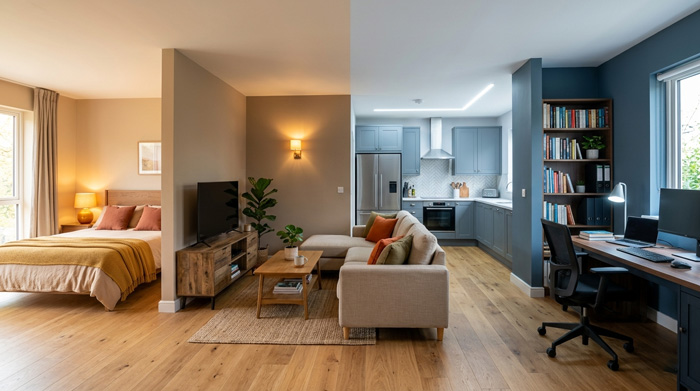
Warm white light tends to create a cozy and relaxed atmosphere, while cool white or daylight tones feel brighter and more energetic. Bedrooms and living rooms often benefit from warmer tones, while kitchens, home offices, and study areas may benefit from cooler tones.
5. Consider dimmability
Not all bulbs dim properly. If the fixture is connected to a dimmer switch, the bulb should be specifically labeled as dimmable and compatible with the dimmer type.
6. Think about appearance
Some Type A bulbs have frosted finishes for softer diffusion, while others are clear and show decorative filaments. The visible look of the bulb can matter in open fixtures.
Why the Type A bulb remains relevant
It is easy to assume that the rise of smart lighting and modern design would make traditional bulb shapes obsolete. Yet the Type A bulb remains relevant because it combines three essential advantages: familiarity, compatibility, and versatility.
Familiarity matters because people recognize this shape instantly and understand how it will look and behave in a fixture. Compatibility matters because countless fixtures are built around Type A dimensions and bases. Versatility matters because the bulb can support traditional incandescent-style warmth, efficient LED performance, decorative filament aesthetics, and even smart connectivity.
In other words, the Type A bulb has survived technological change not because it is old-fashioned, but because its design continues to meet practical needs.
Common misconceptions about Type A bulbs
One common misconception is that “Type A” refers to a specific technology, such as incandescent or LED. In reality, Type A refers to the shape, not the internal lighting method.
Another misconception is that all Type A bulbs are the same size. As discussed earlier, A15, A19, and A21 are all Type A bulbs, but they differ in diameter and typical use.
A third misconception is that higher wattage always means better lighting. With LEDs, low wattage can still deliver high brightness, so lumen output is more useful than wattage when comparing bulbs.
Finally, some buyers assume that a Type A bulb will fit any fixture designed for a “regular bulb.” This is not always true. Enclosed fixtures, ceiling fans, decorative shades, and compact lamps may have size or heat limitations.
FAQs
Can a Type A bulb be used in an enclosed fixture?
Not every Type A bulb is suitable for enclosed fixtures. Many LED bulbs trap extra heat when installed inside closed glass covers, which can shorten lifespan or reduce performance. Always check the packaging or product specifications for “enclosed fixture rated” before using one in a sealed ceiling light or lantern.
Are Type A bulbs suitable for outdoor use?
A Type A bulb can be used outdoors only if the bulb is rated for damp or wet locations and the fixture offers proper protection. Standard indoor bulbs may fail early when exposed to moisture, temperature swings, or direct weather. For porches, garages, and exterior wall lights, choose an outdoor-rated model.
What CRI is best for a Type A bulb?
CRI, or Color Rendering Index, measures how accurately a bulb shows colors. For most homes, a CRI of 80 or above is acceptable, while 90+ is better for kitchens, bathrooms, closets, and spaces where color clarity matters. Higher CRI bulbs usually make skin tones, fabrics, wood finishes, and food look more natural.
Are smart bulbs available in Type A shape?
Yes, many smart bulbs are made in the Type A shape, especially A19. They often support app control, scheduling, voice assistants, dimming, and color tuning. Before buying, make sure the bulb matches your socket type, fixture size, Wi-Fi or hub setup, and any wall dimmer already installed.
Why does a Type A LED bulb flicker or buzz?
Flickering or buzzing usually happens because of dimmer incompatibility, unstable power supply, poor driver quality, or loose electrical contact. In many cases, replacing an old dimmer with an LED-compatible dimmer solves the problem. Choosing a higher-quality bulb can also improve stability, comfort, and visual performance.
