

What “Daylight” means in lighting
Lumens and color temperature are not the same thing
Typical Daylight color temperature range
So how many lumens can a Daylight bulb have?
Why Daylight bulbs often seem brighter
How to choose the right lumen level for a Daylight bulb
Why the title question is misleading
Daylight vs Soft White vs Cool White
Common buying mistakes
The best direct answer
FAQs
When people ask, “How many lumen is daylight?”, they often mix up two different lighting terms. In everyday English, daylight can refer to natural sunlight. But in lighting products, bulb packaging, and interior lighting discussions, Daylight usually refers to a color temperature range, not to the sun itself. That is an important distinction, because lumens measure brightness, while Kelvin measures the color appearance of light.
This means there is no single fixed answer to the question. A Daylight bulb does not have one standard lumen value simply because the word Daylight does not describe brightness. It describes the tone of the light, usually a cooler, whiter appearance that resembles bright daytime conditions. One Daylight bulb may produce 450 lumens, another may produce 800 lumens, and another may produce 1600 lumens or more. They can all be called Daylight as long as they fall within a similar color temperature range.
So the most accurate answer is simple: Daylight is not a lumen rating. It is a color temperature label. If you want to know how bright a Daylight bulb is, you have to look at its lumen output separately.
What “Daylight” means in lighting
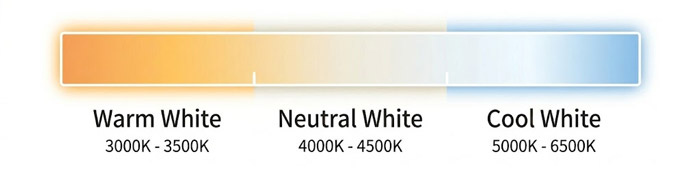
In the lighting industry, Daylight usually refers to a bulb with a cool white color temperature, often somewhere around 5000K to 6500K. This range is designed to look crisp, bright, and clean. It is visually different from warm white bulbs, which tend to look softer and more yellow.
That is why the term can be confusing. People often assume that Daylight means “very bright,” but that is not necessarily true. A bulb labeled Daylight may look sharper or cooler than a warm bulb, yet it may not actually produce more lumens. In other words, a bulb can look more like daytime in color without being especially powerful in brightness.
A useful way to think about it is this. If Kelvin tells you what color the light looks like, lumens tell you how much light the bulb gives off. Those two measurements work together, but they are not interchangeable.
Lumens and color temperature are not the same thing
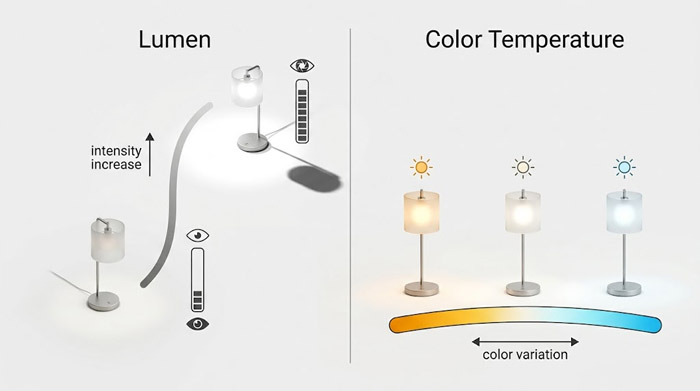
One of the biggest mistakes people make when shopping for bulbs is assuming that Daylight automatically means brighter light. In reality, two bulbs can have the same Daylight color temperature but completely different lumen outputs. Likewise, two bulbs can have the same lumen output but different color temperatures.
See Also: What Are CCT and CRI in Garden Lights?
Here is the key difference:
- Lumens measure brightness
- Kelvin measures color temperature
- Daylight usually refers to the Kelvin side, not the lumen side
For example, an 800-lumen bulb at 6500K may be sold as a Daylight bulb. Another 800-lumen bulb at 2700K may be sold as Soft White. Both bulbs are equally bright in lumen terms, but they look very different. The Daylight bulb appears cooler and more bluish-white, while the Soft White bulb appears warmer and more yellow.
This is why the question “How many lumen is daylight?” needs to be interpreted carefully. The better question is often: How many lumens should a Daylight bulb have for a particular room or task?
Typical Daylight color temperature range
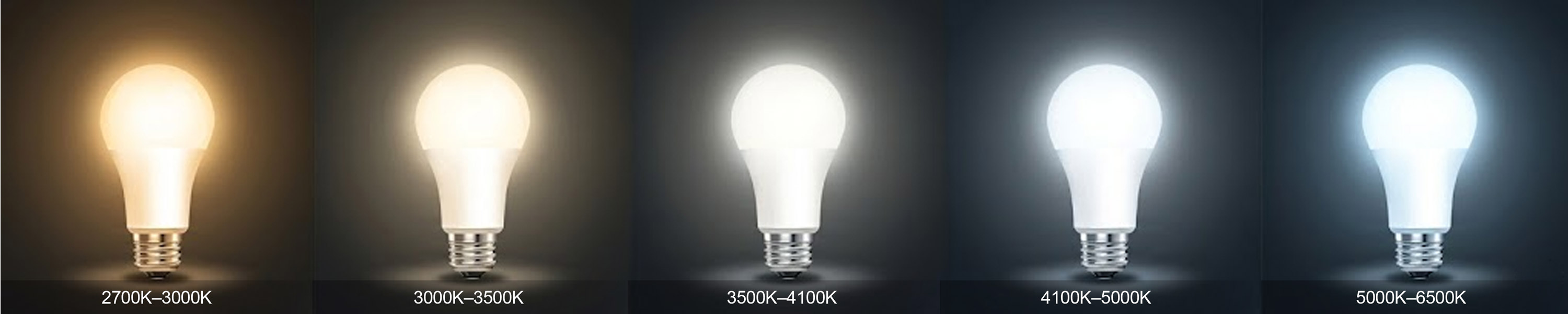
Although brands vary slightly, most Daylight bulbs fall into a fairly consistent color range. The table below shows the common categories used in consumer lighting.
|
Lighting label |
Typical color temperature |
Visual appearance |
|---|---|---|
|
Soft White |
2700K–3000K |
Warm, yellowish, cozy |
|
Warm White |
3000K–3500K |
Slightly warm, balanced |
|
Neutral White / Cool White |
3500K–4100K |
Clean, more neutral |
|
Bright White / Cool Daylight |
4100K–5000K |
Crisp, whiter light |
|
Daylight |
5000K–6500K |
Cool, bright-looking, bluish-white |
This table makes the real point clear. The word Daylight belongs to the color appearance category. It tells you where the bulb sits on the warm-to-cool spectrum. It does not tell you whether the bulb produces 450 lumens or 2500 lumens.
So how many lumens can a Daylight bulb have?
A Daylight bulb can have almost any lumen output depending on its wattage, intended use, fixture type, and brand. There is no single standard brightness level attached to the Daylight label. Instead, Daylight bulbs are sold across many brightness categories.
The table below shows common lumen levels for Daylight bulbs used in homes and offices.
|
Typical bulb use |
Common lumen output |
Daylight option available? |
|---|---|---|
|
Decorative or small lamp bulb |
250–450 lumens |
Yes |
|
Standard household bulb |
450–800 lumens |
Yes |
|
Bright room lighting bulb |
800–1100 lumens |
Yes |
|
High-output bulb for larger rooms |
1100–1600 lumens |
Yes |
|
Utility, garage, or workspace bulb |
1600–2500+ lumens |
Yes |
This means a Daylight bulb might be quite dim, moderately bright, or extremely bright. The label Daylight tells you about the color. The lumen number tells you about the brightness.
That is why consumers should always check both numbers on the package. Looking only at the word Daylight may lead to the wrong choice.
Why Daylight bulbs often seem brighter

Even when two bulbs have the same lumen output, the Daylight version often appears brighter to people. This happens because cool white light can create a sharper, cleaner visual impression. It may make edges, paper, and high-contrast surfaces feel more defined.
That perceived effect comes from several factors:
- cooler light often looks clearer to the eye
- white and blue-white tones can feel more energetic than warm tones
- task-oriented spaces usually benefit from crisp-looking illumination
However, perception is not the same as measurement. A 800-lumen Daylight bulb is still 800 lumens. It may feel brighter than a warm bulb at the same lumen level, but the actual brightness rating remains the same.
This difference between visual impression and technical output is one reason why Daylight bulbs are popular in offices, kitchens, bathrooms, garages, and work areas. People often associate cooler light with alertness, cleanliness, and focus.
How to choose the right lumen level for a Daylight bulb
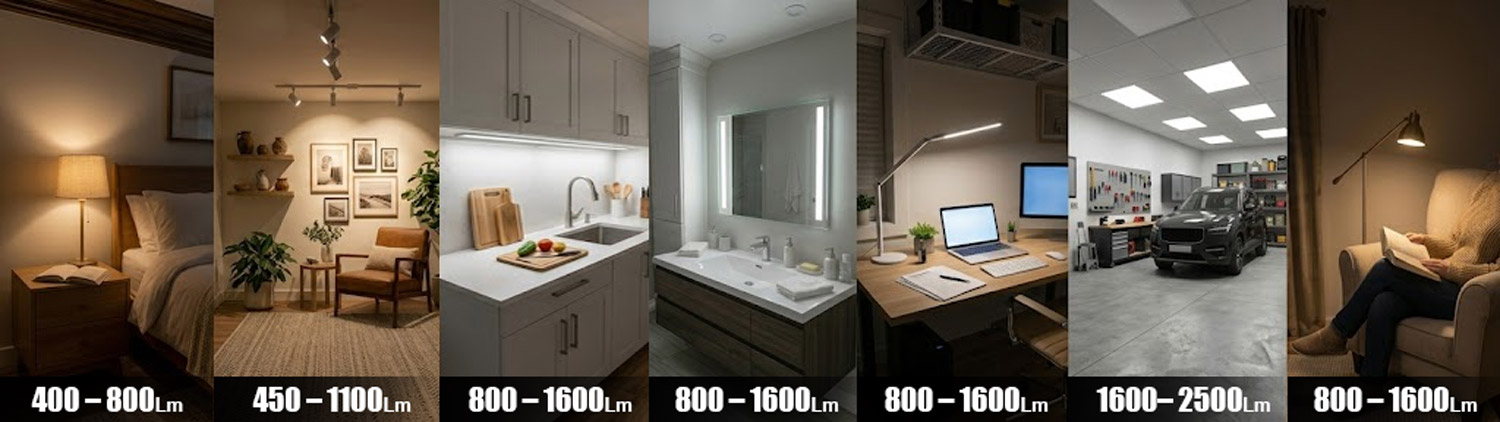
Since Daylight does not define brightness, the best way to choose a bulb is to decide first what kind of space you are lighting. Then choose the lumen level that matches the room’s purpose, while selecting Daylight only if you want that cool white look.
Here is a practical guide.
|
Room or purpose |
Suggested lumens per bulb |
Is Daylight a good fit? |
|---|---|---|
|
Bedside lamp |
400–800 lumens |
Usually not ideal unless you prefer cool light |
|
Living room accent lighting |
450–1100 lumens |
Possible, but many prefer warmer tones |
|
Kitchen task lighting |
800–1600 lumens |
Often yes |
|
Bathroom mirror lighting |
800–1600 lumens |
Often yes |
|
Home office desk area |
800–1600 lumens |
Yes |
|
Garage or workshop |
1600–2500+ lumens |
Yes |
|
Reading or detailed task lighting |
800–1600 lumens |
Often yes |
If the goal is comfort and relaxation, many people prefer warmer light. If the goal is visibility, contrast, and task performance, Daylight bulbs are often a stronger choice. Still, the lumen level should be selected based on the actual brightness needed in the room.
Why the title question is misleading
The phrase “How many lumen is daylight?” sounds natural, but technically it mixes two separate specifications. It is similar to asking how many inches a color is. The problem is not that the question is meaningless; the problem is that it combines one term for brightness with another term for color appearance.
A clearer version of the question would be one of these:
- How many lumens should a Daylight bulb have?
- Is a Daylight bulb brighter than a Soft White bulb?
- What lumen level is best for a Daylight bulb in a bedroom, kitchen, or office?
These questions are easier to answer because they separate brightness from color temperature. Once those two ideas are separated, choosing the right bulb becomes much simpler.
Daylight vs Soft White vs Cool White
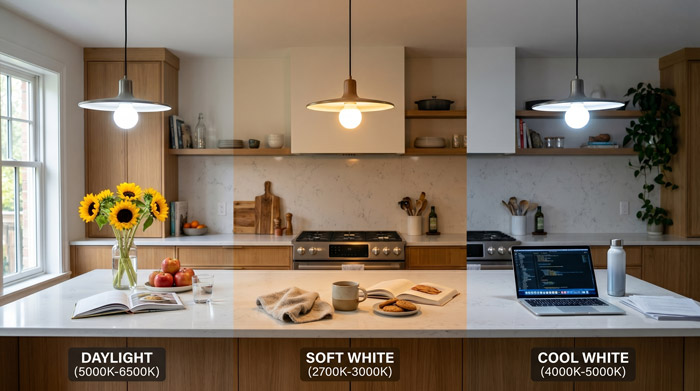
When consumers shop for bulbs, they are often choosing among three broad categories: Soft White, Cool White, and Daylight. The main difference is not brightness but mood and appearance.
Soft White bulbs create a warmer and more relaxed atmosphere. They are common in bedrooms, lounges, and living spaces where comfort matters. Cool White bulbs sit in the middle, offering a neutral or slightly crisp tone. Daylight bulbs push further into the cool range and are often chosen for spaces where visual clarity matters more than warmth.
This does not mean Daylight is always better. It simply means it serves a different purpose. In some rooms, Daylight can feel clean and productive. In others, it can feel too harsh. The right choice depends on how the space is used and what atmosphere you want to create.
Many buyers choose bulbs based only on one word on the box. That often leads to disappointment. A bulb may say Daylight, but if it only produces 450 lumens, it may still be too dim for a main room light. Another bulb may produce 1600 lumens, but if it is Soft White, it may still be very bright even though it looks warmer.
The smartest approach is to check three things together:
- the lumen rating for brightness
- the Kelvin rating for color temperature
- the intended room use for comfort and function
Once those three are considered together, the label Daylight becomes much more useful. It stops being a vague marketing word and becomes part of a practical lighting decision.
If someone asks, “How many lumen is Daylight?”, the best direct answer is this: Daylight itself does not have a fixed lumen value, because Daylight refers to color temperature, not brightness. A Daylight bulb can have a wide range of lumen outputs depending on the product.
In practical terms, many Daylight bulbs on the market fall somewhere between 450 and 1600 lumens, while high-output versions can go beyond that. The correct lumen level depends on whether the bulb is meant for a lamp, ceiling fixture, workspace, bathroom, or large room.
So the real answer is not one number. The real answer is that Daylight tells you the light’s color, and lumens tell you the light’s intensity.
Are Daylight bulbs good for makeup or bathroom mirrors?
Yes, Daylight bulbs are often preferred for bathroom mirrors and makeup areas because their cooler color temperature can provide a cleaner, more neutral-looking light.
This can make skin tone, contrast, and detail easier to see than under very warm lighting, especially when paired with even fixture placement around the mirror.
Can Daylight bulbs cause eye strain?
Daylight bulbs do not automatically cause eye strain, but they can feel harsh in certain environments if the brightness is too high, the bulb is exposed, or glare is not controlled.
Eye comfort depends more on fixture design, brightness balance, placement, and room use than on the Daylight label alone.
Are Daylight bulbs better for reading and studying?
They can be. Many people prefer Daylight bulbs for reading, studying, and desk work because the cooler tone may improve visual clarity and make text appear sharper.
Still, the best result depends on having enough lumens and reducing glare, rather than relying on color temperature alone.
Do Daylight bulbs work with dimmer switches?
Some do, but not all. If a Daylight LED bulb is not labeled dimmable, using it with a dimmer switch can cause flickering, buzzing, uneven performance, or shortened lifespan.
Always check both the bulb packaging and the dimmer compatibility before installation.
Are Daylight bulbs suitable for indoor plants?
Daylight bulbs can be useful for some indoor plants because cooler light is often associated with active growth, but ordinary household Daylight bulbs are not always strong enough to replace dedicated grow lights.
Plant needs depend on light intensity, coverage, daily duration, and species requirements, not just the Daylight label.
