

Choose the Best Outdoor Tree Lighting Style
Use Lights Designed for Outdoor Trees
Choose the Right Light Color
Keep the Light Color Consistent Across the Landscape
Measure the Tree Before Buying Lights
How Much String Lighting Do You Need for a Tree?
Inspect the Tree Before Adding Lights
Start at the Bottom of the Tree
Do Not Wrap Tree Lights Too Tightly
How to Attach Lights to a Tree Without Damaging It
How to Put Lights on a Small Outdoor Tree
How to Put Lights on a Large Outdoor Tree
Hide Cables and Connections Carefully
Plan the Outdoor Power Source
Use a Timer for Outdoor Tree Lights
Avoid Glare
Maintain Tree Lights Over Time
Frequently Asked Questions About Putting Lights on Outdoor Trees
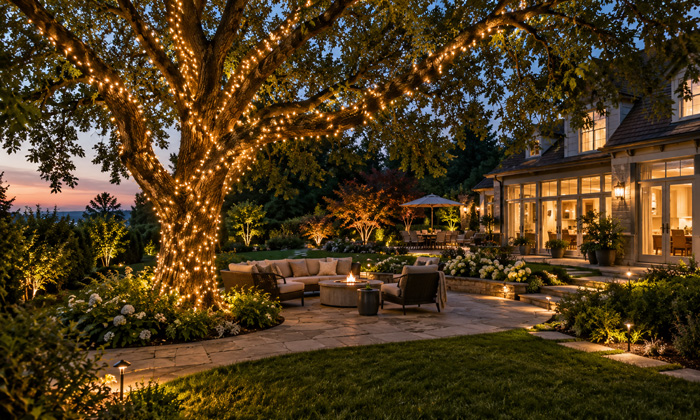
Putting lights on a tree outdoors can completely change the appearance of a garden after dark. A well-lit tree adds height, structure, warmth, and visual depth to the landscape, whether you are decorating a small ornamental tree near a patio or highlighting a large mature tree in a spacious backyard.
The key is not simply to wrap as many lights as possible around the branches. Good outdoor tree lighting should follow the natural shape of the tree, complement the surrounding garden, use weather-resistant equipment, and avoid damaging the trunk or branches.
This guide explains how to put lights on outdoor trees safely and attractively, with practical advice for trunks, branches, canopies, evergreen trees, ornamental trees, and large landscape trees.
Choose the Best Outdoor Tree Lighting Style
There is no single best way to put lights on an outdoor tree. The right technique depends on the tree and the effect you want to create.
Wrap Lights Around the Trunk
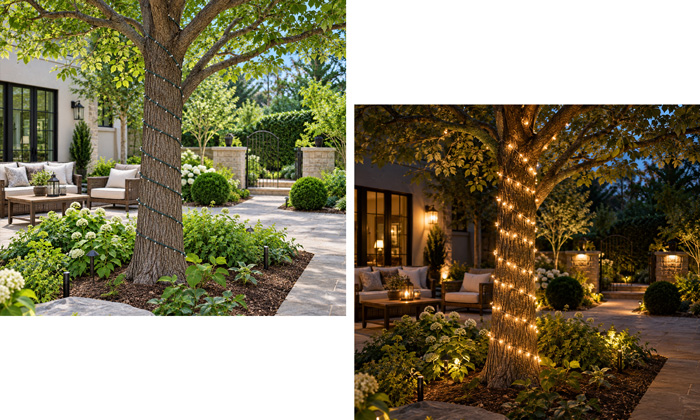
Wrapping lights around the trunk is one of the simplest and most effective outdoor tree lighting ideas.
Starting from the base, spiral the lights upward around the trunk with consistent spacing.
This creates a strong vertical feature and works especially well for trees near:
- patios;
- garden entrances;
- courtyards;
- pathways;
- outdoor kitchens;
- seating areas.
Trunk wrapping also provides a good foundation if you plan to continue the lighting onto the main branches.
Wrap the Trunk and Main Branches
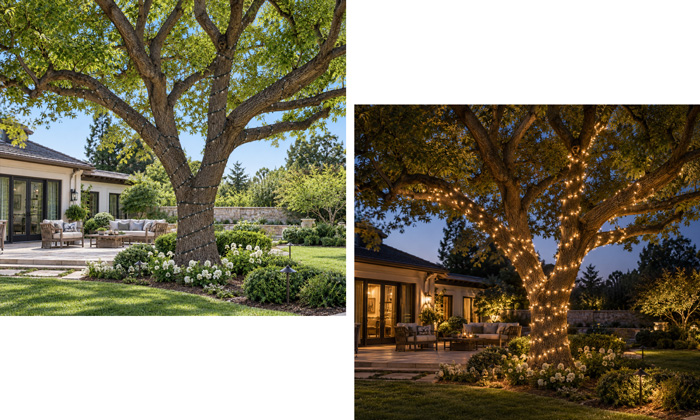
If the tree has attractive branching, continue the lights from the trunk onto its larger structural limbs.
This technique highlights the natural architecture of the tree.
Instead of wrapping every branch, concentrate on the main limbs that define its shape.
The result is usually more elegant and easier to maintain.
This method works particularly well on deciduous trees and trees with open canopies.
Place Lights Through the Canopy
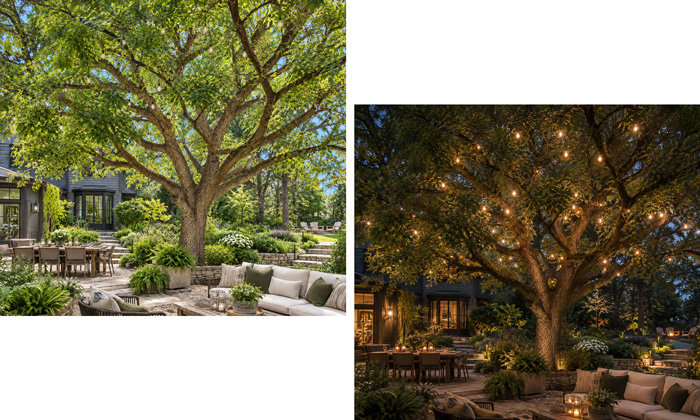
Another option is to distribute lights throughout the canopy rather than tightly wrapping the trunk.
This creates a softer, more atmospheric effect.
From a distance, the lights appear to float among the branches and foliage.
Canopy lighting works particularly well in:
- informal gardens;
- woodland-style landscapes;
- outdoor dining areas;
- large backyards;
- trees positioned behind seating areas.
The lights should be distributed at different depths rather than placed only around the outer edge of the canopy.
Combine Trunk and Canopy Lighting
For a prominent feature tree, the trunk, structural branches, and canopy can all be illuminated.
The trunk gives the tree definition while canopy lights create sparkle and depth.
However, avoid making every part of the tree equally bright.
Some darker sections should remain visible so that the tree retains dimension.
Use Lights Designed for Outdoor Trees
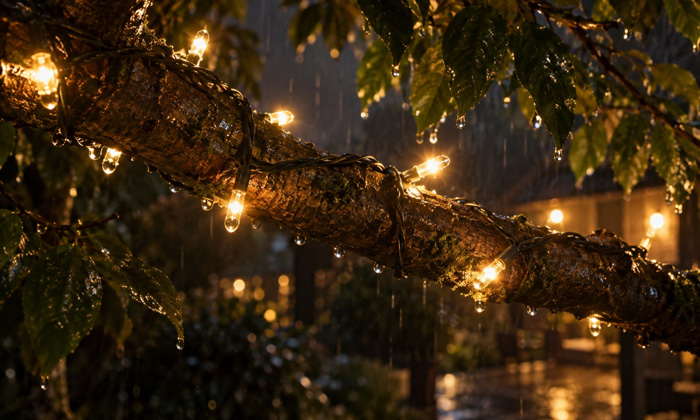
Outdoor tree lights must be suitable for exterior use.
Outdoor lighting is exposed to moisture, temperature changes, wind, dust, and occasional physical movement from branches.
Always check the product specifications before installation and use lighting that is clearly rated for outdoor conditions.
For most garden trees, LED lights are the preferred choice.
Why LED Lights Work Well on Outdoor Trees
LED string lights offer several advantages for landscape applications.
They generally:
- use less electricity;
- produce less heat;
- last longer than traditional incandescent lights;
- are available in long strands;
- come in many bulb sizes;
- work well with timers and outdoor lighting controls.
Small LED bulbs are particularly suitable for wrapping trees because they create a refined appearance without visually overpowering the bark and branches.
Choose the Right Light Color
The color of the lights has a major effect on the atmosphere of the garden.
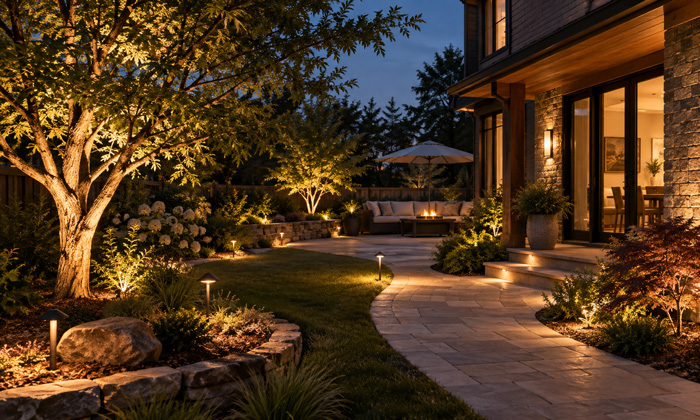
Warm White Lights
Warm white is usually the best choice for residential garden lighting because it works naturally with materials such as wood, stone, brick, bark, foliage, and other warm architectural finishes.
It creates a comfortable, inviting atmosphere and blends easily with most existing landscape lighting systems, making it a versatile option for illuminating outdoor trees, patios, pathways, and surrounding planting areas.
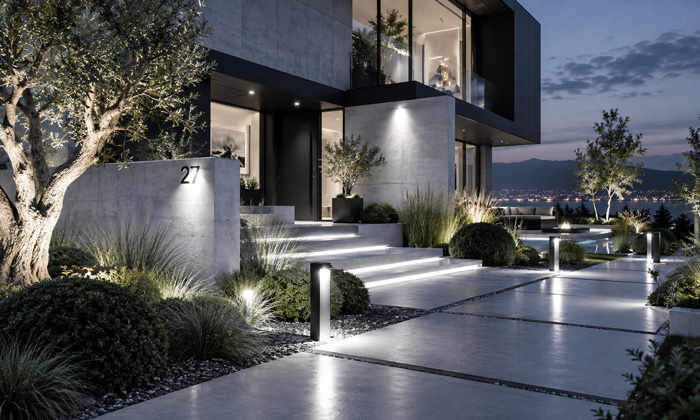
Cool White Lights
Cool white lighting has a brighter, crisper, and more contemporary appearance, making it a good match for gardens with modern architecture, concrete, steel, minimalist planting, and monochromatic materials.
However, it can feel too harsh in traditional gardens or landscapes with dense, naturalistic planting, where warmer light often creates a softer and more harmonious effect.
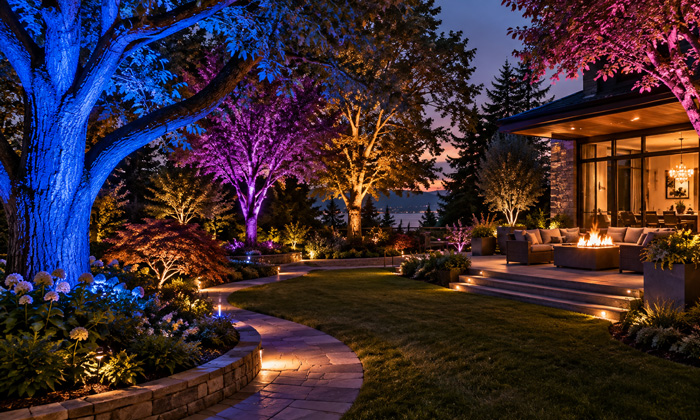
Colored Tree Lights
Colored lights are generally more suitable for seasonal decoration, special events, or festive displays.
For permanent garden lighting, one consistent shade of white usually creates a more sophisticated result.
Keep the Light Color Consistent Across the Landscape
If the garden already contains pathway lights, wall lights, spotlights, or deck lighting, try to keep the color temperature consistent.
For example, a tree wrapped in very cool white bulbs can look disconnected from a landscape illuminated with warm white path lights.
Visual consistency helps the garden feel like one coordinated lighting design rather than several unrelated lighting installations.
Measure the Tree Before Buying Lights
Before buying outdoor string lights, take time to measure the tree rather than estimating the amount of lighting based only on its height. The trunk circumference, the height of the section you plan to wrap, the number and length of the main branches, the spacing between each wrap, and the overall size of the canopy all affect how much lighting you will need. A shorter tree with a broad, spreading structure can easily require more string lights than a taller tree with a narrow trunk and compact canopy.
It is also a good idea to purchase slightly more lighting than your initial measurements suggest. Extra length gives you greater flexibility when transitioning from the trunk to the branches, adjusting the spacing, or extending the lights into parts of the canopy. Having a little additional length available also helps create a more even and natural-looking installation without forcing you to stretch the strands too tightly.
How Much String Lighting Do You Need for a Tree?
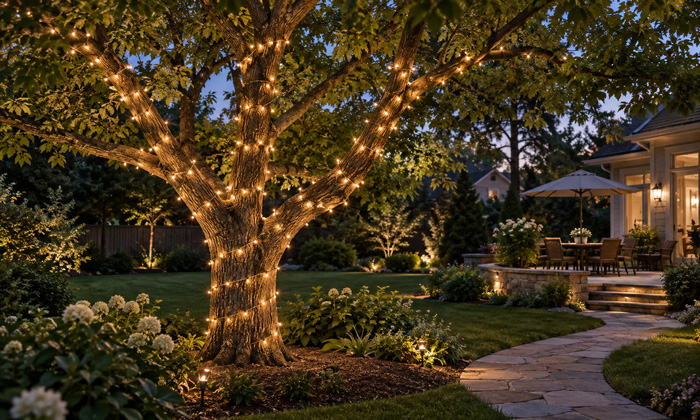
The amount of string lighting you need depends largely on how closely you plan to wrap the trunk and branches. Tighter spacing creates a brighter, more defined appearance but requires significantly more lighting, while wider spacing produces a softer and more relaxed effect. For most landscape-style installations, dense coverage is unnecessary, and consistent spacing is more important than wrapping every section closely. Before installation, decide which main branches you want to highlight rather than trying to cover the entire tree, as this will make it much easier to estimate the total length of string lights required.
Inspect the Tree Before Adding Lights
Before installing outdoor lights, inspect the tree carefully and avoid attaching lighting to branches that are dead, broken, cracked, diseased, unstable, or recently damaged. Any dead or unsafe branches should be pruned before installation, and it is also important to check for limbs that may interfere with roofs, structures, overhead cables, or other garden features. A healthy, well-maintained tree provides a safer and more reliable foundation for decorative lighting while also helping the finished installation look cleaner and more intentional.
Start at the Bottom of the Tree
For most wrapped tree lighting installations, begin at the base of the trunk and position the first section of the strand so it can connect comfortably to the outdoor power supply. From there, spiral the lights upward while keeping the spacing between each wrap as consistent as possible. The spacing does not need to be perfectly exact, but it should appear balanced when viewed from a distance. As you work, step back every few feet to check the overall effect and make adjustments where needed, especially if the tree is clearly visible from a patio, window, entrance, or other main viewing area.
Do Not Wrap Tree Lights Too Tightly
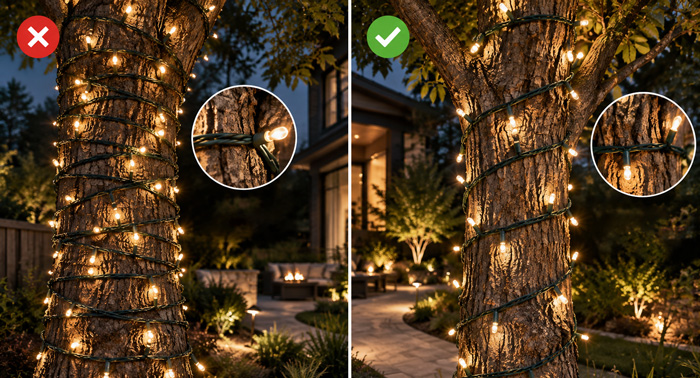
Outdoor tree lights should be secure, but they should never be pulled tightly against the bark. Because trees continue to grow and their trunks and branches gradually increase in diameter, wires that are wrapped too tightly can eventually press into the bark and cause damage. A slightly relaxed wrap allows the lights to follow the natural shape of the tree without creating unnecessary tension, which is especially important for permanent or semi-permanent installations. Young trees require even greater care because their trunks and branches can expand relatively quickly as they grow.
How to Attach Lights to a Tree Without Damaging It
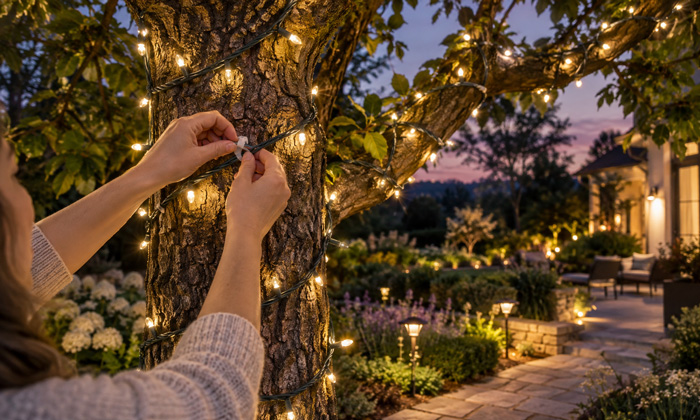
In many cases, spiral wrapping provides enough support to keep outdoor string lights in place without additional fasteners. When extra support is needed, choose removable fastening methods that will not cut into or injure the bark, and avoid using nails, screws, staples, or sharp metal clips directly on a living tree because they can damage both the bark and the electrical cable. Outdoor fastening products designed for string lights are a better choice, as they allow easier removal and adjustment while keeping the installation secure. Any fasteners used should remain loose enough to accommodate natural branch movement and future growth.
How to Put Lights on a Small Outdoor Tree
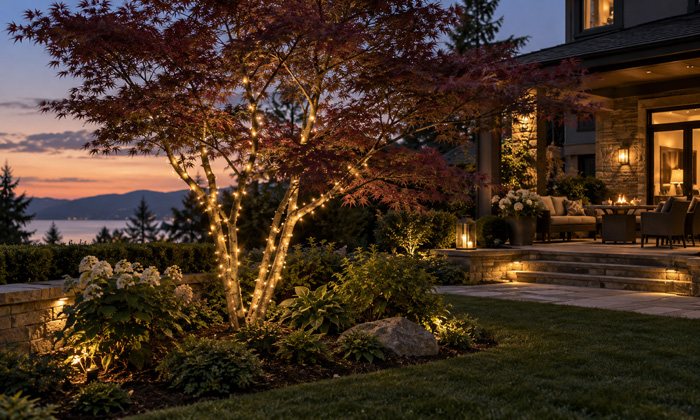
Small ornamental trees benefit from a restrained lighting approach because their natural form is often one of their strongest visual features. Japanese maples, dogwoods, flowering cherries, small magnolias, and other compact ornamental trees can easily look overwhelmed if too many lights are added. Instead of covering the entire tree, focus on the main stem or stems and extend the lighting onto a few important structural branches.
This approach allows the shape of the tree to remain visible while still creating a refined nighttime effect. Smaller trees generally look more elegant when the lighting highlights their structure rather than covering every branch. Multi-stem trees can be especially attractive when each main stem is wrapped lightly and consistently, creating definition without making the installation feel too dense.
How to Put Lights on a Large Outdoor Tree
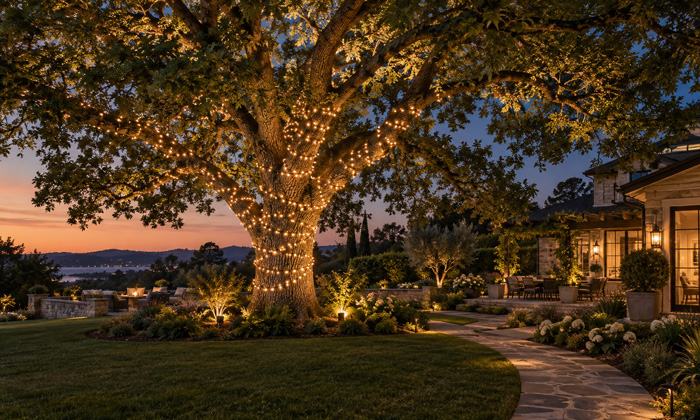
Large mature trees require more planning because covering an entire oak, sycamore, elm, or similar landscape tree can require a considerable amount of lighting and installation equipment. Instead of trying to illuminate every branch, focus on the most visible parts of the tree. In many cases, wrapping the trunk and several lower structural branches is enough to create a strong visual effect while keeping the installation more manageable.
For very tall trees, decorative string lights can be combined with landscape uplighting to create a more balanced result. String lights can add detail and definition around the trunk and lower branches, while ground-mounted fixtures illuminate the higher canopy and emphasize the overall size of the tree. If the installation requires climbing high into the canopy or using specialized access equipment, professional installation is the safer and more practical choice.
Hide Cables and Connections Carefully
Visible cords can distract from an otherwise attractive tree lighting installation, so route electrical cables through less noticeable areas whenever possible. At ground level, cables can often follow planting bed edges, walls, fences, shrub lines, or hardscape boundaries to keep the installation visually clean. Avoid running cords across open pathways or other areas where people regularly walk, and do not hide electrical connections in places where they may be exposed to water or become difficult to inspect. Good landscape lighting should minimize visible wiring while keeping all connections safe and accessible for future maintenance.
Plan the Outdoor Power Source
Before beginning installation, decide how the lights will receive power and make sure the electrical supply is suitable for outdoor use. All lighting equipment should be rated for exterior conditions, and any extension cords used should also be specifically designed for outdoor environments to withstand moisture, temperature changes, and regular exposure to the elements.
When planning the cable route, avoid areas where cords could create trip hazards, sit in standing water, interfere with lawn mowing, become damaged by garden tools, or get tangled in surrounding plants. For larger or permanent landscape lighting installations, a professionally installed outdoor electrical system is generally a better long-term solution than relying on several temporary extension cords.
Use a Timer for Outdoor Tree Lights
A timer makes outdoor tree lighting easier to manage by allowing the lights to turn on and off automatically during the hours when the garden is actually in use. For example, you can schedule the lights to come on around dusk and switch off later in the evening, which helps reduce unnecessary energy use while keeping the tree lighting coordinated with other landscape fixtures. Timers are especially useful when several illuminated trees are part of the same garden lighting system.
See also: Everything You Need to Know About Landscape Lighting Timer
Avoid Glare
Outdoor tree lighting should enhance the landscape without creating uncomfortable glare, so consider where people will sit, walk, and view the garden before positioning the lights. Avoid directing light toward seating areas, bedroom windows, neighboring properties, or nearby roads, especially when decorative tree lights are combined with ground-mounted spotlights. Landscape spotlights should be aimed carefully at the trunk, branches, or canopy rather than toward viewers, helping the tree remain visually prominent while keeping the surrounding space comfortable after dark.
Maintain Tree Lights Over Time
Outdoor tree lights should be inspected periodically.
Look for:
- loose sections;
- damaged wire;
- failed bulbs;
- branches growing around the cable;
- tight fasteners;
- shifting strands.
Permanent installations require particular attention because the tree continues to grow.
A strand that was comfortably positioned when installed may become tight after several growing seasons.
For young trees, regular adjustment is especially important.
Frequently Asked Questions About Putting Lights on Outdoor Trees
This provides a balanced effect while allowing the natural structure of the tree to remain visible.
The main concern is tree growth.
Wires and fasteners may become restrictive as the trunk and branches increase in diameter.
Where additional support is needed, use removable outdoor fasteners that do not penetrate the bark.
Avoid nails, screws, and staples.
Long-term installations should allow room for growth.
Young trees grow quickly, so the lighting should be checked and adjusted frequently if it remains in place.
For the upper canopy, landscape uplighting may be more practical than extensive string lighting.
