

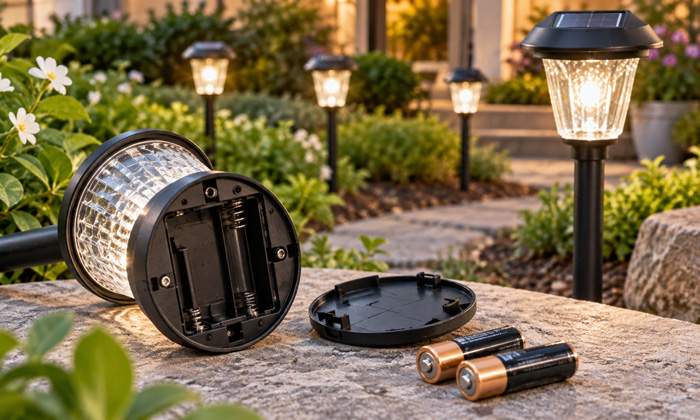
Regular AA Batteries Are Usually Not Suitable for Solar Lights
Why Solar Lights Need Rechargeable Batteries
Can Rechargeable AA Batteries Be Used in Solar Lights?
What Happens If You Put Alkaline AA Batteries in Solar Lights?
How Battery Choice Affects Solar Light Performance
Should You Replace Solar Light Batteries Regularly?
FAQs
Solar lights are designed to collect sunlight during the day, store energy in a battery, and power the LED light after dark. Since many solar lights use AA-sized batteries, it is common to wonder whether regular AA batteries from household devices can replace the original battery. The answer depends on the battery type and the design of the solar light.
Regular AA Batteries Are Usually Not Suitable for Solar Lights
Most solar lights require rechargeable batteries because the battery inside the fixture must store energy collected from the solar panel every day. Standard AA alkaline batteries are disposable and are not designed for repeated charging cycles. Installing them in a solar light may allow the light to turn on temporarily, but the battery will not recharge properly and may eventually leak or damage the light’s internal components.
Solar lights typically come with rechargeable AA or AAA batteries, such as NiMH (nickel-metal hydride) batteries, which are made to handle continuous charging and discharging. These batteries store solar energy during daylight hours and release it at night.
Why Solar Lights Need Rechargeable Batteries
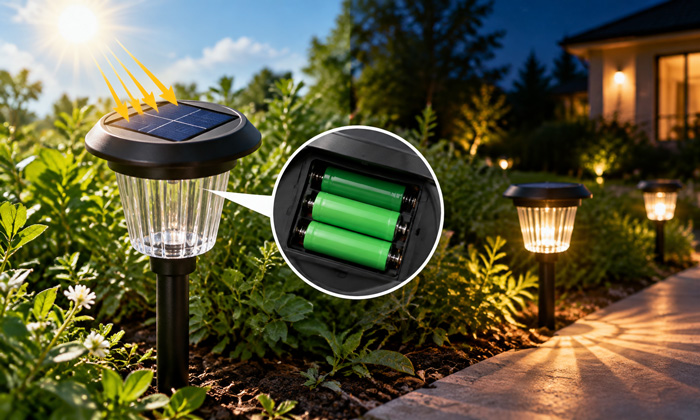
The battery is a key part of the solar lighting system. The solar panel generates electricity during the day, and the battery stores that power for nighttime operation. Because this process happens repeatedly, the battery must be capable of many charge and discharge cycles.
Many people assume that all batteries with the same size can be exchanged, but size alone does not determine compatibility. A standard AA battery and a rechargeable AA battery may look identical, yet their charging characteristics are different. Choosing the correct battery type helps maintain brightness and extend the lifespan of the solar light.
The battery inside a solar light stores the electricity generated from sunlight and supplies power after dark. Different solar lights use different battery configurations, with some designs including built-in rechargeable batteries as part of their energy storage system, which is common in solar lights with battery systems.
Can Rechargeable AA Batteries Be Used in Solar Lights?
Rechargeable AA batteries can often work in solar lights, but they need to match the specifications of the original battery. Most garden solar lights use rechargeable batteries with the correct voltage and capacity for their charging circuits.
When replacing a battery, it is important to check:
- Battery voltage, commonly 1.2V for NiMH batteries
- Battery size, such as AA or AAA
- Capacity rating, measured in mAh
- Compatibility with the solar light model
Using a rechargeable battery with unsuitable specifications may reduce lighting time or prevent the battery from charging efficiently.
What Happens If You Put Alkaline AA Batteries in Solar Lights?
A regular alkaline AA battery may fit into the battery compartment, but it is not designed for solar charging. The solar panel and charging circuit are built around rechargeable battery technology. Continuous charging attempts can cause problems because disposable batteries are not made to safely accept repeated charging.
In some cases, an alkaline battery may power a solar light for a short period, such as during testing, but it is not a long-term replacement solution. A proper rechargeable battery provides better performance and avoids unnecessary damage.
When replacing batteries in solar garden lights, the battery type should match the charging system inside the fixture. Disposable batteries in solar garden lights may seem convenient, but rechargeable batteries are typically better suited for repeated charging cycles and long-term outdoor use.
How Battery Choice Affects Solar Light Performance
The battery type directly affects how long a solar light stays illuminated at night. A suitable rechargeable battery stores enough energy during the day and releases it steadily after sunset.
Solar light performance is affected by several factors, including sunlight exposure, weather conditions, and charging duration. The amount of energy stored during the day depends on how much direct sunlight the panel receives, while factors such as panel placement and daily weather conditions can influence the overall charging process. This is why details about solar light charging time are often considered when evaluating nighttime lighting performance.
Seasonal conditions can also change how efficiently solar lights operate outdoors. In winter, shorter days, weaker sunlight, and colder temperatures may reduce the amount of energy collected and affect battery performance. These factors are common when using solar powered lights during winter, especially in areas with limited daylight hours.
Should You Replace Solar Light Batteries Regularly?
Rechargeable batteries inside solar lights do not last forever. After many charge cycles, they gradually lose the ability to hold energy, causing shorter lighting times or dimmer brightness.
When a solar light stops working properly, replacing the rechargeable battery with the correct type is usually a better solution than installing disposable batteries. Proper maintenance, including keeping the solar panel clean and positioning the light where it receives enough sunlight, can also improve battery performance.
FAQs
How often should solar light batteries be replaced?
Solar light batteries usually need replacement every 1 to 3 years, depending on battery quality, weather conditions, and how frequently the lights are used.
A battery that no longer holds enough charge may cause shorter lighting times or reduced brightness.
Can higher-capacity rechargeable batteries make solar lights brighter?
A higher-capacity rechargeable battery can extend the operating time of a solar light, but it does not always increase brightness.
The light output mainly depends on the LED, solar panel efficiency, and the built-in circuit design.
Why do solar lights stop working after replacing the battery?
Solar lights may fail after a battery replacement due to issues such as insufficient sunlight, dirty solar panels, incorrect battery installation, or a damaged charging component.
Checking each part of the system can help identify the cause.
Are all rechargeable AA batteries compatible with solar lights?
Not all rechargeable AA batteries are suitable for solar lights.
The battery voltage, chemistry type, and capacity should match the requirements of the solar light to ensure proper charging and stable performance.
Can solar lights work without a battery installed?
Most solar lights cannot operate normally without a battery because the battery stores energy collected during the day for nighttime use.
Without energy storage, the light usually turns off when sunlight is no longer available.
