
Are Outdoor Lights Safe to Use in Rain?
Understanding IP Ratings for Outdoor Lights
Can String Lights Stay On During Rain?
Risks of Using Outdoor Lights Incorrectly
How to Keep Outdoor Lights Safe in Rain
Should You Turn Outdoor Lights Off During Heavy Rain?
The Importance of Ground Fault Protection
Can Solar Outdoor Lights Stay On in Rain?
When Should Outdoor Lights Be Turned Off?
FAQs
Outdoor lighting is an essential part of many homes, providing security, improving visibility, and creating a comfortable atmosphere around gardens, patios, driveways, and entrances. However, many homeowners wonder whether outside lights can safely remain on during rainy weather. The answer depends on the type of light, its weather protection rating, installation quality, and the condition of the electrical system.
In general, outdoor lights designed specifically for exterior use can stay on in the rain. These lights are manufactured with protective materials and weather-resistant designs that allow them to handle moisture exposure. However, indoor lights, damaged fixtures, or improperly installed outdoor lighting can create serious safety risks when exposed to rain.
Are Outdoor Lights Safe to Use in Rain?
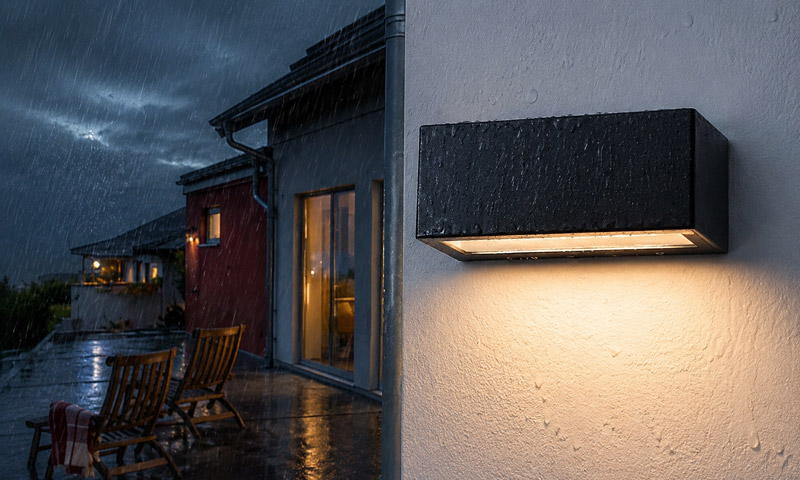
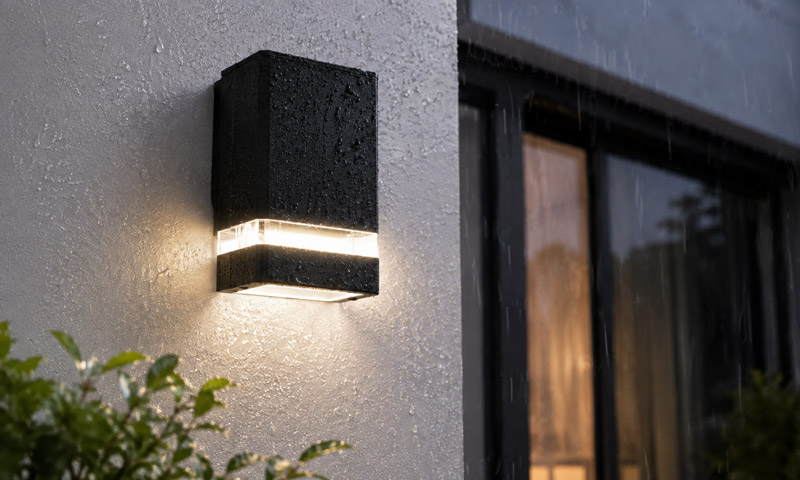
Most outdoor lighting fixtures are designed to withstand normal weather conditions, including rain. They usually have sealed housings that protect electrical components from water and moisture. Many outdoor lights also carry an IP (Ingress Protection) rating, which indicates how well they resist dust and water.
For example, a light with an IP44 rating can handle splashing water from different directions, making it suitable for many covered outdoor areas. Lights with higher ratings, such as IP65 or IP67, provide stronger protection and are better suited for exposed locations where they may experience heavy rain.
However, being weather-resistant does not mean a light is completely waterproof in every situation. Continuous exposure to heavy rain, flooding, or poor installation can still cause damage over time.
Understanding IP Ratings for Outdoor Lights
The IP rating is one of the most important factors when choosing outdoor lighting. The first number measures protection against solid objects such as dust, while the second number measures water resistance.
| IP Rating | Water Protection Level | Suitable Outdoor Use |
|---|---|---|
| IP44 | Protected against water splashes | Covered patios, porches, sheltered outdoor areas |
| IP54 | Limited protection against dust and water spray | Outdoor walls and areas with some protection |
| IP65 | Protected against water jets | Open gardens, driveways, exposed outdoor spaces |
| IP66 | Strong protection against powerful water jets | Areas exposed to harsh weather conditions |
| IP67 | Can withstand temporary water immersion | Ground lights and areas with possible water accumulation |
Choosing a light with the correct IP rating helps ensure safe operation during rainy conditions.
Can String Lights Stay On During Rain?
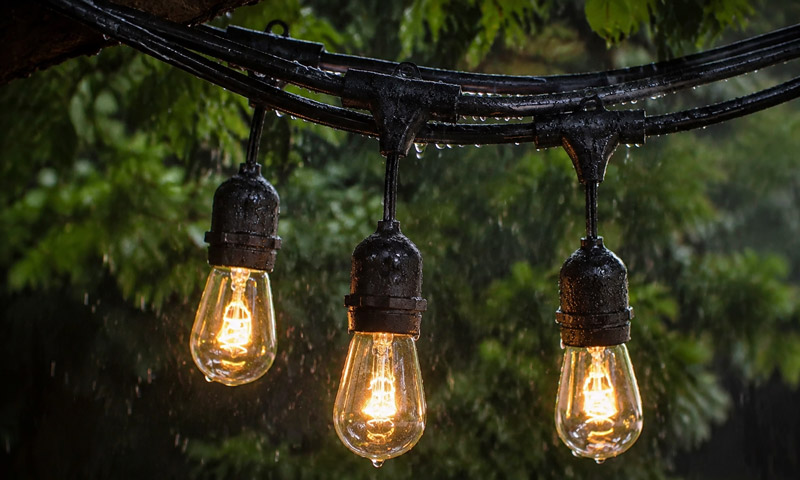
Outdoor string lights are commonly used for decorating balconies, gardens, and patios. Many modern outdoor string lights are designed to remain outside throughout different weather conditions. However, not all string lights are suitable for rain.
Before leaving string lights on during wet weather, check whether they are labeled for outdoor use. Indoor string lights typically lack proper sealing and may allow water to reach electrical connections.
The plug and connection points are especially important. Even if the bulbs are weather-resistant, exposed plugs or extension connections can become dangerous when they come into contact with water.
Risks of Using Outdoor Lights Incorrectly
Using unsuitable lights in rainy weather can lead to several problems. Water entering electrical components may cause short circuits, power failures, or damage to the lighting system. In serious cases, faulty outdoor lighting can create electric shock hazards or increase the risk of fire.
Common problems include:
- Using indoor lights outdoors
- Damaged cables with exposed wires
- Cracked light covers or broken seals
- Poorly protected extension cords
- Connections placed directly on wet ground
- Installing fixtures without proper weatherproof fittings
Regular inspection is important, especially before rainy seasons or after storms.
How to Keep Outdoor Lights Safe in Rain
Proper installation and maintenance can greatly improve outdoor lighting safety. Outdoor fixtures should always be installed according to manufacturer instructions and local electrical requirements.
Important safety practices include:
- Choose lights specifically labeled for outdoor use.
- Check the IP rating before installation.
- Keep plugs and electrical connections away from standing water.
- Use weatherproof outdoor extension cords when needed.
- Replace damaged cables or cracked fixtures immediately.
- Install lights under protective covers when possible.
- Use outdoor-rated timers or smart controls.
A well-installed outdoor lighting system can operate safely even during frequent rainfall.
Should You Turn Outdoor Lights Off During Heavy Rain?
For normal rain, outdoor-rated lights can usually remain on. However, during extreme weather conditions, it may be safer to turn them off. Heavy storms, flooding, lightning, or water entering electrical connections can increase risks.
If outdoor lights are connected through a properly installed system with weather-resistant fixtures and protection devices, they are generally designed to handle challenging conditions. Still, turning off unnecessary electrical equipment during severe storms can provide additional protection.
The Importance of Ground Fault Protection
Ground Fault Circuit Interrupter (GFCI) protection is an important safety feature for outdoor electrical systems. A GFCI device can quickly shut off power when it detects an electrical imbalance, helping reduce the risk of electric shock.
Outdoor outlets, lighting systems, and extension connections should use appropriate safety protection, especially in areas exposed to rain or moisture.
Can Solar Outdoor Lights Stay On in Rain?
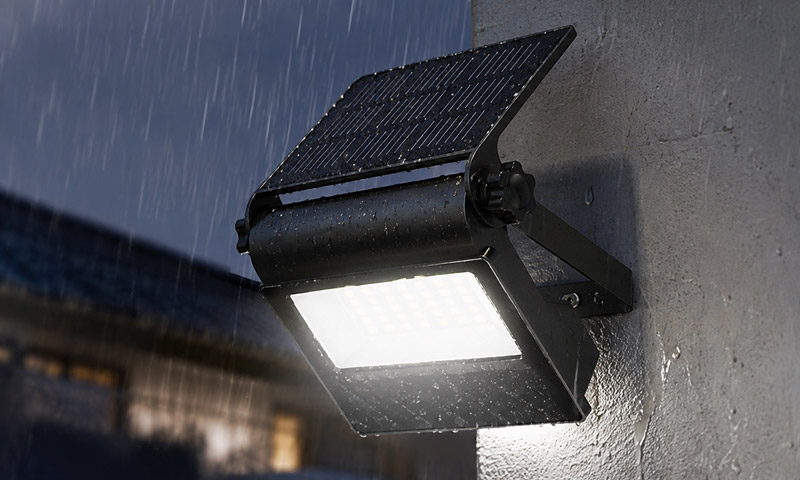
Solar outdoor lights are generally well suited for rainy conditions because they do not require direct electrical connections. Many solar lights have sealed battery compartments and waterproof designs.
However, their performance may decrease after several cloudy or rainy days because limited sunlight reduces charging efficiency. Rain itself usually does not damage quality solar lights, but poor-quality products may allow water into internal components.
When Should Outdoor Lights Be Turned Off?
Outdoor lights should be switched off or inspected if you notice signs of damage, including:
- Flickering during rain
- Water inside the light housing
- Burning smells
- Unusual buzzing sounds
- Tripped electrical breakers
- Damaged insulation on cables
These signs indicate that the lighting system may no longer be safe to operate.
FAQs
How can I tell if my outdoor lights are waterproof?
Check the product label or user manual for the IP rating, waterproof certification, and manufacturer’s instructions.
Outdoor lights with higher IP ratings generally provide better protection against rain and moisture.
Can outdoor LED lights be left on overnight during rainy weather?
Yes, outdoor LED lights designed for exterior environments can usually stay on overnight in the rain.
Proper installation, weatherproof connections, and suitable electrical protection are important for safe operation.
Do outdoor lights use more electricity when exposed to cold and wet weather?
Rain and moisture typically do not increase the electricity consumption of outdoor lights.
Energy usage mainly depends on the bulb type, wattage, and operating time.
How often should outdoor lights be checked for rain damage?
Outdoor lighting systems should be inspected regularly, especially after storms or periods of heavy rainfall.
Checking cables, seals, mounting points, and connections helps prevent future problems.
Can moisture inside an outdoor light fixture be repaired?
Minor condensation may disappear naturally, but visible water buildup usually indicates a sealing issue.
Damaged seals or internal components may need replacement to restore safe operation.
