

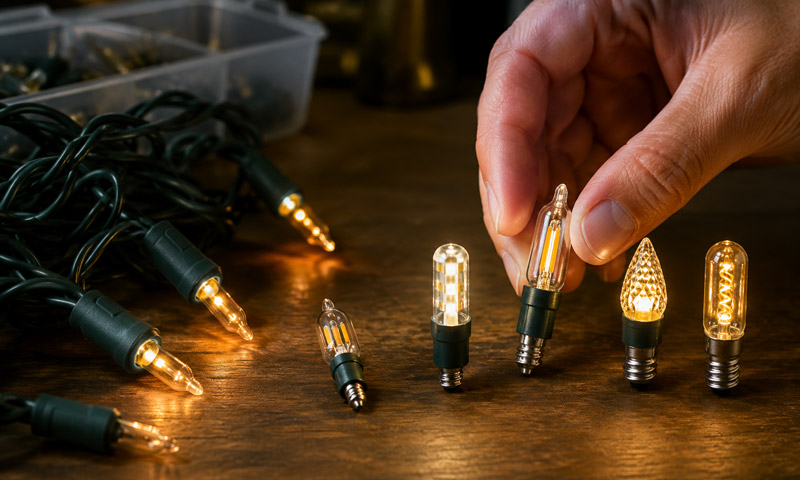
Understanding Why Mini Light Bulbs May Not Be Bright Enough
1. The Bulb Has a Low Lumen Output
2. The Bulb Type Limits Brightness
3. Incorrect Voltage Causes Poor Performance
4. The Power Supply May Be Insufficient
5. The Bulb Size and Design Affect Light Distribution
How to Choose the Right Mini Light Bulbs
1. Check the Required Voltage and Base Type
2. Choose Based on Lumens Instead of Wattage
3. Consider LED Mini Bulbs for Better Brightness
4. Select the Right Color Temperature
5. Match the Bulb to the Application
Common Mistakes When Choosing Mini Light Bulbs
How to Improve the Brightness of Existing Mini Lighting
FAQs
Mini light bulbs are widely used in decorative lighting, holiday displays, string lights, night lights, appliances, small fixtures, and specialty lighting applications. However, many users experience a common problem: the bulbs look too dim, fail to provide enough illumination, or do not create the expected lighting effect. Understanding why mini light bulbs are not bright enough and knowing how to choose the right ones can help improve brightness, efficiency, and overall performance.
Understanding Why Mini Light Bulbs May Not Be Bright Enough
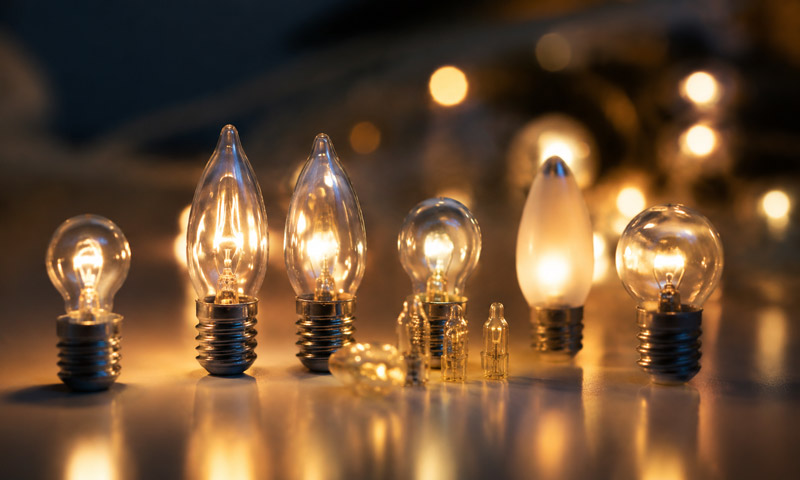
The brightness of a mini light bulb depends on several factors, including bulb technology, wattage, voltage, design, and intended use. A small bulb does not automatically mean weak lighting, but many mini bulbs are designed for decorative or low-intensity applications rather than powerful illumination.
1. The Bulb Has a Low Lumen Output
One of the most important factors affecting brightness is lumen output. Lumens measure the amount of visible light produced by a bulb. Many people focus on wattage when choosing bulbs, but wattage only indicates energy consumption, not brightness.
Traditional incandescent mini bulbs often produce limited light because much of their energy is converted into heat rather than visible illumination. If a mini bulb has a low lumen rating, it will naturally appear dim even if it consumes a similar amount of power as another bulb.
When stronger lighting is needed, choosing a bulb with a higher lumen output is more effective than simply selecting a higher wattage bulb.
2. The Bulb Type Limits Brightness
Different mini bulb technologies have different brightness capabilities.
Incandescent mini bulbs have been used for decades in decorative lighting because they produce a warm glow and are inexpensive. However, they are generally less efficient and have limited brightness compared with newer technologies.
LED mini bulbs are usually much brighter for the same power consumption. They convert more electricity into light and generate less heat, making them a better option when brightness and energy efficiency are priorities.
If a mini bulb seems too weak, replacing an older incandescent model with an LED equivalent can significantly improve illumination.
3. Incorrect Voltage Causes Poor Performance
Mini bulbs are often designed for specific voltage ratings, such as 12V, 24V, or 120V. Using a bulb with the wrong voltage can reduce brightness or damage the bulb.
A bulb receiving lower voltage than required may appear noticeably dim because it cannot operate at its designed output. For example, installing a 24V bulb in a 12V system will usually result in weak light.
Before purchasing replacement mini bulbs, always check the voltage requirements of the fixture or lighting system.
4. The Power Supply May Be Insufficient
Even if the bulb specifications are correct, the power source can affect brightness. Batteries, transformers, adapters, and wiring systems all influence how much power reaches the bulb.
A weak battery or aging power adapter may not provide enough current, causing bulbs to appear dim. Long wiring distances can also create voltage drops, especially in low-voltage lighting systems.
Checking the condition and capacity of the power supply is essential when multiple mini bulbs are not performing as expected.
5. The Bulb Size and Design Affect Light Distribution
Mini bulbs come in many shapes and designs, including small round bulbs, candle-style bulbs, capsule bulbs, and miniature LED packages. The physical design affects how light spreads.
Some bulbs may produce enough light but direct it in a narrow area, making them appear less bright from certain angles. A bulb designed for focused lighting may not work well in a fixture that requires wide illumination.
Choosing the correct bulb shape and beam angle can improve the overall lighting effect.
How to Choose the Right Mini Light Bulbs
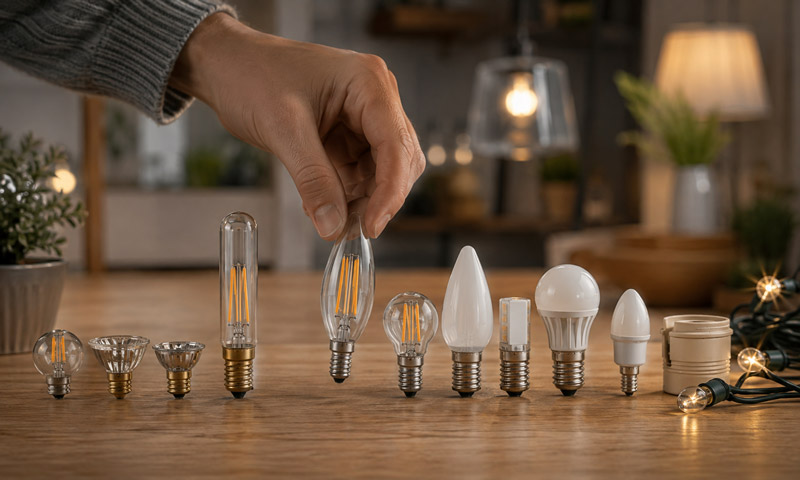
Selecting the right mini light bulbs requires more than choosing the smallest or cheapest option. The best bulb depends on the application, brightness requirements, power system, and desired appearance.
1. Check the Required Voltage and Base Type
Before buying a replacement bulb, identify two important specifications:
- Voltage rating
- Bulb base type
Mini bulbs use various bases, including screw bases, wedge bases, bi-pin bases, and specialty connectors. A bulb with the wrong base will not fit properly, while the wrong voltage can affect safety and performance.
Matching the original bulb specifications is the first step toward reliable operation.
2. Choose Based on Lumens Instead of Wattage
For brightness, lumens are the measurement that matters most.
If a mini bulb is used for decoration, a lower lumen output may be sufficient. For task lighting, displays, signs, or areas requiring visibility, a higher lumen bulb is usually the better choice.
When switching from incandescent to LED, compare lumen ratings rather than trying to match wattage directly.
3. Consider LED Mini Bulbs for Better Brightness
LED mini bulbs have become the preferred choice for many applications because they offer several advantages:
- Higher brightness with lower energy consumption
- Longer lifespan
- Lower heat production
- Better resistance to frequent switching
- More color options
For users who find traditional mini bulbs too dim, LED replacements often provide the biggest improvement without requiring major changes to the lighting system.
4. Select the Right Color Temperature
Brightness is not only about the amount of light but also how the light appears.
Color temperature is measured in Kelvin (K):
- Warm white lighting creates a soft, comfortable atmosphere and is common for decorative applications.
- Neutral white provides a balanced appearance suitable for general lighting.
- Cool white produces a sharper, brighter-looking effect and is often used for work areas or displays.
A bulb with the same lumen output can appear brighter or softer depending on its color temperature.
5. Match the Bulb to the Application
Different uses require different types of mini bulbs.
For decorative string lights, appearance and color consistency may matter more than maximum brightness. For small lamps or display lighting, higher brightness and better light distribution may be necessary.
Consider whether the bulb is intended for:
- Decoration
- Accent lighting
- Reading or task lighting
- Outdoor displays
- Appliance lighting
- Indicator lighting
Choosing a bulb designed for the specific purpose will provide better results.
Common Mistakes When Choosing Mini Light Bulbs
Many brightness problems happen because the replacement bulb does not match the original application.
One common mistake is selecting a bulb based only on physical size. A bulb may fit perfectly but still provide insufficient light because its electrical specifications or lumen output are unsuitable.
Another mistake is assuming higher wattage always means brighter light. Modern LED bulbs demonstrate that efficient designs can produce more light while using less energy.
Ignoring compatibility with dimmers, transformers, or control systems can also lead to poor performance. Some LED mini bulbs require compatible drivers or dimming equipment to operate correctly.
How to Improve the Brightness of Existing Mini Lighting
If replacing bulbs is not immediately possible, several adjustments may improve performance.
Cleaning the bulb surface and fixture can increase light output because dust and dirt reduce visible brightness. Checking connections can also help, as loose or damaged wiring may reduce power delivery.
For systems with multiple bulbs, upgrading the power supply or shortening excessive wiring may reduce voltage loss and improve brightness.
However, if the bulbs themselves have low lumen ratings, changing to a brighter bulb is usually the most effective solution.
FAQs
Can replacing a mini light bulb with a higher wattage bulb make it brighter?
Replacing a mini light bulb with a higher wattage bulb does not always guarantee better brightness.
The fixture must support the increased power consumption, and brightness depends more on lumen output than wattage. Choosing a bulb with higher lumens and compatible electrical specifications is usually the better solution.
Why do some LED mini bulbs look brighter than incandescent bulbs with the same size?
LED mini bulbs often appear brighter because they use energy more efficiently and convert more electrical power into visible light.
Their internal design allows better light production with lower heat loss, providing higher illumination while maintaining a compact size.
How long do mini LED light bulbs usually last compared with traditional bulbs?
Mini LED light bulbs generally have a much longer lifespan than traditional incandescent mini bulbs.
Their durability is affected by operating temperature, usage frequency, electrical stability, and overall bulb quality. Properly matched LED bulbs can provide reliable performance for many years.
Can mini light bulbs be used outdoors in cold or wet conditions?
Some mini light bulbs are designed for outdoor environments, but not all models are suitable for exposure to moisture, temperature changes, or weather conditions.
Outdoor applications require bulbs with appropriate protection ratings and materials to maintain safe and stable performance.
Do mini light bulbs work with dimmer switches?
Mini light bulbs can work with dimmer switches only when the bulb type and dimming system are compatible.
Many LED mini bulbs require specific dimmable designs and compatible dimmers to avoid flickering, reduced lifespan, or unstable brightness.
