
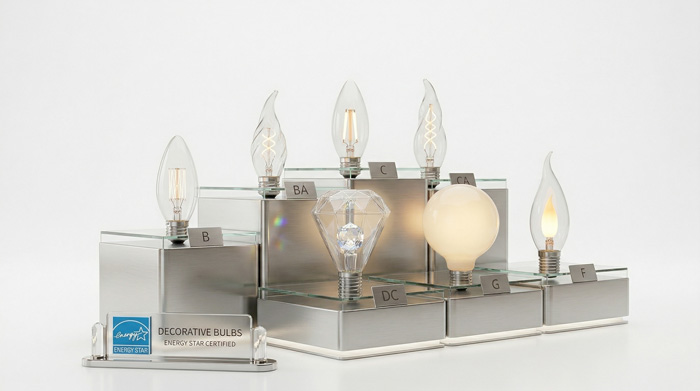
If you have ever shopped for chandelier bulbs, vanity lights, or decorative lamps, you have probably seen the phrase “Type B bulb” on packaging or product listings. At first glance, the label can be confusing. Many people assume it refers to a specific socket, a voltage rating, or even a special lighting technology. In everyday lighting terminology, however, Type B usually refers to the bulb’s shape rather than its base or internal electronics. More specifically, it describes a decorative bulb with a slender, candle-like profile that is commonly used where the bulb is visible and appearance matters as much as illumination. ENERGY STAR classifies shape families such as B, BA, C, CA, DC, G, and F as decorative lamp forms, while GE explains that B and C bulbs are the elongated, flame-like bulbs often used in chandeliers and similar fixtures.
In practical terms, a Type B bulb is the bulb you often see in chandeliers, wall sconces, pendant fixtures, accent lights, and some ceiling fans. It is popular because it looks elegant and compact. Unlike a standard A-shaped household bulb, which is optimized mainly for general-purpose room lighting, a B bulb is designed to fit narrow decorative sockets and complement the fixture’s style. Retailers and manufacturers frequently describe these lamps as candle bulbs, chandelier bulbs, candelabra bulbs, blunt-tip bulbs, or torpedo bulbs, depending on the exact profile. That means “Type B bulb” is not one rigid product but a family of decorative bulbs with closely related shapes and uses.
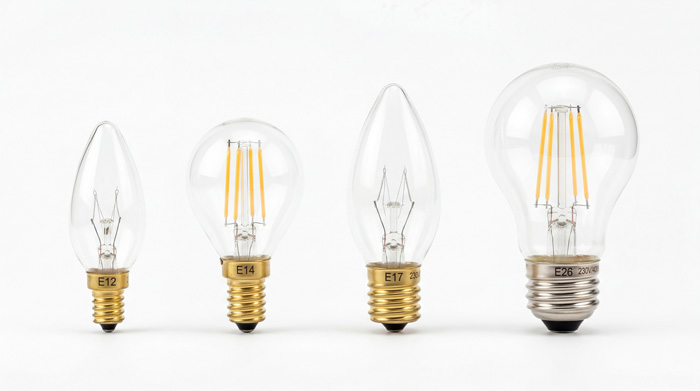
One of the most important things to understand is that shape code and base code are separate specifications. A bulb code such as B10 or B11 tells you the bulb’s shape and width, while a code such as E12, E14, E17, or E26 tells you the base type that fits into the socket. GE and LEDVANCE both explain that bulb naming combines a letter for shape with a number for size, and the number usually represents the bulb’s diameter at its widest point. Bulbs.com’s base chart further shows that E12 is a 12 mm candelabra base, E14 is a 14 mm European base, E17 is an intermediate base, and E26 is a standard medium Edison screw base. So a B11 bulb with an E12 base and a B11 bulb with an E26 base share the same general shape but fit different sockets.
The number in a Type B code is especially useful when replacing a bulb. In the standard naming system, the number indicates the bulb diameter, commonly in eighths of an inch. That means a B10 bulb is about 10/8 inches, or 1.25 inches, across at its widest point, while a B11 bulb is about 11/8 inches, or 1.375 inches, across. This is why B11 bulbs are slightly fuller-looking than B10 bulbs, even though both are decorative and narrow compared with standard household bulbs. The difference sounds small on paper, but in a chandelier or sconce, it can noticeably affect the visual balance of the fixture.
Another point of confusion is the meaning of the letter B itself. In decorative-lighting guides, B bulbs are often described as blunt-tip or bullet/torpedo-shaped bulbs. They resemble a candle flame, but they usually have a slightly fuller body and a less sharply pointed end than some C or CA bulbs. Sources that compare decorative lamp families note that C bulbs are more conical, while CA bulbs typically have a bent or angular tip for a more dramatic candle-flame appearance. B bulbs, by contrast, are generally a bit more restrained and symmetrical, which is why many people like them in fixtures that aim for a classic or transitional look rather than a highly ornate one.
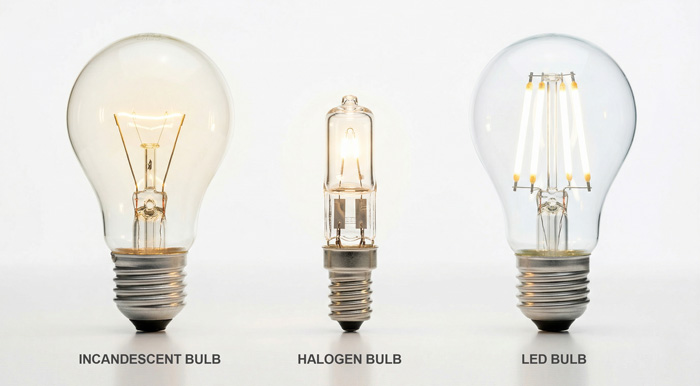
Today, Type B bulbs are available in several lighting technologies, but the market has shifted strongly toward LED. Older decorative fixtures often used incandescent or halogen chandelier bulbs, but modern replacements are typically LED because they last longer and use far less electricity. Current retail listings from major sellers show B10 and B11 decorative bulbs in common LED versions such as 25-watt, 40-watt, and 60-watt equivalents, with examples around 300 lumens, 500 lumens, and even 750 lumens depending on the design. That gives buyers a wide range of choices, from soft decorative glow to surprisingly bright functional light.
Because Type B bulbs are often exposed rather than hidden under a shade, manufacturers also offer them in different visual styles. You can find clear glass, frosted glass, filament-style LED, bent-tip decorative versions, and even smart candelabra bulbs in this shape family. Some are designed to imitate vintage incandescent filaments, while others prioritize a cleaner, more minimal look. In decorative lighting, the bulb is part of the design language, so details like glass finish, filament visibility, and tip shape matter more than they would with a bulb hidden inside a lamp shade.
A major advantage of Type B bulbs is that they combine form and function. Their small footprint lets them fit into tight multi-arm chandeliers and narrow sconces, while their decorative profile keeps the fixture attractive when the lights are on or off. This makes them ideal for dining rooms, entryways, bedrooms, bathroom vanity lights, and decorative corridor lighting. In many of these places, people want a bulb that is not only bright enough but also refined in appearance. A bulky standard bulb can make a fixture look awkward, but a Type B bulb usually preserves the intended proportions.
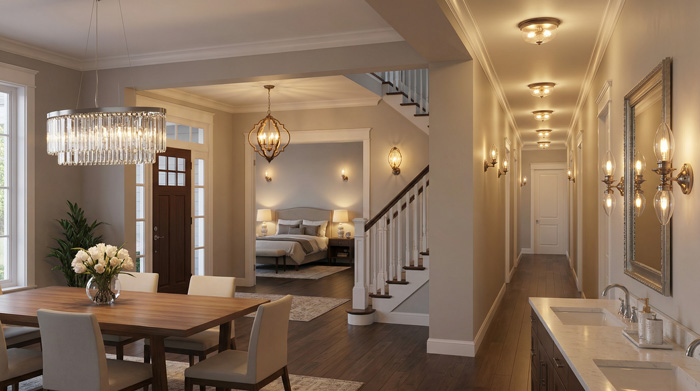
That said, choosing the right Type B bulb requires more than just reading the word “B” on the package. First, you need to confirm the base size. In the United States, many chandelier bulbs use E12 candelabra bases, but some fixtures take E17 or even E26 bases. In Europe, E14 is also common. Second, you should check the shape code, such as B10 or B11. Third, consider the brightness, usually given in lumens rather than watts. Fourth, decide on the color temperature: warm white around 2700K is usually best for classic decorative spaces, while cooler tones may feel too harsh in chandeliers or sconces. Finally, verify whether the bulb is dimmable if your fixture is connected to a dimmer switch.
FAQs
Are all Type B bulbs dimmable?
No. Many LED Type B bulbs are dimmable, but not every model supports dimming.
Even when a bulb is labeled dimmable, it should be paired with an LED-compatible dimmer to avoid unstable performance.
In many cases, dimming issues come from bulb-and-dimmer compatibility rather than the bulb itself.
Can a Type B bulb be used in an enclosed fixture?
Only if the bulb is specifically rated for enclosed fixtures.
Using an LED bulb in an enclosed space can reduce lifespan and light output if the bulb is not designed for that environment.
Enclosed-fixture support varies by model, so the product packaging or datasheet should always be checked before installation.
Are Type B bulbs safe for bathrooms, porches, or outdoor fixtures?
Some are, but many are not.
Suitability depends on the bulb’s damp-location or wet-location rating, not on the Type B shape alone.
Always verify the usage rating on the package or product page before using the bulb in bathrooms, porches, or exterior fixtures.
Can I use a Type B bulb in a standard E26 socket?
Yes, but only if the bulb has an E26 base or includes a suitable adapter.
Many Type B decorative bulbs use an E12 candelabra base, while some versions are made for E26 compatibility.
The bulb shape does not determine socket fit—the base type does.
Why does a Type B LED bulb flicker after installation?
Flicker is often caused by dimmer incompatibility rather than a defective bulb.
LED bulbs and dimmers both use electronic controls, and these controls do not always operate well together.
In some homes, power-line noise from large appliances can also contribute to occasional flicker.
