

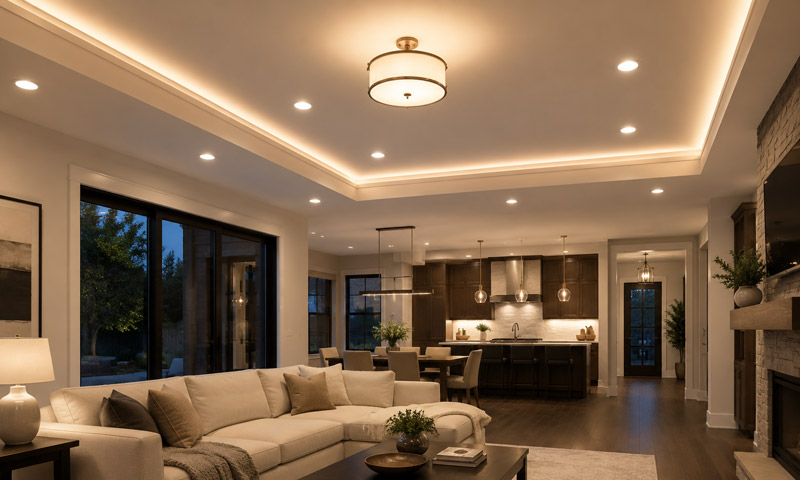
Common Names for Lights in the Ceiling
What Are Recessed Ceiling Lights Called?
What Are Lights Mounted Directly on the Ceiling Called?
What Are Long Ceiling Lights Called?
What Are Flat Ceiling Lights Called?
What Are Hanging Ceiling Lights Called?
What Are Adjustable Ceiling Lights Called?
Ceiling Light Names by Installation Method
Ceiling Lights for Bathrooms and Wet Areas
How to Identify the Correct Ceiling Light Name
So, What Are Lights in the Ceiling Called?
Frequently Asked Questions About Lights in the Ceiling
Lights installed in or attached to a ceiling are generally called ceiling lights, but the exact name depends on how the fixture is installed, how it distributes light, and where it is used. Common terms include recessed lights, flush mount lights, surface-mounted lights, pendant lights, downlights, track lights, and linear ceiling lights.
Understanding these names makes it easier to choose the right fixture for a home, office, retail space, hotel, or other architectural project.
Common Names for Lights in the Ceiling
The table below summarizes the most common types of ceiling lighting.
| Type of Ceiling Light | Installation Style | Main Characteristics | Common Applications |
|---|---|---|---|
| Recessed Lights | Installed inside the ceiling | Minimal appearance, downward illumination | Homes, offices, hotels |
| Downlights | Recessed or surface-mounted | Focused downward beam | Corridors, kitchens, retail spaces |
| Flush Mount Lights | Mounted directly against ceiling | Compact with little or no gap | Bedrooms, hallways, low ceilings |
| Semi-Flush Mount Lights | Mounted slightly below ceiling | More decorative than flush mounts | Dining rooms, bedrooms |
| Surface-Mounted Lights | Attached directly to ceiling surface | No ceiling cutout required | Offices, commercial buildings |
| Linear Ceiling Lights | Surface-mounted, recessed, or suspended | Long continuous light output | Offices, retail, modern interiors |
| Pendant Lights | Suspended from ceiling | Decorative and directional | Dining areas, kitchens, reception areas |
| Track Lights | Mounted on ceiling tracks | Adjustable individual light heads | Galleries, shops, showrooms |
| Chandeliers | Suspended from ceiling | Decorative multi-light fixture | Lobbies, dining rooms, hotels |
What Are Recessed Ceiling Lights Called?
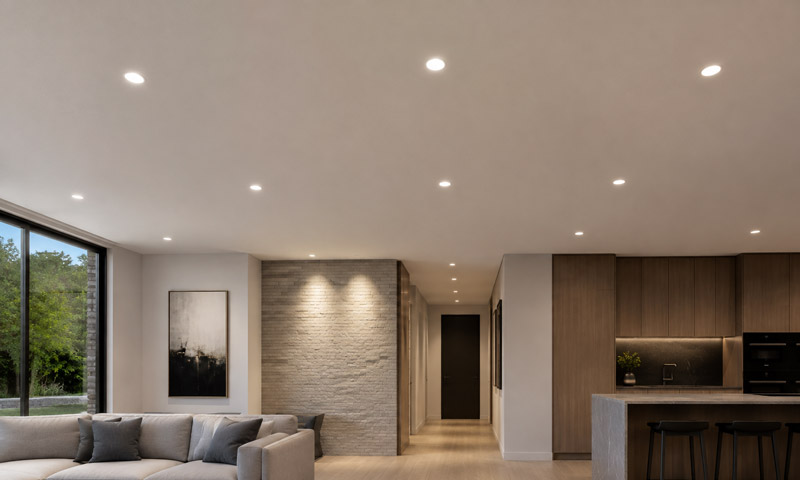
Lights installed inside a ceiling opening are usually called recessed lights. They may also be known as:
- Recessed downlights
- Can lights
- Pot lights
- Spotlights
- Ceiling downlights
Because most of the fixture is hidden above the ceiling, recessed lighting creates a clean and uncluttered appearance.
Recessed lights are particularly common in modern residential and commercial interiors where designers want the ceiling to remain visually simple.
What Are Lights Mounted Directly on the Ceiling Called?
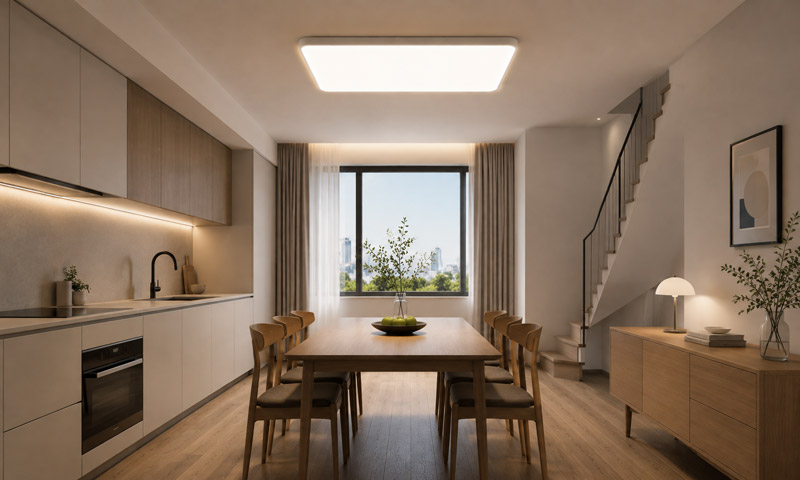
Lights attached directly to the ceiling surface are called surface-mounted ceiling lights.
Unlike recessed fixtures, they do not require a large cavity above the ceiling. This makes them suitable for concrete ceilings, low ceilings, renovation projects, and spaces where recessed installation is impractical.
A modern example is a ceiling mounted line light, which uses a slim linear fixture to create continuous or evenly distributed illumination across a space.
Surface-mounted fixtures can range from small round downlights to long architectural linear lighting systems.
What Are Long Ceiling Lights Called?
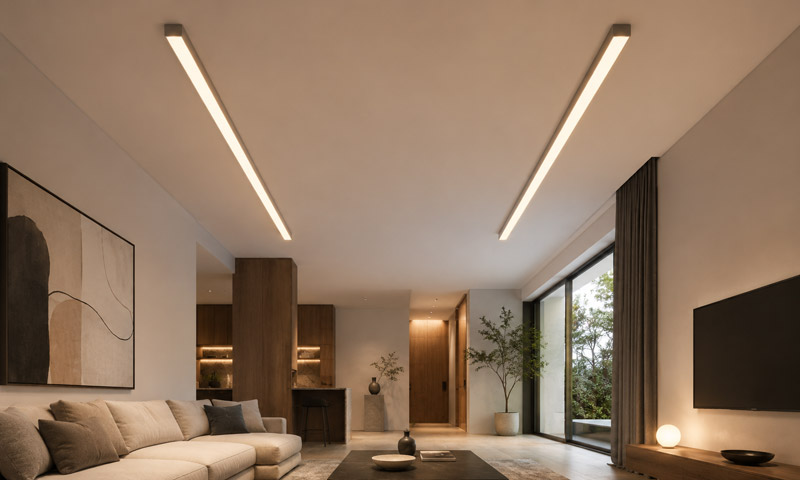
Long, narrow lights installed along a ceiling are usually called linear ceiling lights or linear LED lights.
Depending on the installation method, they may also be described as:
- Surface-mounted linear lights
- Recessed linear lights
- Suspended linear lights
- LED strip fixtures
- Linear architectural lighting
- Continuous lighting systems
Linear lights are especially popular in offices, supermarkets, retail stores, classrooms, corridors, and contemporary architectural spaces.
Their main advantage is the ability to provide consistent illumination across a larger area while creating clean visual lines.
What Are Flat Ceiling Lights Called?
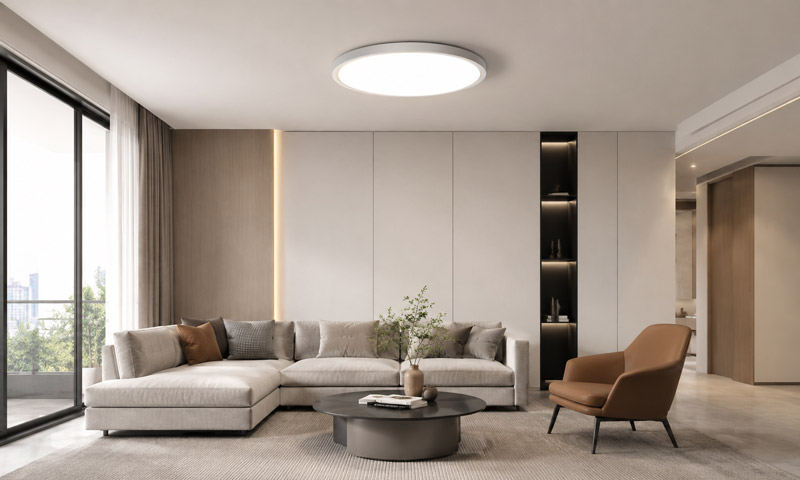
Flat fixtures that sit close to the ceiling are normally called flush mount ceiling lights.
A flush mount fixture attaches directly to the ceiling with almost no visible gap between the fixture and the ceiling surface.
These lights are useful in spaces with limited ceiling height, including:
- Bedrooms
- Closets
- Hallways
- Apartments
- Kitchens
- Utility rooms
Very slim LED versions may also be marketed as LED ceiling panels or ultra-thin ceiling lights.
What Are Hanging Ceiling Lights Called?
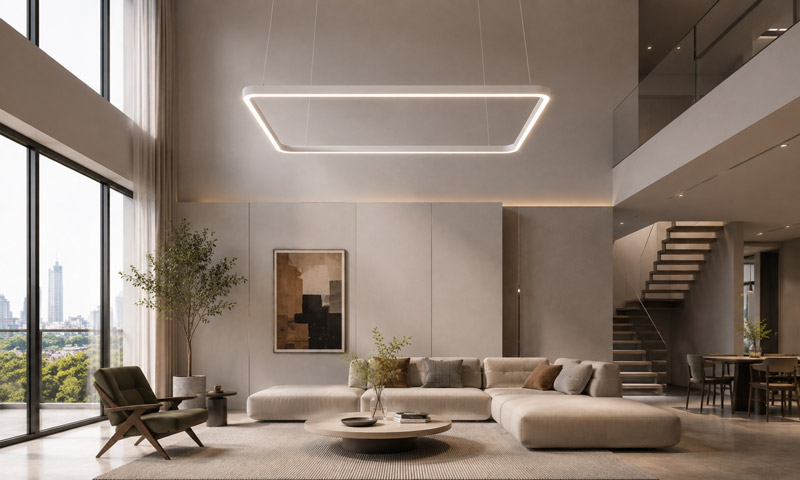
Lights suspended from a ceiling by a cable, rod, chain, or wire are generally called pendant lights.
When several decorative lamps are combined into one larger fixture, the product may instead be called a chandelier.
Pendant lights are often installed above kitchen islands, dining tables, counters, reception desks, and other areas where lighting also contributes to the interior design.
Long suspended fixtures used in offices and commercial buildings may be called suspended linear lights.
What Are Adjustable Ceiling Lights Called?
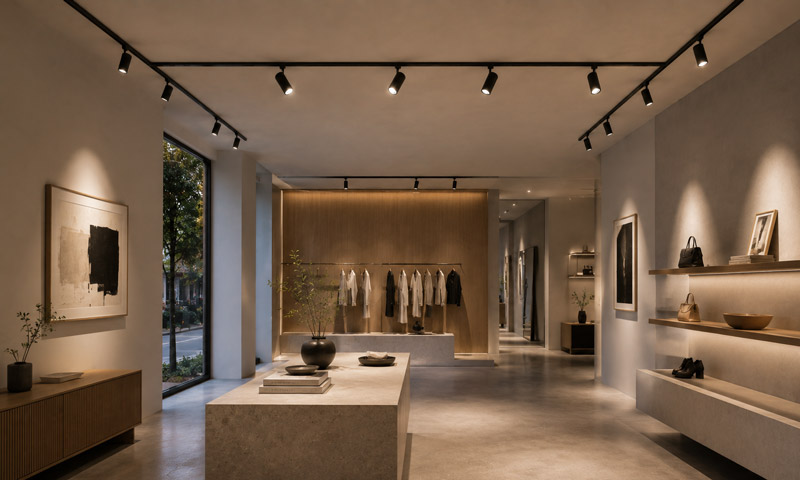
Adjustable lights mounted on tracks are known as track lights or track lighting.
A track lighting system usually consists of an electrified rail attached to the ceiling with multiple adjustable light heads.
These systems allow users to direct illumination toward specific objects or areas, making them particularly useful for:
- Retail displays
- Art galleries
- Museums
- Showrooms
- Restaurants
- Residential accent lighting
Individual directional ceiling fixtures may also be called spotlights.
Ceiling Light Names by Installation Method
One of the easiest ways to identify a ceiling light is by looking at how it is installed.
Recessed
The fixture is installed partly or completely inside the ceiling.
Typical names include recessed lights, recessed downlights, and recessed linear lights.
Surface-Mounted
The fixture sits directly on the ceiling.
Typical names include flush mount lights, surface-mounted downlights, and surface-mounted linear lights.
Suspended
The fixture hangs below the ceiling.
Typical names include pendant lights, chandeliers, and suspended linear lights.
Track-Mounted
The fixture connects to a powered ceiling track.
These are usually called track lights.
Ceiling Lights for Bathrooms and Wet Areas
The name of a ceiling light does not automatically indicate whether it can be installed in a bathroom, covered outdoor area, or other location exposed to moisture.
For these applications, the fixture's IP rating is important.
For example, IP44 fixtures provide protection against splashing water, while IP65 fixtures provide much stronger protection against water jets and dust. If the light will be installed in a bathroom or another moisture-prone location, understanding IP44 vs IP65 and the real difference can help determine which level of protection is appropriate.
Always consider the installation zone and local electrical requirements when choosing ceiling lighting for wet environments.
How to Identify the Correct Ceiling Light Name
If you are unsure what a particular ceiling light is called, check three characteristics:
| Question | Example | Likely Name |
|---|---|---|
| Is it hidden inside the ceiling? | Round fixture installed in a ceiling opening | Recessed light or downlight |
| Is it attached directly to the ceiling? | Fixture fixed against the surface | Surface-mounted or flush mount light |
| Does it hang from the ceiling? | Lamp suspended by cable or rod | Pendant light |
| Is it long and narrow? | Continuous LED fixture | Linear ceiling light |
| Can individual heads be adjusted? | Several spotlights attached to a rail | Track lighting |
| Is it decorative with several lamps? | Large hanging multi-arm fixture | Chandelier |
So, What Are Lights in the Ceiling Called?
The general term is ceiling lights, but different fixtures have more specific names.
A light installed inside the ceiling is usually called a recessed light or downlight. A fixture attached directly to the ceiling is a surface-mounted or flush mount light. Long fixtures are commonly called linear ceiling lights, while suspended fixtures are known as pendant lights or chandeliers.
Using the correct terminology makes it easier to search for products, compare lighting solutions, communicate with designers or contractors, and select the appropriate fixture for a specific installation.
Frequently Asked Questions About Lights in the Ceiling
1. How many lumens should a ceiling light have?
The right lumen output depends on the room size, ceiling height, and intended use. Bedrooms often require softer illumination, while kitchens, offices, and work areas usually need higher lumen levels. Instead of choosing by wattage alone, compare the fixture’s lumen output to determine its actual brightness.
2. What color temperature is best for ceiling lights?
For warm and comfortable interiors, 2700K to 3000K is commonly used in bedrooms, living rooms, and hospitality spaces. Around 4000K provides a cleaner neutral white suitable for offices, kitchens, and commercial areas, while 5000K produces a cooler daylight appearance.
3. What does CRI mean in ceiling lighting?
CRI, or Color Rendering Index, measures how accurately a light source reveals colors compared with natural light. A CRI of 80 is suitable for many general applications, while CRI 90 or higher is preferred where accurate color appearance is important, such as retail stores, galleries, kitchens, and premium interiors.
4. Are LED ceiling lights dimmable?
Many LED ceiling lights are dimmable, but the fixture, LED driver, and wall dimmer must be compatible. Using an incompatible dimmer can cause flickering, buzzing, limited dimming range, or lights that remain faintly illuminated after being switched off.
5. How long do LED ceiling lights usually last?
Quality LED ceiling lights commonly have rated lifespans of tens of thousands of hours. Actual service life depends on LED quality, driver performance, operating temperature, ventilation, switching frequency, and installation conditions. Proper thermal management is especially important for maintaining long-term light output.
