
Definition of Candelabra Bulbs
The E12 Base Explained
Common Shapes of Candelabra Bulbs
Lighting Technologies Used in Candelabra Bulbs
Common Applications
Brightness and Light Output
Color Temperature and Ambiance
Dimmability
Advantages of Candelabra Bulbs
How to Choose the Right Candelabra Bulb
Conclusion
FAQs
Candelabra bulbs are a distinctive category of light bulbs known for their small screw bases, elegant appearance, and frequent use in decorative lighting fixtures. Although many consumers recognize them by sight, fewer understand their specifications, applications, and differences from other bulb types. In residential, hospitality, and commercial interior design, candelabra bulbs serve both functional and aesthetic purposes. They are especially common in chandeliers, wall sconces, pendant lights, ceiling fans, and ornamental lamps where compact size and visual sophistication matter as much as illumination.
This article provides a professional overview of candelabra bulbs, including their definition, physical characteristics, common base types, shapes, lighting technologies, applications, advantages, limitations, and key considerations when selecting them.
Definition of Candelabra Bulbs
A candelabra bulb is typically defined by its small screw base, most commonly the E12 base in North America. The term “candelabra” comes from the bulb’s traditional resemblance to candle flames used in classical chandeliers and candleholders. Unlike standard household bulbs, which often use the larger E26 base, candelabra bulbs are slimmer, shorter, and designed to fit compact decorative fixtures.
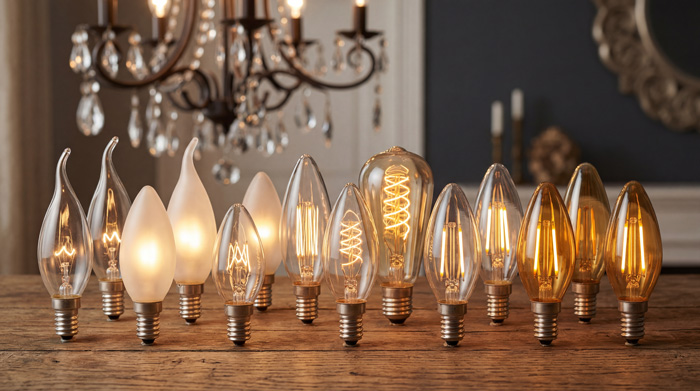
The term may refer to both the base type and the bulb style. In everyday usage, people often call any small decorative bulb a candelabra bulb, but technically, the classification depends largely on the base size. A bulb may have a candelabra base yet appear in multiple shapes, including torpedo, flame-tip, globe, tubular, and bent-tip styles.
The E12 Base Explained
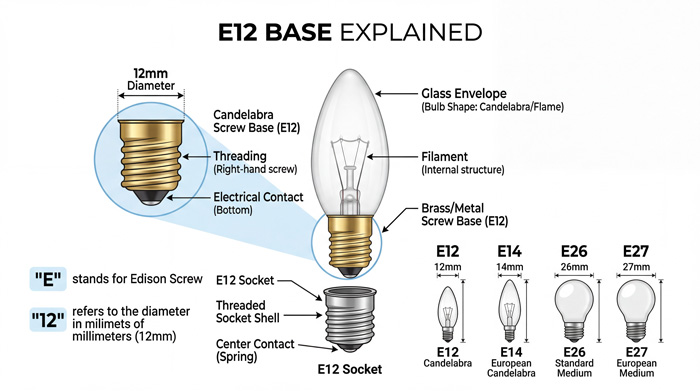
The most important technical identifier for a candelabra bulb is its base. In the United States and Canada, the standard candelabra base is called E12, where:
- E stands for Edison screw
- 12 refers to the base diameter in millimeters
This smaller base allows the bulb to fit in fixtures where standard bases would be too large or visually bulky. It is commonly used in decorative fixtures because it helps maintain a refined, proportionate appearance. In Europe and some other regions, similar decorative bulbs may use different base sizes, such as E14, which is known as the small Edison screw.
When buying replacement bulbs, the base must match the fixture socket exactly. Even if two bulbs look similar, a mismatch in base type will prevent installation.
Common Shapes of Candelabra Bulbs
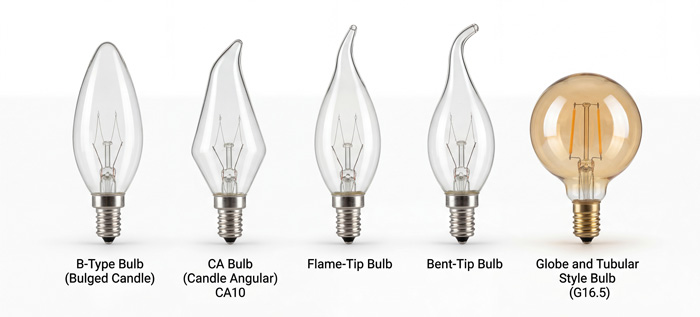
Candelabra bulbs are available in several shapes, each suited to different design and lighting needs. Shape affects not only appearance but also light distribution.
1. B-Type Bulbs
B-type bulbs are among the most traditional forms of candelabra lighting. The “B” often stands for “bulged” or decorative candle style. These bulbs usually have a smooth, tapered profile that mimics the silhouette of a candle.
2. CA Bulbs
CA stands for “candle angular.” These bulbs are shaped like candle flames and are widely used in chandeliers and sconces. Common variations include:
- CA10
- CA11
The number generally refers to the bulb diameter in eighths of an inch.
3. Flame-Tip Bulbs
Flame-tip bulbs have a pointed top shaped like a flame. They are used primarily where the bulb itself remains visible and contributes to the decorative effect of the fixture.
4. Bent-Tip Bulbs
Bent-tip versions add an ornamental curve at the top, enhancing the appearance of more traditional or luxury fixtures.
5. Globe and Tubular Styles
Some candelabra-base bulbs appear in globe or tubular forms. These are often used in vanity mirrors, signage, specialty lamps, or modern design applications.
Lighting Technologies Used in Candelabra Bulbs
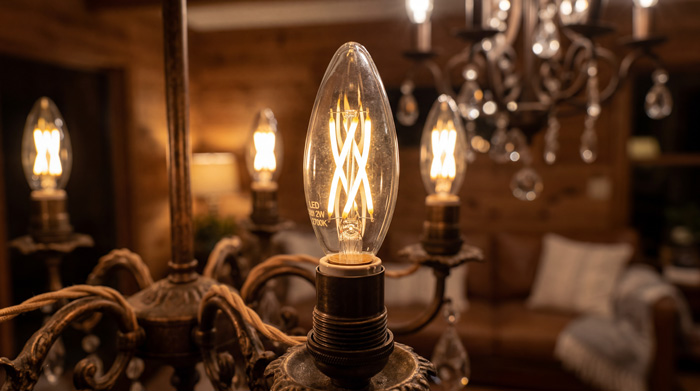
Over time, candelabra bulbs have been manufactured using several lighting technologies. Understanding these options is essential for evaluating performance, energy efficiency, lifespan, and visual quality.
Incandescent Candelabra Bulbs
Historically, most candelabra bulbs were incandescent. These bulbs produce light by heating a filament until it glows. Incandescent candelabra bulbs are valued for their warm color, smooth dimming behavior, and classic appearance.
However, they have significant drawbacks:
- Low energy efficiency
- Short lifespan
- High heat output
- Greater maintenance frequency
Despite their attractive warm glow, incandescent candelabra bulbs have largely been replaced in many markets by more efficient alternatives.
Halogen Candelabra Bulbs
Halogen versions are a more efficient variant of incandescent technology. They provide crisp light, excellent color rendering, and dimmability. They also maintain a relatively compact form factor suitable for decorative fixtures.
Still, halogen bulbs generate substantial heat and are less efficient than LED alternatives. Their use has declined as energy-efficiency regulations and consumer preferences increasingly favor LEDs.
LED Candelabra Bulbs
Today, LED candelabra bulbs are the dominant option. They combine decorative styling with modern energy performance. LED technology offers several advantages:
- Lower energy consumption
- Longer operating life
- Reduced heat emission
- Availability in multiple color temperatures
- Compatibility with many dimming systems
- Greater durability
LED candelabra bulbs can replicate the appearance of incandescent candle bulbs while outperforming them in nearly every technical category. Many models also include filament-style LED designs, which preserve the vintage aesthetic of traditional bulbs.
Common Applications
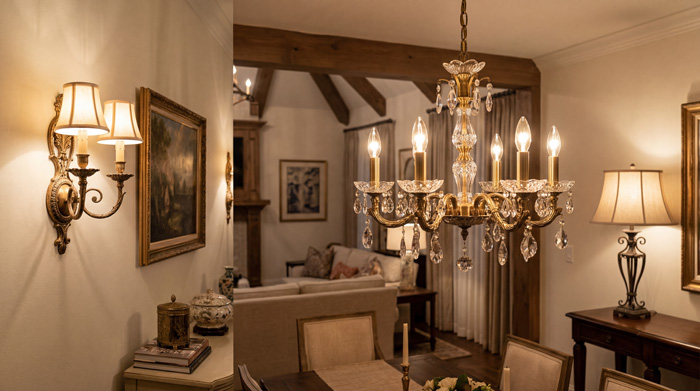
Candelabra bulbs are chosen primarily for fixtures in which visibility, scale, and design coherence are important. Their applications include both residential and commercial spaces.
Chandeliers
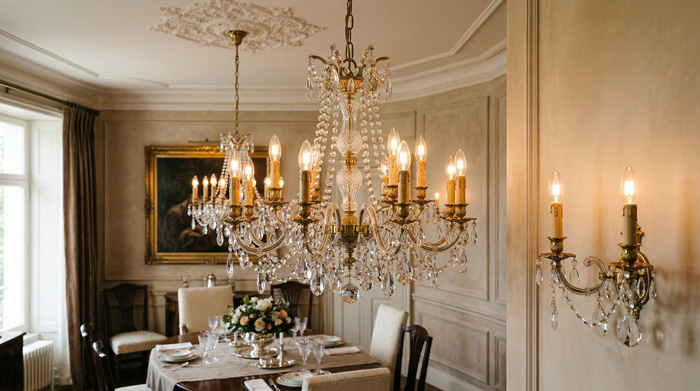
This is the most iconic use case. Chandeliers often have multiple upward-facing arms that resemble candleholders. Candelabra bulbs fit these fixtures naturally, preserving the intended decorative look.
Wall Sconces
Wall-mounted decorative fixtures frequently use candelabra bulbs because they are compact and attractive when exposed.
Ceiling Fans
Many ceiling fans with integrated light kits are designed for candelabra-base bulbs. Their smaller size helps manufacturers fit multiple bulbs into a limited housing.
Decorative Table and Floor Lamps
Some accent lamps, especially those with ornate or vintage-inspired designs, use candelabra bulbs for stylistic consistency.
Pendant and Lantern Fixtures
In open pendant or lantern-style fixtures, bulb visibility is part of the design. Flame-tip or filament-style candelabra bulbs are often selected for visual impact.
Hospitality and Commercial Interiors
Hotels, restaurants, banquet halls, and event venues use candelabra bulbs extensively in decorative lighting schemes, particularly to create ambiance and architectural character.
Brightness and Light Output
One common misconception is that candelabra bulbs are inherently dim. In reality, brightness depends on the bulb’s technology and wattage-equivalent output, not merely on its shape or base size.
Traditional incandescent candelabra bulbs often produced relatively modest lumen output, making them ideal for mood lighting but less suitable for task lighting. Modern LED candelabra bulbs, however, can achieve a wide range of brightness levels. Many are designed to replace 25W, 40W, or 60W incandescent bulbs while consuming only a fraction of the energy.
When selecting brightness, consumers should focus on lumens, not just watts. Watts indicate energy consumption, whereas lumens indicate actual light output.
As a general principle:
- Lower-lumen candelabra bulbs are suitable for ambiance
- Mid-range lumen options work well for general decorative illumination
- Higher-lumen LEDs can support more functional lighting needs
Color Temperature and Ambiance
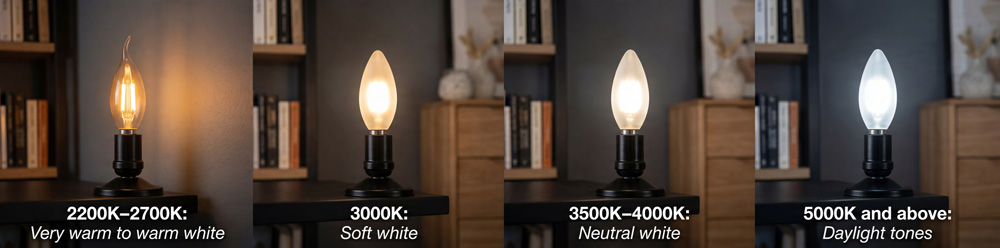
Color temperature strongly affects how candelabra bulbs perform in a space. Because these bulbs are often used decoratively, the choice of color temperature is especially important.
Typical options include:
- 2200K–2700K: Very warm to warm white, ideal for classic chandeliers, dining rooms, bedrooms, and hospitality settings
- 3000K: Soft white, suitable for balanced residential lighting
- 3500K–4000K: Neutral white, more common in transitional commercial or modern interiors
- 5000K and above: Daylight tones, less common in decorative candelabra applications
For traditional chandeliers and ornate sconces, warm white is usually preferred because it resembles candlelight and creates a welcoming atmosphere.
Dimmability
Dimming is often essential in fixtures that use candelabra bulbs. Dining spaces, living rooms, hotels, and event venues commonly rely on dimming to control mood and visual comfort.
However, not all candelabra bulbs are equally compatible with dimmer systems. Incandescent bulbs typically dim smoothly, while LED bulbs require compatible dimming circuitry. If an LED candelabra bulb is labeled dimmable, it should still be checked against the existing dimmer switch to avoid flicker, buzzing, or limited dimming range.
In professional lighting design, bulb-dimmer compatibility is a key selection criterion.
Advantages of Candelabra Bulbs
Candelabra bulbs offer several important benefits.
Aesthetic Appeal
Their greatest strength is visual elegance. They complement decorative fixtures without appearing oversized or intrusive.
Compact Size
Their small dimensions allow them to fit in narrow or ornamental fixtures where standard bulbs would be impractical.
Design Versatility
They are available in many shapes, finishes, and lighting technologies, making them suitable for traditional, transitional, and modern interiors.
Energy Efficiency with LEDs
LED candelabra bulbs provide substantial energy savings while maintaining an attractive appearance.
Long Lifespan
Compared with incandescent options, LED candelabra bulbs require less frequent replacement, which is especially valuable in hard-to-access chandeliers or high-ceiling installations.
How to Choose the Right Candelabra Bulb
Selecting the right candelabra bulb involves more than matching the socket. A professional purchasing decision should consider the following factors:
Base Type
Confirm whether the fixture requires E12 or another similar small base format.
Bulb Shape
Choose a shape appropriate to fixture visibility and design style. Flame-tip and bent-tip bulbs work well in exposed classical fixtures, while globe or tubular bulbs may suit modern or specialty applications.
Brightness
Evaluate lumens according to the room’s lighting purpose.
Color Temperature
Match the bulb’s color tone to the interior mood and design concept.
Dimmability
Verify both bulb and dimmer compatibility if adjustable light levels are needed.
Fixture Environment
Some enclosed fixtures require bulbs rated for enclosed spaces. This is especially important for LED longevity.
Finish and Appearance
Clear glass, frosted glass, and exposed filament styles each create different visual effects.
Conclusion
Candelabra bulbs are specialized lighting products that combine decorative elegance with practical performance. Defined primarily by their small screw bases—most notably the E12 base in North America—they are widely used in chandeliers, sconces, ceiling fans, and other ornamental fixtures. Their importance lies not only in their compact size but also in their ability to contribute directly to the character of a space.
While traditional incandescent and halogen versions helped establish the classic look associated with candelabra lighting, modern LED candelabra bulbs now offer a superior balance of beauty, efficiency, longevity, and flexibility. For homeowners, designers, contractors, and facility managers, understanding the specifications and selection criteria of candelabra bulbs is essential to achieving both visual harmony and lighting performance.
FAQs
Are candelabra bulbs and chandelier bulbs the same thing?
Not always. A “candelabra bulb” typically refers to the base type (commonly E12 in North America), while “chandelier bulb” describes bulbs designed for chandelier-style fixtures.
Many chandelier bulbs do use a candelabra base, but the terms are not strictly identical.
Can you use an adapter to fit a candelabra bulb into another socket type?
Yes, socket adapters are available, but they must be used carefully.
The adapter must match the fixture’s voltage, wattage limits, and physical space. In tight or decorative fixtures, adapters may cause heat buildup, poor fit, or aesthetic issues.
For long-term reliability, using the correct bulb type is usually the better solution.
Why do candelabra bulbs flicker or burn out quickly in chandeliers?
Common causes include incompatible dimmers, voltage fluctuations, loose socket contacts, overheating in enclosed fixtures, or low-quality LED drivers.
In multi-arm chandeliers, wiring inconsistencies can also contribute.
Using high-quality bulbs with stable driver electronics and proper compatibility helps reduce these issues.
Can candelabra bulbs be used outdoors?
Only if both the bulb and the fixture are rated for outdoor use.
For exterior or damp environments, choose bulbs labeled for damp or wet locations. Standard indoor bulbs may fail quickly when exposed to moisture or temperature changes.
Are LED candelabra bulbs compatible with smart switches and home automation systems?
Many are compatible, but not all.
Compatibility depends on the bulb’s internal driver design and whether it supports smart dimmers or automation systems.
Always confirm compatibility between the bulb, switch, dimming system, and fixture to avoid flicker, delays, or limited dimming performance.
