
Key Features of Art Deco Garden Lights
Common Types of Art Deco Garden Lights
Materials Used in Art Deco Garden Lighting
How Art Deco Garden Lights Affect Outdoor Spaces
Where to Use Art Deco Garden Lights
How to Choose Art Deco Garden Lights
Installation and Maintenance
FAQs
Art Deco garden lights are outdoor lighting fixtures inspired by the geometric shapes, luxurious materials, and streamlined appearance of the Art Deco design movement. They combine practical outdoor illumination with a distinctive decorative style, making them suitable for gardens, pathways, patios, entrances, and landscaped areas.
Unlike ordinary garden lights that focus mainly on function, Art Deco fixtures are designed to become visible architectural features. Their symmetrical forms, bold lines, metallic finishes, and patterned glass can add elegance and visual structure to an outdoor space during both the day and night.
Key Features of Art Deco Garden Lights
Geometric Shapes
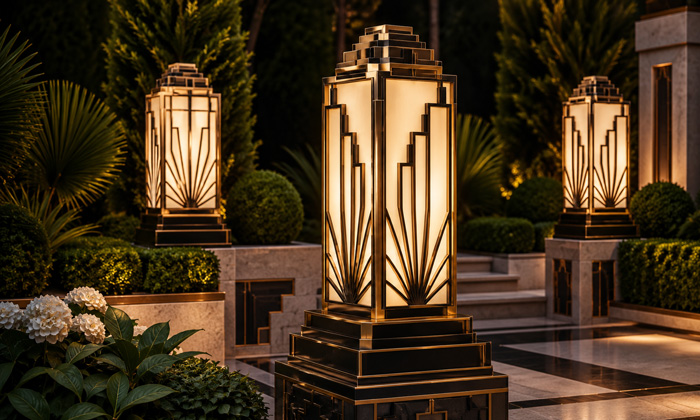
Strong geometry is one of the most important characteristics of Art Deco design. Garden lights may feature stepped profiles, rectangular frames, fan-shaped patterns, sunburst details, zigzags, or repeated vertical lines. These shapes give the fixtures a clean and organized appearance.
Symmetry
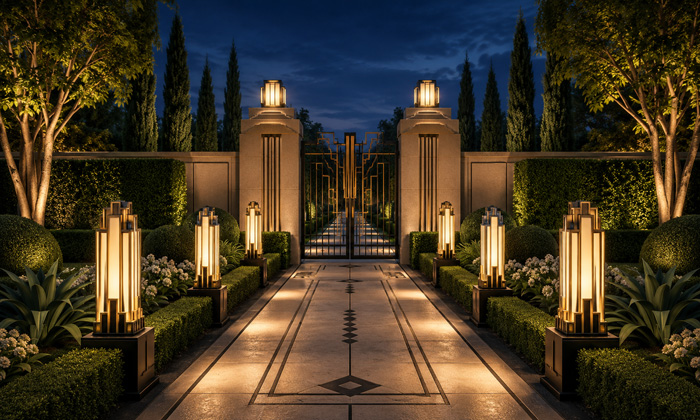
Most Art Deco garden lights use balanced, symmetrical designs. This makes them especially suitable for formal gardens, straight pathways, entrance gates, and carefully planned landscapes.
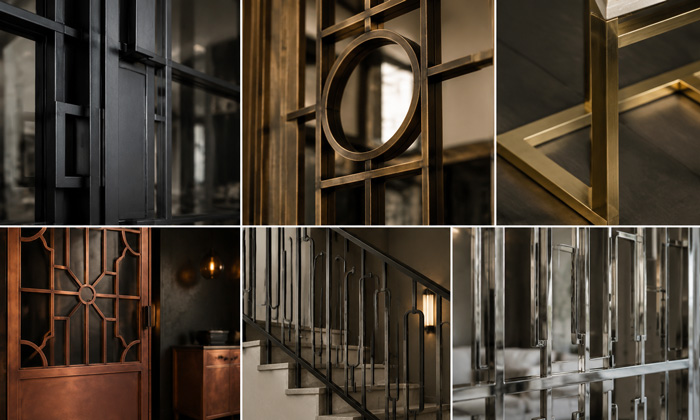
Decorative Metalwork
Metal frames are commonly used to create the bold structure associated with the style. Popular finishes include black, bronze, brass, copper, chrome, and brushed nickel. Dark finishes often create a dramatic architectural look, while brass and bronze add warmth and luxury.
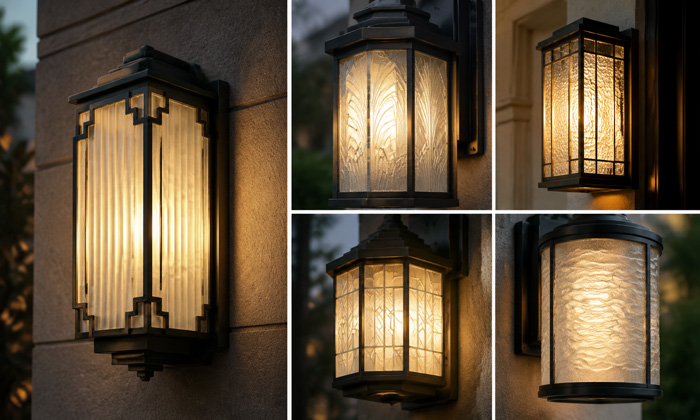
Patterned or Frosted Glass
Art Deco outdoor lights frequently use frosted, ribbed, etched, or textured glass. These materials soften the light, reduce glare, and create attractive patterns when the fixture is illuminated.
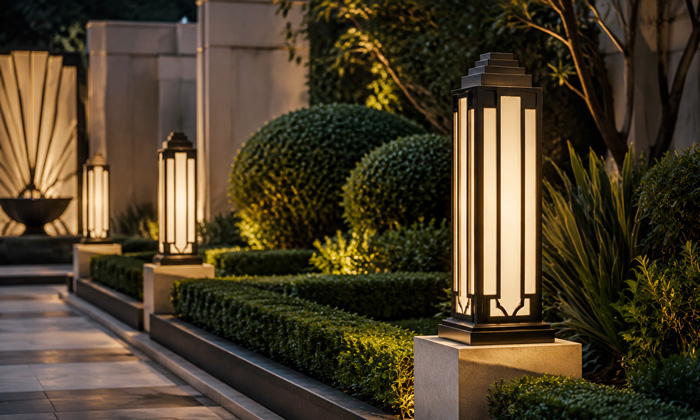
Streamlined Appearance
Although Art Deco can be decorative, it usually avoids excessive ornamentation. The overall appearance remains controlled, polished, and modern. This balance allows Art Deco lights to work in both traditional and contemporary gardens.
Common Types of Art Deco Garden Lights
|
Type |
Typical Location |
Main Purpose |
Common Design Features |
|---|---|---|---|
|
Path Lights |
Walkways and garden borders |
Improve visibility and guide movement |
Slim posts, stepped tops, geometric shades |
|
Exterior walls and entrances |
Provide security and architectural lighting |
Rectangular frames, patterned glass, symmetrical details |
|
|
Post Lights |
Gates, driveways, and large gardens |
Illuminate wider outdoor areas |
Tall structures, lantern-style heads, decorative metalwork |
|
Bollard Lights |
Paths, patios, and landscaped zones |
Create low-level ambient lighting |
Strong vertical lines, compact geometric forms |
|
Pendant Lights |
Covered patios and porches |
Provide overhead lighting |
Layered shapes, metal frames, frosted glass |
|
Stairs and raised garden areas |
Increase safety |
Recessed rectangular designs and controlled downward light |
Materials Used in Art Deco Garden Lighting
Because garden lights are exposed to changing weather conditions, their materials must provide both style and durability.
Aluminum is widely used because it is lightweight, resistant to corrosion, and suitable for powder-coated finishes. Stainless steel offers a cleaner and more contemporary appearance, while brass and copper develop an attractive natural patina over time. Cast iron can provide a heavier, more traditional look but may require additional protection against rust.
Glass is another important material. Frosted glass creates soft, diffused illumination, while clear glass produces brighter and sharper light. Textured or patterned glass is especially appropriate for Art Deco fixtures because it adds decorative detail without making the design look overly complicated.
How Art Deco Garden Lights Affect Outdoor Spaces
Art Deco lights can help define the structure of a garden. Repeated fixtures placed along a pathway create rhythm and visual order. Matching wall lights on both sides of a doorway establish symmetry, while a decorative post light can become a focal point near a gate or seating area.
The type of light produced is also important. Warm white lighting generally complements bronze, brass, black, and copper finishes. It creates a comfortable atmosphere and highlights the luxurious character of the design. Cooler light may work with chrome or silver-toned fixtures, but it can make outdoor spaces feel more formal and less inviting.
Art Deco fixtures are most effective when they provide controlled illumination rather than excessive brightness. Downward-facing lights can illuminate pathways without producing unnecessary glare, while frosted shades create gentle ambient lighting around patios and entrances.
Where to Use Art Deco Garden Lights
Art Deco garden lights work particularly well in structured outdoor environments. They can be installed beside straight paths, near clipped hedges, around paved courtyards, or next to symmetrical planting beds. They also complement stone walls, dark metal gates, tiled patios, and buildings with strong architectural lines.
However, these lights are not limited to formal gardens. A small number of carefully selected fixtures can introduce contrast into a natural or contemporary landscape. For example, a geometric wall light can provide a sophisticated accent against a simple exterior wall, while low bollard lights can add order to a loosely planted garden.
How to Choose Art Deco Garden Lights
The first consideration should be the scale of the fixture. Large wall lights may suit wide entrances and tall exterior walls, while smaller fixtures are more appropriate for narrow paths or compact courtyards. A light that is too small may disappear visually, while an oversized fixture can dominate the surrounding area.
The fixture should also have a suitable outdoor protection rating. Lights exposed directly to rain require stronger protection than fixtures installed beneath a covered porch. Corrosion-resistant materials and sealed electrical components are essential for long-term outdoor use.
Color temperature, brightness, and beam direction should match the purpose of the light. Path lights should provide enough illumination for safe movement, while decorative wall lights can use softer output. Fixtures should also coordinate with nearby doors, windows, railings, furniture, and other metal elements.
Correct installation is necessary for safety and performance. Outdoor electrical connections should be waterproof, secure, and suitable for local conditions. Hardwired fixtures are generally best installed by a qualified electrician.
Maintenance usually involves cleaning the glass, removing dirt from metal surfaces, checking seals, and replacing damaged components. Harsh cleaning chemicals should be avoided, especially on brass, bronze, or coated finishes. Regular inspection can help identify corrosion, water entry, or loose fittings before they cause permanent damage.
Are Art Deco garden lights energy-efficient?
Art Deco garden lights can be highly energy-efficient when fitted with LED bulbs.
LEDs consume less electricity, generate less heat, and last significantly longer than traditional incandescent bulbs while preserving the fixture’s decorative appearance.
Can Art Deco garden lights work with smart lighting systems?
Many Art Deco garden lights can be connected to smart bulbs, timers, motion sensors, or compatible outdoor lighting controllers.
This allows users to adjust brightness, create schedules, and operate the lights remotely.
Are solar-powered Art Deco garden lights available?
Solar-powered Art Deco garden lights are available in path, post, and wall-mounted designs.
Their performance depends on solar-panel quality, battery capacity, daily sunlight exposure, and the number of hours the lights operate each night.
Do Art Deco garden lights attract insects?
Outdoor lights can attract insects, especially when they produce bright blue or ultraviolet wavelengths.
Warm-colored LED bulbs usually attract fewer insects and are better suited to comfortable garden seating and dining areas.
Can original vintage Art Deco lights be used outdoors?
Original vintage fixtures should only be used outdoors after professional inspection and weatherproof conversion.
Old wiring, sockets, seals, and metal components may need replacement to meet modern outdoor electrical and safety requirements.
