

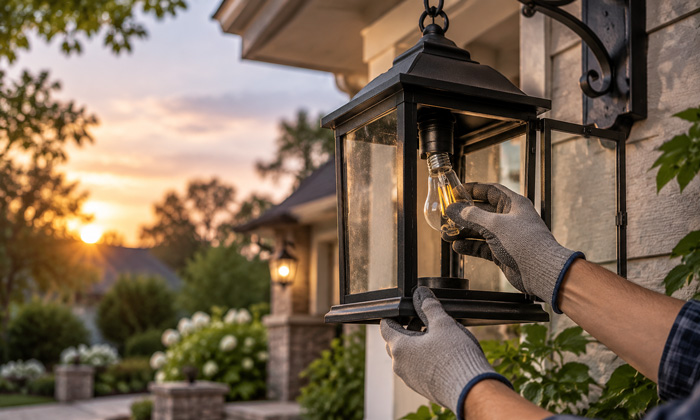
Prepare the Necessary Tools and Materials
Turn Off the Power Before Changing the Bulb
Access the Bulb Inside the Outdoor Hanging Lantern
Choose the Correct Replacement Bulb
Install the New Bulb and Reassemble the Lantern
Test the Outdoor Hanging Lantern
Common Problems When Changing an Outdoor Hanging Lantern Bulb
Maintain Your Outdoor Hanging Lantern
FAQs
Outdoor hanging lanterns are a popular choice for porches, patios, entryways, and outdoor walkways because they provide both decorative appeal and practical lighting. However, when the bulb inside the lantern stops working, replacing it can sometimes feel complicated because of the fixture’s enclosed design, glass panels, and weather-resistant structure.
Learning how to change the light bulb in an outdoor hanging lantern does not require professional electrical skills. With the right preparation and a careful approach, most homeowners can complete the replacement safely. The key is understanding how the lantern opens, choosing the correct replacement bulb, and handling the fixture carefully to avoid damaging the glass or electrical components.
Prepare the Necessary Tools and Materials
Before starting the replacement process, prepare everything you need so the job can be completed smoothly. Outdoor hanging lanterns are often installed in elevated locations, so having the correct tools will make the process safer and easier.
The basic items needed usually include:
- A compatible replacement light bulb that matches the lantern’s specifications
- A stable step ladder suitable for outdoor use
- A screwdriver that fits the fixture’s screws
- Work gloves to protect your hands and improve grip
- A soft cloth for cleaning the lantern and handling the bulb
The exact tools required may vary depending on the lantern design. Some models use small screws to hold the cover in place, while others use decorative knobs, clips, or removable panels. Before removing any parts, examine the lantern carefully to understand how the housing is secured.
Turn Off the Power Before Changing the Bulb
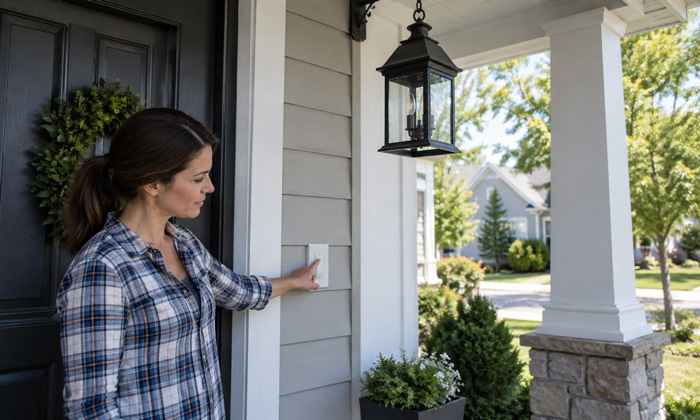
Safety is the most important step when replacing any outdoor light bulb. Turn off the wall switch connected to the lantern before touching the fixture. For additional protection, you can also turn off the circuit breaker that supplies power to the outdoor light.
Allow the old bulb to cool completely before attempting to remove it. Light bulbs, especially incandescent and halogen types, can become very hot during operation and may cause burns if handled immediately after use.
Outdoor lighting fixtures are exposed to moisture, temperature changes, and weather conditions, so avoid working on the lantern during rain or when the fixture is wet. A dry environment helps reduce safety risks and makes the replacement process easier.
Access the Bulb Inside the Outdoor Hanging Lantern
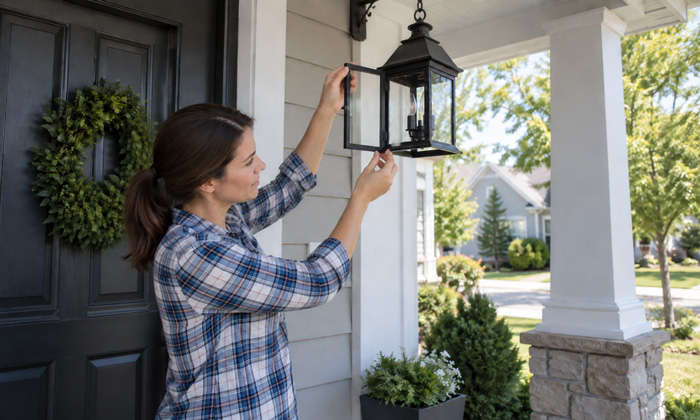
Outdoor hanging lantern designs vary by manufacturer and model, so the method for accessing the bulb may be different. Always check the product manual before opening the fixture and avoid forcing any parts to prevent damage.
The method for opening an outdoor hanging lantern depends on the fixture’s design. Some lanterns open from the top, some from the bottom, and others have removable glass sections that allow access to the bulb.
Place your ladder on a stable surface and position yourself so you can reach the lantern comfortably without stretching. Forcing yourself to reach too far can make it difficult to control small screws or fragile glass parts.
Many traditional hanging lanterns have a top cap secured with screws or a decorative finial. In this design, the top section can usually be removed by loosening the fasteners and carefully lifting the cover away from the bulb socket.
Other lanterns may have a hinged door or removable glass panel. If your fixture uses this style, open the panel slowly and support the glass while removing it. Outdoor glass can become fragile after years of exposure to sunlight and temperature changes, so avoid applying unnecessary pressure.
Some designs provide access through the bottom of the lantern. These models may require twisting off a bottom section or removing a decorative knob before the bulb becomes visible. Always check the structure carefully before taking apart any component.
Choose the Correct Replacement Bulb
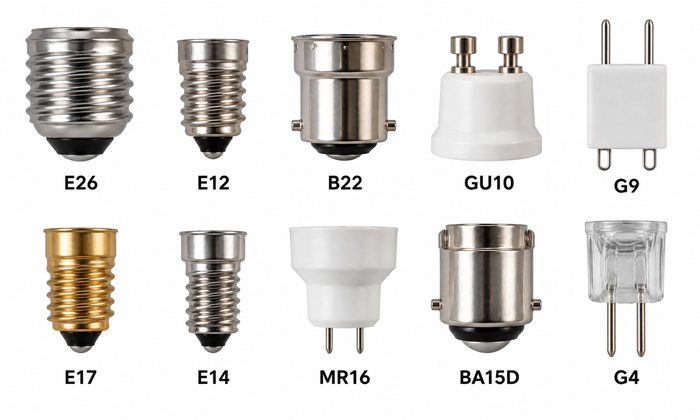
Common light bulb base types available on the market, showing different socket designs. Check the bulb base compatibility with your outdoor hanging lantern before installation to ensure a proper fit.
Selecting the correct bulb is essential for proper performance and safety. Outdoor hanging lanterns have specific requirements, and using an unsuitable bulb can shorten the fixture’s lifespan or create excessive heat.
Before installing a new bulb, check the following details:
- Bulb base type and size
- Maximum wattage allowed by the lantern
- Voltage requirements
- Whether the bulb is rated for outdoor use
Many homeowners choose LED bulbs as replacements because they consume less energy and generally last longer than traditional bulbs. However, the LED bulb should still match the fixture’s specifications and size requirements.
The shape of the bulb also matters. Decorative lanterns often use candle-style bulbs, while larger fixtures may require standard household bulbs. Choosing a bulb that fits properly ensures the lantern cover can close correctly after installation.
Install the New Bulb and Reassemble the Lantern
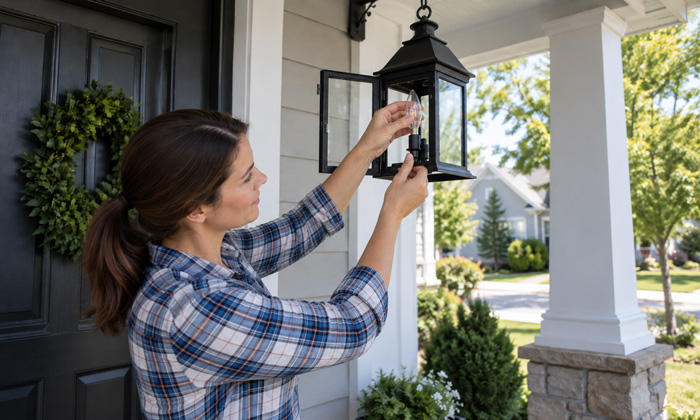
After selecting the correct replacement bulb, insert it into the socket and turn it clockwise until it is secure. Avoid overtightening because excessive force can damage both the bulb and the socket.
Before closing the lantern, inspect the inside of the fixture. Remove dust, insects, or dirt that may have collected inside the housing. Cleaning the glass panels at this stage can also improve the brightness and appearance of the light.
Once the bulb is installed, carefully reinstall the lantern cover, glass panels, or bottom section. Make sure every screw, clip, and decorative component is returned to its original position. A properly sealed lantern helps protect the bulb and electrical parts from outdoor moisture.
Test the Outdoor Hanging Lantern

After the fixture has been reassembled, restore power and turn on the light switch. Check whether the new bulb works properly and whether the lantern remains stable.
If the light does not turn on, first confirm that the bulb is installed correctly. Try another compatible bulb if necessary. If the problem continues, the issue may involve the socket, wiring, or power supply rather than the bulb itself.
A flickering light may indicate a loose connection, damaged socket, or moisture problem inside the fixture. In these situations, further inspection may be required.
Common Problems When Changing an Outdoor Hanging Lantern Bulb
Changing a bulb in an outdoor hanging lantern is usually simple, but some problems can make the process more difficult.
- The lantern cover will not open: Hidden screws, decorative caps, or clips may be holding the housing together. Inspect the fixture carefully instead of forcing it open.
- The bulb is stuck in the socket: Corrosion and weather exposure can make bulbs difficult to remove. Use gentle pressure and avoid twisting aggressively.
- The glass panel feels loose or unstable: Support the glass while working and make sure all retaining screws or clips are properly secured before finishing.
Understanding these common issues can help prevent accidental damage and make future bulb replacements easier.
Maintain Your Outdoor Hanging Lantern
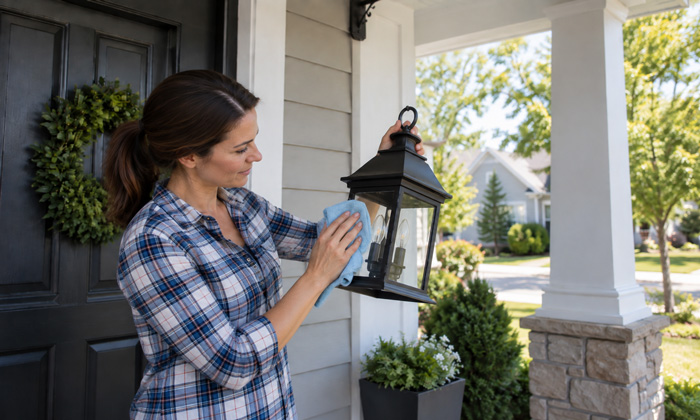
Regular maintenance can extend the life of your outdoor hanging lantern and reduce problems during future bulb changes. Cleaning the fixture periodically prevents dirt buildup and allows you to notice loose screws, damaged seals, or corrosion before they become serious issues.
It is also helpful to inspect the lantern after severe weather. Strong wind, heavy rain, and temperature changes can affect outdoor fixtures over time. Keeping the housing properly sealed helps protect the bulb socket and electrical connections from moisture.
Using high-quality outdoor-rated bulbs and replacing damaged parts promptly will help your lantern continue working efficiently.
FAQs
