Table of Contents
- Where to Find Government Grants for Solar Park Lights
- Land and Water Conservation Fund State Assistance
- State and Local Park Development Grants
- Transportation Alternatives and Recreational Trail Funding
- Community Development Block Grants
- Energy Efficiency Funding for Lighting Retrofits
- Solar Park Lighting Grant Options by State
- Where Solar Park Lighting Projects Run Into Trouble
- A purchase can stall over the pole and foundation
- Failed components can leave sections dark for months
- The lights can run out of charge before closing time
- Bright spots can hide poorly lit gaps
- How to Prepare a Grant Application for Solar Park Lighting
- 1. Describe the public access problem and document it
- 2. Confirm the site boundary and the project category
- 3. Price the complete installation and long-term operation
- 4. Calculate the grant request from eligible costs
- 5. Schedule reviews, purchasing, and acceptance
- FAQs
Government grants can help pay for solar-powered lights in public parks, on trails, and along pedestrian routes. The best funding source depends on what the lighting does. Lights that make a public recreation area usable after dusk may fit a park development grant. Lights along a route that connects a park to a school or neighborhood may fit a transportation program. A city improving a park in an eligible neighborhood may have a community development funding option.
Start with the route people need to use, the hours it needs to be lit, and the public agency that controls the site. Those details tell a grant administrator whether the work fits the program. They also tell your design team whether off-grid solar can provide reliable lighting at that location.
Where to Find Government Grants for Solar Park Lights
Land and Water Conservation Fund State Assistance
The Land and Water Conservation Fund, or LWCF, is a starting point for public outdoor recreation projects in every state. The National Park Service’s 2026 manual identifies fixed lighting that improves safety at public parks and recreation areas as an eligible type of improvement. It also allows solar energy systems that support outdoor recreation. A parks department can use those provisions to discuss its proposed scope with its state grant administrator.
Local applicants start with their LWCF State Liaison Office. The state sets its own application schedule and selection criteria and evaluates projects against its Statewide Comprehensive Outdoor Recreation Plan, commonly called a SCORP. LWCF generally reimburses up to 50% of eligible costs in the states. The property within the approved grant boundary is generally protected for public outdoor recreation in perpetuity, so review the boundary and land-use obligations before committing to a project.
National Park Service. (2026, May 1). State and local assistance programs manual (Version 2026)
For a broader park rehabilitation or a new recreation space in a qualifying area, review the Outdoor Recreation Legacy Partnership. It is a nationally competitive LWCF program with its own eligibility rules. The National Park Service updated those rules in 2026, including which areas qualify and who can apply directly. Local governments generally participate as subrecipients and should check the current funding notice with their state program office.
State and Local Park Development Grants
State park programs can fund improvements such as trail construction, park rehabilitation, and new recreation facilities. Ask the program administrator how it classifies the proposed lighting. Fixtures serving a new public gathering area, a full lighting-system rehabilitation, and routine replacement of failed components can receive different treatment. Maryland’s Program Open Space Local, for example, funds eligible capital improvements and excludes operating and maintenance costs.
Maryland provides a documented example of solar lighting in an approved park grant. In 2022, the state Board of Public Works approved $24,354 in Program Open Space Local funding for the Taylor Park gazebo area in Keedysville. The project included a gazebo, a gravel pad, picnic tables, and solar lighting. The award amount covered the approved development scope, which shows how a relatively small lighting component can fit a defined public park improvement.
Maryland Board of Public Works. (2022, November 16). Board of Public Works: After meeting agenda summary (p. 15).
Transportation Alternatives and Recreational Trail Funding
Consider Transportation Alternatives when the park route serves a pedestrian or bicycle connection. A greenway between a park and a neighborhood, a shared-use path leading to a school, or a crossing that connects a trail to a public entrance can have a transportation purpose. Explain where people are traveling, which part of the connection is hard to use after dark, and how the lighting improves that part of the trip.
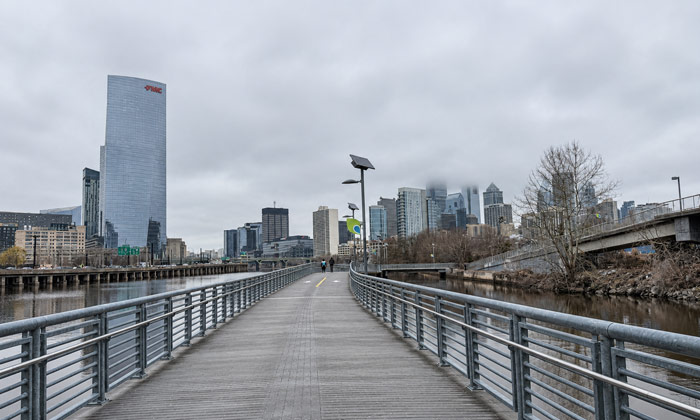
Check the state’s current guidance before adding fixtures to the budget. Alabama’s FY 2027 Transportation Alternatives guidelines, for instance, explicitly list lighting among the improvements that can be part of eligible pedestrian and bicycle facilities. For a recreation-focused trail, check the Recreational Trails Program separately. States administer their own trail programs and can advise whether the proposed lighting is an eligible expense.
Community Development Block Grants
The Community Development Block Grant program can support eligible public improvements. HUD’s guidance includes parks, playgrounds, sidewalks, and parking areas in that category. A lighting project still needs to meet a CDBG national objective. For an area-benefit project, the local CDBG office evaluates the population in the area the improvement actually serves.
This can be a route for cities upgrading access to an existing neighborhood park. Bring a map showing the blocks served, the entrances people use, and the specific areas where lighting is missing or unreliable. Ask the city, county, or state CDBG administrator how it determines the service area and whether the improvement can be included in its funding cycle.
Energy Efficiency Funding for Lighting Retrofits
If your project replaces existing lights, check for a current state energy program or an available award with an eligible retrofit scope. The U.S. Department of Energy’s Energy Efficiency and Conservation Block Grant guidance illustrates how specific these programs can be. It allows solar panels as part of certain streetlight replacements that use LEDs or comparably efficient lighting technology. Ask the energy office whether its current funding covers your site and whether it requires an existing fixture inventory or an energy-use baseline.
Solar Park Lighting Grant Options by State
These eight examples show how applicant rules, project size, and application cycles differ. The dates reflect agency postings checked on November 15, 2026. For a state outside the table, start with the National Park Service’s LWCF state liaison directory and the state parks or recreation grants office.
| State | Where to start | What to check for a lighting project |
|---|---|---|
| California | California State Parks LWCF | The agency lists January 14, 2027 as the local-agency deadline, with a 50% match. Check the application guide for your agency type and proposed development scope. |
| Florida | Florida Recreation Development Assistance Program | This reimbursement program serves eligible local governments developing public outdoor recreation. The FY 2027–28 application cycle closed October 15, 2026. Use the program page to track the next opportunity. |
| Maryland | Program Open Space Local | Counties and municipalities are eligible through the local allocation process. Development projects generally require a 10% or 25% local match, depending on the county’s plan. Check with the county’s grants administrator. |
| Minnesota | Outdoor Recreation Grant Program | Proposals need an eligible primary outdoor recreation facility and at least $100,000 in total project costs. Before developing a small lighting proposal, confirm how the state classifies the primary facility and any supporting improvements. |
| New York | Environmental Protection Fund Grant Program for Parks, Preservation and Heritage | Municipalities and eligible nonprofits with an ownership interest can seek matching funds for park improvements. The published 2026 round closed July 31, 2026. |
| Pennsylvania | Community Conservation Partnerships Program, Park Rehabilitation and Development | The state portal lists January 11 to April 30, 2027 for this category. Use the regional grant contact to confirm how lighting fits the proposed park rehabilitation. |
| Texas | Texas Parks and Wildlife Department Local Parks Grants | Eligible local government entities can apply for 50% matching grants on a reimbursement basis. Choose the category that fits the community and project and confirm its deadline. |
| Washington | Washington Wildlife and Recreation Program, Local Parks category | The state program includes community park renovation. Washington’s separate LWCF program lists no 2026 application round, so check each program’s calendar independently. |
Where Solar Park Lighting Projects Run Into Trouble
A purchase can stall over the pole and foundation
In October 2023, the Centerville, Utah, City Council tabled a proposed Community Park lighting purchase while staff obtained information about wind-load ratings and procurement compliance. The council had equipment and installation bids in hand. It still needed information about how the proposed installation would withstand local conditions.
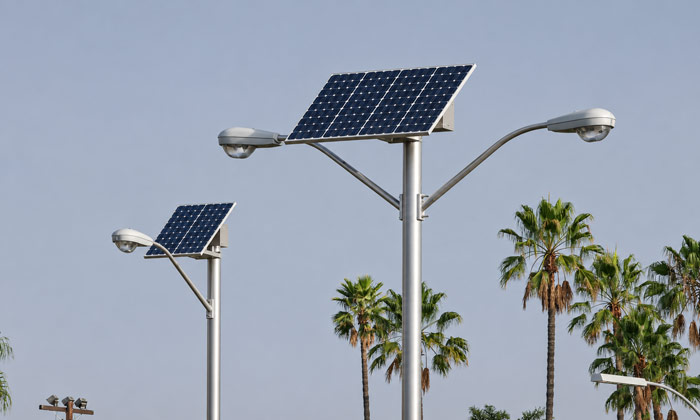
Ask for the structural design of the complete assembly early enough to include it in the cost estimate. The panel adds area that catches wind, and that affects the pole, mounting hardware, and foundation. If those components change after the grant budget is set, installation costs and the construction schedule can change with them.
Failed components can leave sections dark for months
In the Candelas area of Arvada, Colorado, a public district update reported that the city inspected approximately 150 solar streetlights and identified 49 that needed component or assembly replacements. The update described broken panels, pole defects, and supply delays. Some poles had already been removed, leaving parts of the neighborhood darker until replacements could arrive. The same repair logistics matter to parks with hard-to-reach poles or a single lit route to an exit.
For a park project, ask which batteries, controllers, panels, and fixtures can be replaced individually. Get lead times and include the labor and equipment needed to reach each unit. Assign a department to handle outage reports and decide which locations get priority when several fixtures fail. Include those costs in the local maintenance plan so the park can continue operating after the construction award closes.
The lights can run out of charge before closing time
A fixture that works on a sunny autumn evening can have a shorter runtime during a stretch of cloudy winter weather. Low solar input, snow on the panel, longer nights, and reduced battery performance in cold conditions can all affect the hours of light available. For tree-lined paths, assess how shade affects solar light charging at each proposed pole. A single estimate for the entire park can miss a shaded bend, entrance, or path under a dense tree canopy.
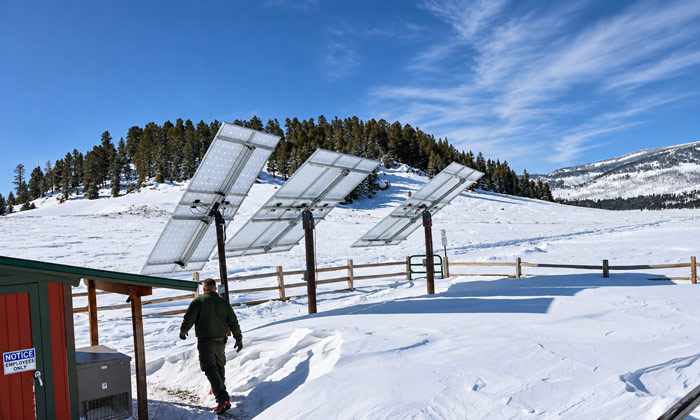
Specify hours of operation at each light level, then ask the designer for the corresponding energy calculation. For example, a fixture that draws 20 watts for four hours and 5 watts for eight hours uses 120 watt-hours per night. Three nights at that schedule with no usable charging would require 360 watt-hours delivered to the fixture. Actual battery sizing also accounts for system losses, usable battery capacity, temperature, and battery aging. Use the most demanding part of the park’s operating season to check the design.
Bright spots can hide poorly lit gaps
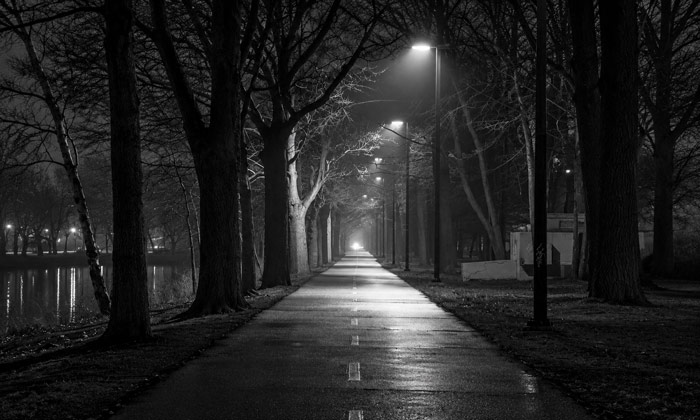
Where the route borders homes, waterways, or habitat, specify where the light should fall and the hours it is needed. Shielding, aiming, and controls can reduce spill beyond the path. At acceptance, walk the route after dark and verify that the installed system performs at the operating settings in the design.
Where the route borders homes, waterways, or habitat, specify where the light should fall and the hours it is needed. Shielding, aiming, and controls can reduce spill beyond the path. At acceptance, walk the route after dark and verify that the installed system performs at the operating settings in the design.
How to Prepare a Grant Application for Solar Park Lighting
1. Describe the public access problem and document it
Identify the entrance, trail segment, or recreation facility. Record its opening hours, where people arrive from, and the point at which visibility becomes a problem. Dated photos, maintenance records, and public comments can establish current conditions. If the project replaces a failed installation, record where and when failures occurred. A light that goes out before park closing points to a different design problem from a damaged fixture at a crossing.
A project description might read like this.
Improve after-dark access along the 600-foot path connecting the east parking lot to the park’s picnic shelter. Install solar-powered fixtures where the site assessment confirms adequate winter charging. Verify light levels at the path junction and accessible entrance, and test operation through the park’s posted closing time.
2. Confirm the site boundary and the project category
Bring a location map, a preliminary scope, and evidence of land control to the first conversation with the grant administrator. Ask whether the lighting can be proposed on its own or needs to accompany an eligible recreation facility, trail connection, or rehabilitation. For LWCF, identify the proposed grant boundary and check how the project fits the state’s outdoor recreation plan and scoring criteria.
3. Price the complete installation and long-term operation
Build the capital estimate around the work required at the site. Typical items to evaluate include design, fixtures and controls, panels and batteries, poles, foundations, installation, site restoration, and nighttime testing. Ask the program which items it will accept. Estimate ongoing inspections, cleaning, battery replacement, repair labor, and disposal in the operating budget.
Off-grid solar can be a good fit where extending electrical service requires costly trenching or would disturb an established trail. If a site already has usable power and conduit, price a wired alternative as well. Compare both designs over the same service period, with the same operating hours and required light levels. That gives the parks department a basis for explaining the technology choice and budgeting for its upkeep.
4. Calculate the grant request from eligible costs
Suppose a park project costs $120,000 and the program can reimburse up to 50% of eligible costs. If the entire scope is eligible, the maximum request under that percentage is $60,000. If the agency excludes $12,000 from the eligible budget, the maximum falls to $54,000. The applicant would then need $66,000 to complete the same scope. Compare the calculation with any award ceiling and secure enough cash to pay invoices as they come due under the reimbursement schedule.
5. Schedule reviews, purchasing, and acceptance
Get the eligible start date and any pre-award cost exceptions in writing before ordering equipment or authorizing work. Assign responsibility for applicable environmental and historic reviews, especially if pole foundations require ground disturbance. Put those steps on the same schedule as design, purchasing, construction, and reimbursement. Include acceptance checks for coverage along the route, operation at scheduled dimming levels, and an overnight runtime check where that performance is part of the specification.
FAQs
1. Can a homeowners association get a grant for solar lights in its community park?
A park reserved for HOA members generally falls outside public outdoor recreation programs such as LWCF. If the association is willing to establish lasting public access, ask the state program office whether an eligible municipality or park district can sponsor the project and what ownership or site-control arrangement the program would accept.
2. Can a city combine state and federal grants for the same solar lighting project?
It can when both programs allow the arrangement. Ask each administrator to approve which expenses its award will cover and whether the state funds qualify as match. Track each expense against the approved funding source. If the state-administered money originated from another federal award, confirm whether that federal program has specific authority to be used as match.
3. Do grant-funded solar park lights have to be made in the United States?
It depends on the award. The federal Build America, Buy America preference can apply to products incorporated into federally assisted infrastructure. The rules differ for manufactured products, iron and steel products, and construction materials. Check the award terms and any applicable waivers before bidding, and specify what sourcing documentation you will need for the fixtures, poles, and other covered items.
4. Do off-grid solar park lights require permits?
Local requirements can apply even when the fixtures use their own panels and batteries. Pole height, foundation design, location, and site use can affect the approvals required. For example, San José publishes different structural review and permit requirements based on light-pole height. Ask the local building and planning offices to review the proposed installation and identify the applicable approvals.
5. Can a municipality claim a federal solar tax credit through elective pay?
Eligible local governments can use IRS elective pay for certain credits, including the Clean Electricity Investment Credit when the underlying facility or property qualifies. The city should verify which equipment and costs qualify for its specific installation. For applicable solar facilities beginning construction after July 4, 2026, the current rules generally require placement in service by December 31, 2027. Elective pay also involves IRS pre-filing registration and a tax return.
