
The Philosophy of the Rustic Glow
1. String Lights: The Overhead Canopy
2. The Timeless Appeal of Lanterns
3. Barn Lights (Gooseneck Fixtures)
4. Mason Jar Lighting
5. Path Lighting: Shepherd’s Hooks and Mushrooms
6. Elemental Lighting: Fire Features
Comparison of Rustic Lighting Types
Design Strategies: Layering the Light
Conclusion
FAQs
In the realm of landscape design, lighting is rarely just about visibility; it is about narrative. While modern lighting focuses on sleek lines and clinical brightness, rustic garden lighting aims to tell a story of time, nature, and warmth. It captures the essence of a countryside cottage, a mountain lodge, or a vintage farmhouse, bringing a sense of nostalgia to outdoor spaces.
Achieving a truly rustic aesthetic requires more than simply buying "old-looking" fixtures. It requires an understanding of materials—weathered wood, seeded glass, copper that patinas over time, and wrought iron—and how they interact with the organic chaos of a garden. This article explores the most common types of rustic garden lights, offering a deep dive into how to utilize them to create an outdoor sanctuary that feels both timeless and inviting.
The Philosophy of the Rustic Glow
Before diving into specific fixtures, it is essential to understand the quality of light required for this style. Rustic lighting is synonymous with warmth. The harsh, blue-white glare of 5000K LEDs has no place here. Instead, the rustic garden relies on a temperature range of 2200K to 2700K, mimicking the soft, amber hues of candlelight or incandescent filaments.
The goal is not to flood the yard with light but to create pools of illumination and shadow. This interplay highlights the texture of bark, the roughness of stone walls, and the delicate movement of foliage. The fixtures themselves often serve as sculptural elements during the day, contributing to the garden's décor even when unlit.
1. String Lights: The Overhead Canopy
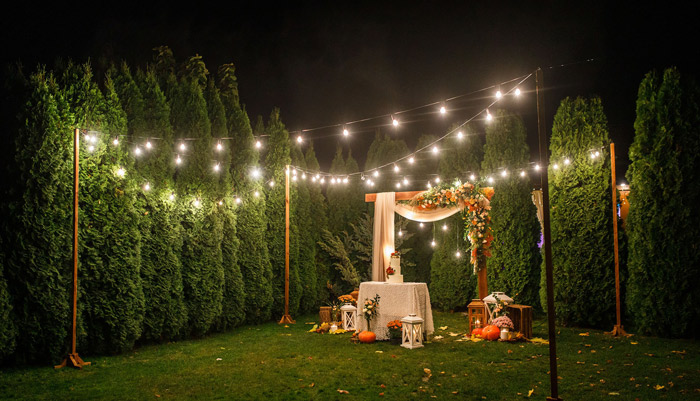
String lights have evolved from simple holiday decorations to the backbone of rustic outdoor design. They mimic the effect of starlight or fireflies, creating an artificial ceiling that defines an outdoor "room" without enclosing it.
The Edison Bulb String
Perhaps the most iconic element of modern rustic design is the Edison bulb. Characterized by their exposed, often squirrel-cage filaments and warm amber glass, these bulbs are a direct nod to the industrial revolution and turn-of-the-century aesthetics.
When strung across a pergola or between trees, heavy-duty commercial-grade cables with suspended Edison bulbs create a bistro-style atmosphere. Unlike delicate fairy lights, these distinct bulbs offer enough luminescence to dine by. The key to a rustic look here is the cable; thick black or dark green rubber cords look far more authentic and permanent than thin, transparent wires.
Fairy and Copper Wire Lights
On the other end of the spectrum are fairy lights. While Edison bulbs provide structure, fairy lights provide magic. Specifically, copper wire lights are excellent for rustic gardens because the wire itself blends into tree bark and wooden structures.
- Tree Wrapping: Tightly wrapping trunks and major branches of oak or willow trees highlights the natural architecture of the garden.
- Jar Stuffing: Bundling battery-operated fairy lights inside antique glass vessels creates portable lanterns.
- Shrub Draping: Loosely draping them over boxwoods creates a soft, ethereal glow that looks like a swarm of fireflies.
2. The Timeless Appeal of Lanterns
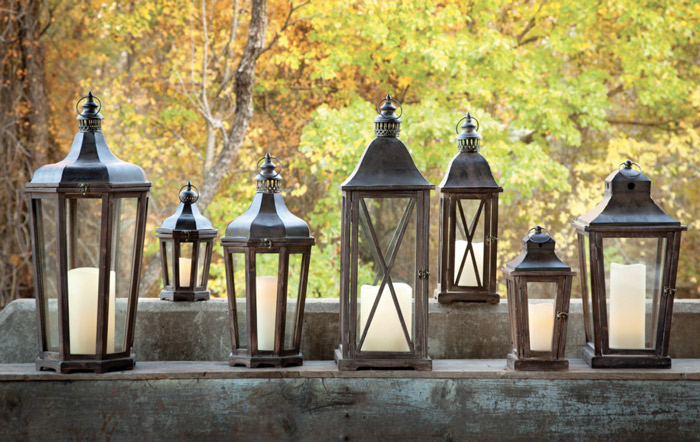
Lanterns are arguably the most versatile fixture in rustic design. They bridge the gap between the indoors and outdoors, reminiscent of a time when one would carry a light from the hearth to the barn.
Stationary Post Lanterns These are often used to mark entryways or the beginning of a path. A rustic post lantern usually features a "seeded" or "bubbled" glass pane, which diffuses the light and adds a vintage texture. The metal finish is crucial here; matte black, oil-rubbed bronze, or raw copper are preferred over shiny chrome or polished brass.
Hanging and Portable Lanterns For a more flexible approach, oversized lanterns placed directly on the ground (typically on stone steps or wooden decks) offer a casual, "undesigned" look.
- Moroccan/Punched Tin: These lanterns cast intricate shadow patterns on the ground, adding texture to the light itself.
- Wood and Glass: Boxy, wooden lanterns with heavy rope handles evoke a nautical or farmhouse feel.
- Hurricane Lanterns: Modeled after old oil lamps, these protect the flame (or bulb) from the wind and look incredibly authentic on a rustic dining table.
3. Barn Lights (Gooseneck Fixtures)

If your garden features structures—a shed, a garage, a fence line, or a pergola—barn lights are the quintessential choice for "Farmhouse Rustic."
Originating from the utilitarian lights used in early 20th-century factories and farms, these fixtures feature a wide, downward-facing metal shade attached to a curved "gooseneck" arm. They are strictly functional in design, which is exactly why they appeal to the rustic aesthetic. They direct light downward, reducing light pollution and focusing attention on whatever is beneath them, such as a potting bench or a doorway.
To maximize the rustic appeal, look for:
- Galvanized Steel: Offers a raw, industrial look that weathers well.
- Enamel Finishes: specifically in hunter green, barn red, or glossy black.
- Caged Bulbs: Many barn lights come with a wire cage covering the bulb, adding an extra layer of industrial texture.

Nothing screams "rustic" or "country living" quite like the Mason jar. Repurposing these canning staples into light fixtures is a hallmark of the DIY rustic movement. While they can look kitschy if overdone, they are charming when used with restraint.
Solar Mason Jar Lids
The easiest implementation involves replacing the standard lid with a solar-panel-integrated lid containing an LED string. These can be left on garden tables or hung from shepherd's hooks along a pathway. They charge during the day and glow automatically at dusk.
Chandelier Clusters
For a more dramatic statement, Mason jars can be hardwired into a cluster to form an outdoor chandelier. Suspended from a sturdy tree branch or the center of a gazebo, a cluster of blue-tinted vintage Ball jars with glowing filaments inside creates a stunning focal point that feels handcrafted and personal.
5. Path Lighting: Shepherd’s Hooks and Mushrooms
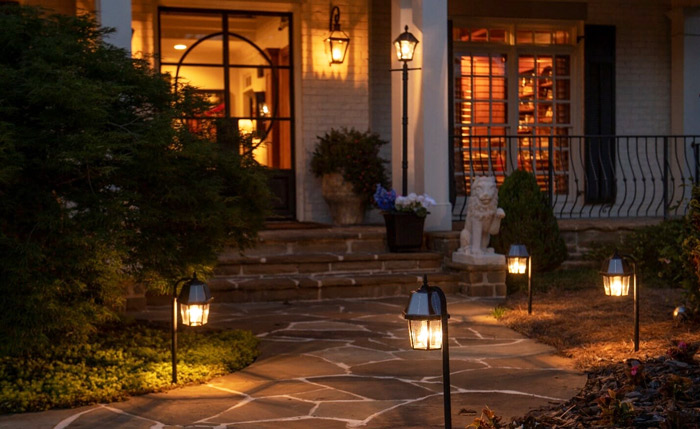
Navigating a rustic garden shouldn't feel like walking down an airport runway. You want to avoid the "soldier row" look of perfectly spaced, bright stakes. Instead, rustic path lighting should be organic and low-profile.
Shepherd’s Hooks Rather than sticking lights directly into the soil, using iron shepherd’s hooks to hang small lanterns or jars elevates the light source slightly. This looks particularly good in flower beds where low-lying lights might be obscured by overgrown foliage. The iron hook itself adds a vertical, rusted element to the garden design.
Mushroom Lights These are fixtures with a domed top that directs light strictly downward. For a rustic look, avoid black plastic. Seek out solid copper or brass mushroom lights.
- The Patina Factor: The beauty of using raw copper mushroom lights is that they start bright and shiny but, within a few months of exposure to rain and air, turn a beautiful verdigris green or brown, disappearing into the foliage during the day.
6. Elemental Lighting: Fire Features
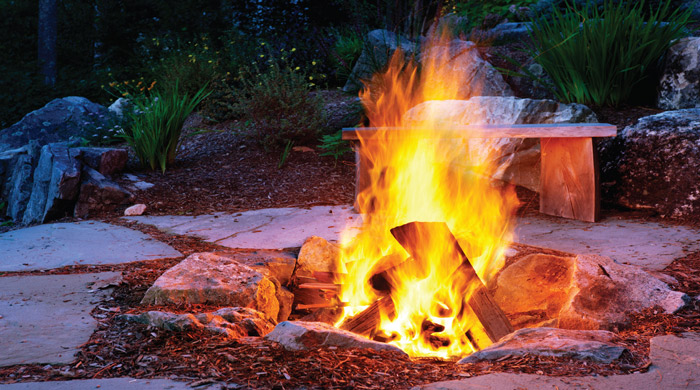
While electrical lighting is convenient, the most primal and truly rustic light source is fire. Incorporating real flame adds movement, heat, and a soundscape (the crackle of wood) that bulbs cannot replicate.
- Fire Pits: The centerpiece of a rustic garden. Whether it’s a simple ring of stones or a heavy cast-iron bowl, the fire pit provides a central gathering glow.
- Tiki Torches (The Rustic Way): Avoid the cheap bamboo stakes found at party stores. Opt for metal torches in copper or iron that use citronella oil. These can be staked into the ground or mounted to deck railings.
- Chimineas: These clay or metal fireplaces are excellent for directing smoke upward and providing a contained, glowing mouth of light.
Comparison of Rustic Lighting Types
| Lighting Type | Primary Aesthetic Vibe | Best Placement | Maintenance Level | Installation Difficulty |
|---|---|---|---|---|
| Edison String Lights | Bistro, Industrial, Warm | Overhead (Pergolas, Trees) | Medium (Bulb replacement) | Moderate (Requires hanging points) |
| Fairy Lights | Whimsical, Magical, Delicate | Wrapped on trees, in jars | High (Delicate wires break) | Low to Moderate |
| Lanterns (Candle) | Traditional, Romantic | Steps, Tables, Hooks | High (Lighting candles) | Low (Portable) |
| Lanterns (LED/Solar) | Traditional, Convenient | Steps, Tables, Hooks | Low | Low |
| Barn Lights (Gooseneck) | Farmhouse, Utilitarian | Walls, Sheds, Fences | Low | High (Hardwiring usually required) |
| Mason Jar Lights | DIY, Country, Nostalgic | Hanging from trees, tables | Low (if solar) | Low |
| Copper Path Lights | Organic, High-End, Subtle | Lining walkways, flower beds | Low (Patina is desired) | Moderate (Wiring) to Low (Solar) |
| Fire Features | Primal, Cozy, Interactive | Patios, Open gravel areas | High (Fuel/Wood management) | Low to High (Gas lines vs. Wood) |
Design Strategies: Layering the Light
A high-quality rustic lighting scheme never relies on just one of the types listed above. The magic lies in the layering.
The Three Layers of Rustic Lighting:
- Ambient (The Mood): This is usually provided by your string lights or a large fire pit. It sets the overall brightness level of the area.
- Task (The Function): This ensures you don’t trip or spill your drink. Path lights along the walkway and Barn lights over the grill or back door serve this purpose.
- Accent (The Drama): This is purely aesthetic. Up-lighting a particularly gnarly old oak tree or placing a candle lantern on a stone wall creates depth and visual interest.
Tips for Authentic Placement
- Hide the Source: In rustic design, seeing the glare of the bulb is often undesirable (unless it's an Edison bulb). Try to position path lights behind ferns or rocks so you see the glow on the path, not the fixture itself.
- Embrace Asymmetry: Do not line up path lights in perfect pairs. Stagger them. Place a lantern on the left side of the stairs and a potted plant on the right. Rustic design feels collected, not calculated.
- Warmth over Wattage: Always choose lower lumens. It is better to have more fixtures with low light output than one fixture that is blindingly bright.
Rustic garden lighting is an invitation to slow down. It rejects the hyper-polished look of modern landscaping in favor of textures that feel worn, loved, and enduring. Whether you are draping heavy-gauge Edison strings across a courtyard or placing a solitary copper lantern on a mossy stone wall, the objective remains the same: to create a space that feels like a refuge.
By carefully selecting materials that weather beautifully—like copper, iron, and wood—and prioritizing warm, amber light temperatures, you can transform your garden into a twilight sanctuary that echoes the charm of the past while illuminating the beauty of the present.
FAQs
What IP rating is required for rustic lights exposed to rain and sprinklers?
"Rustic" refers to the style, not the durability. For outdoor safety, you must check the Ingress Protection (IP) rating. For fixtures placed under a porch or roof, IP44 is sufficient. However, for path lights, barn lights, or any fixture fully exposed to heavy rain and garden sprinklers, you should insist on a minimum of IP65 (water jet tight). Using IP44 lights in open garden beds often leads to moisture ingress and short circuits within a year.
How does Color Rendering Index (CRI) affect the appearance of rustic materials?
While Color Temperature (e.g., 2700K) determines how "warm" the light feels, CRI (Color Rendering Index) determines how "real" the colors look. For rustic gardens rich in natural textures like red brick, cedar wood, and sandstone, you should choose LED bulbs with a CRI of 90 or higher. A low CRI (below 80) will make rich wood tones look dull, grey, or muddy, effectively ruining the expensive rustic aesthetic.
Can I use standard "rustic" iron fixtures in coastal or saltwater environments?
Generally, no. Standard wrought iron or galvanized steel will rust destructively within months near the ocean due to salt air. For a rustic look in coastal areas, you must use solid brass or marine-grade (316) stainless steel with a powder-coated finish. Alternatively, solid copper is an excellent coastal choice; it will oxidize rapidly to a green verdigris patina, which actually forms a protective layer against further corrosion.
What is the realistic lumen output difference between Solar and Hardwired rustic lights?
There is a significant performance gap. A typical rustic solar path light generates 10 to 50 lumens and relies on battery reserves that fade in winter. In contrast, a hardwired low-voltage (12V) system typically delivers 200 to 500 lumens per fixture consistently. If your goal is security or safely illuminating a dark stairway, do not rely on solar; hardwired systems are necessary for critical visual tasks.
How do I ensure my rustic lighting is "Dark Sky" compliant?
Many rustic fixtures, especially glass lanterns and string lights, cast light in all directions, contributing to light pollution. To be Dark Sky compliant, choose fixtures classified as "Full Cutoff" (like Gooseneck Barn Lights with deep shades). These ensure 100% of the light is directed downward. This minimizes glare, protects the view of the stars, and creates a more dramatic, high-contrast effect on the ground rather than "flooding" the yard.
