
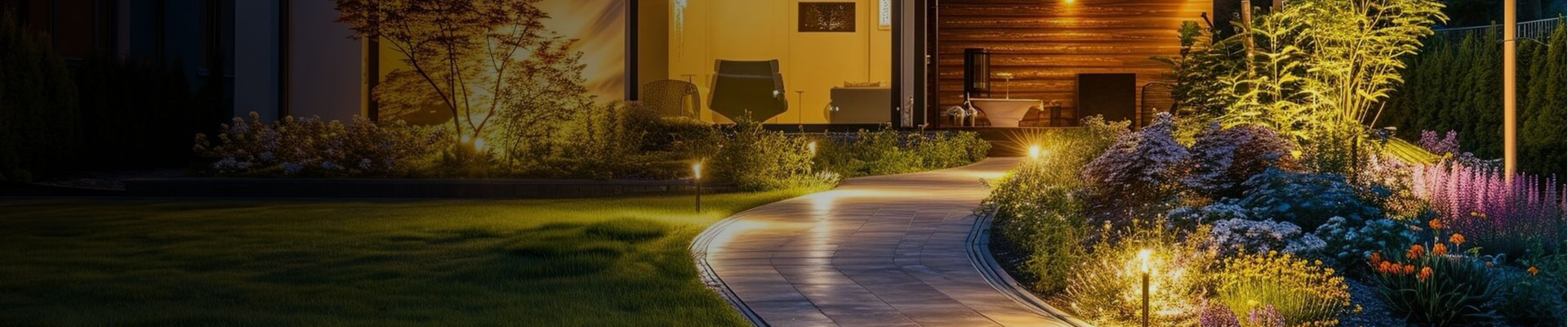

What “best” means in Australian gardens in 2026
The non-negotiables when buying LED garden lights
1) Choose the right power architecture first
2) Optics and glare control are more important than brightness
3) Weather protection should match exposure
4) Materials and finishes determine long-term appearance
5) Serviceability is a hidden cost saver
Best categories for Australian gardens—and how to choose within them
A) Smart RGB or tunable-white spotlights for feature lighting
B) DIY-friendly low-voltage kits for quick upgrades
C) Architectural spikes, bollards, and wall lights for a clean, permanent look
D) Solar lights for “no cable” convenience
Strong options in Australia (2026)
How to make your lighting look “professional” with fewer fixtures
Practical bullet checklist (short, high-impact)
Suggested “best” setups for typical Australian homes (2026)
FAQs
Australia is one of the hardest places in the world to keep outdoor lighting looking good and working reliably. Intense summer UV, sudden storms, coastal salt spray, irrigation overspray, heat-soak on dark hardscapes, and temperature swings can all punish seals, plastics, coatings, and electronics. That’s why the “best” LED garden light in 2026 is not simply the brightest or the cheapest—it’s the product (and system) that holds up over time, delivers the right beam where you need it, avoids glare, and matches how Australians actually use outdoor spaces: front-path safety, feature trees, entertaining zones, pool surrounds, and functional side access paths.
In 2026, the market has matured into three main directions. First is the expandable low-voltage ecosystem—modular lights that connect to a transformer/controller and can be added over time. Second is the architectural, more permanent approach—bollards, ingrounds, step lights, and wall luminaires selected for a clean look and long service life, usually installed more like a “set-and-forget” system. Third is solar, which has improved in convenience and everyday reliability, but remains best when cabling is impractical or the goal is gentle pathway marking rather than high-performance feature lighting.
This guide focuses on what matters in Australian conditions and provides a professional shortlist across categories, with a comparison table to help you choose.
What “best” means in Australian gardens in 2026
For most homes, garden lighting is no longer a single purchase; it’s a small “project” that evolves. People start with a few lights to improve safety and ambience, then add more once they see what works. The best systems support this: you can begin with two or three path or spike lights, then expand to uplighting feature trees, adding subtle wall washing, and defining entertaining areas with warmer, layered illumination.
Aesthetics matter, but comfort matters even more. A garden can look expensive with relatively few fixtures if the light is controlled and placed properly. Conversely, a garden can look harsh and messy with many fixtures if glare isn’t managed. In 2026, good outdoor lighting is defined by beam control, colour quality, durability, and serviceability—not by raw lumen numbers.
The non-negotiables when buying LED garden lights
1) Choose the right power architecture first
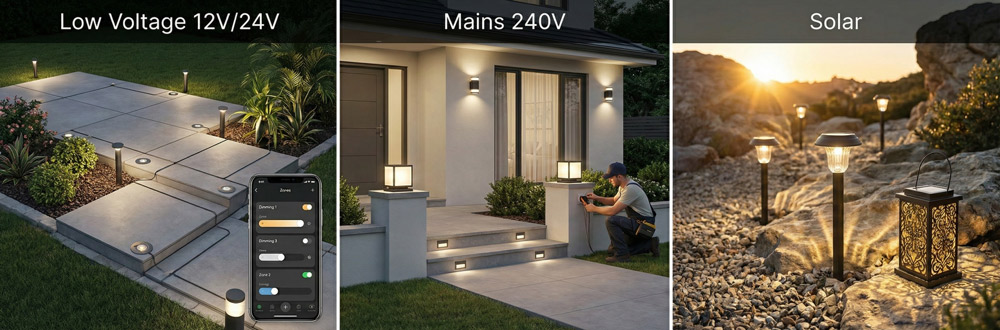
Before picking brands or styles, decide how you want to power the system:
- Low-voltage (typically 12V or 24V): Ideal for modular, expandable garden lighting. It’s popular because it’s easier to plan, easier to add to, and often more DIY-friendly. Low-voltage also suits smart controllers, dimming, and zoned lighting.
- Mains (240V): Often best for permanent architectural lighting such as bollards, step lights, and wall luminaires where you want minimal visible cabling and long-term stability. Mains usually requires professional installation and more planning.
- Solar: Best for areas where running cables is difficult or where you want a fast, non-invasive solution. Solar lighting works well for accent paths, feature spots, and occasional-use areas. However, performance depends on sunlight exposure, battery quality, and seasonal conditions, so it’s generally less consistent than wired systems and less suitable for high-output or precision lighting.
If flexibility and future expansion are priorities, low-voltage systems are usually the best choice; for landscape builds or renovations with a fully resolved design, mains power delivers the cleanest and most permanent result; while solar lighting is best considered a practical supplement where simplicity and cable-free installation are key.
2) Optics and glare control are more important than brightness
Outdoor lighting fails aesthetically when it creates glare—hotspots that draw the eye and feel uncomfortable. Look for fixtures with:
- Shielding and hoods on spikes to hide the LED source from common viewing angles
- Defined beam angles (e.g., narrow for trunks, wider for canopies/walls)
- Diffusers/louvres on bollards so paths are lit without shining into eyes
“Bright” does not equal “beautiful.” A controlled, moderate output placed correctly almost always looks better.
3) Weather protection should match exposure
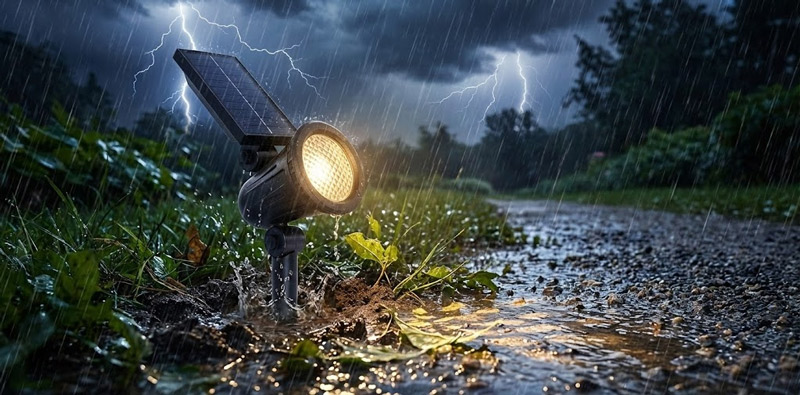
Image of the Lumetro LM-S9901 model.
Australia’s exposure levels vary wildly. A sheltered courtyard in Melbourne has different demands than an open coastal garden in Perth. As a practical approach:
- Higher IP ratings are smarter for exposed lawns, gardens near sprinklers, and coastal homes.
- Inground uplights should be treated as premium fixtures: water management, drainage, and robust sealing are essential.
4) Materials and finishes determine long-term appearance
Coastal air and UV can quickly degrade low-quality coatings. For longevity, prioritize:
- Marine-grade or corrosion-resistant metals where possible
- Quality powder coating or anodising
- UV-stable polymers (where plastic parts are used)
5) Serviceability is a hidden cost saver
Some fixtures use integrated LED modules; others use replaceable lamps (like MR16). Integrated LEDs can be excellent if the fixture and driver are high quality, but it’s worth checking warranty and real-world serviceability. Replaceable lamps can be convenient, but only if the housing, seals, and connectors are also durable.
Best categories for Australian gardens—and how to choose within them
A) Smart RGB or tunable-white spotlights for feature lighting
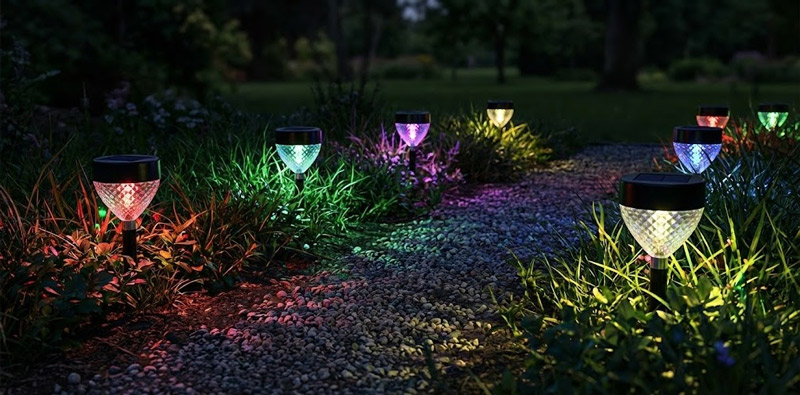
Image of the Lumetro LM-507 Model.
If you want “wow” moments—feature trees, textured walls, garden art, or entertaining zones—smart lighting is the easiest way to get dramatic results. Smart systems let you schedule scenes, dim late at night, or shift tone for events.
This category suits households that actually use scenes and scheduling. If you know you’ll keep everything on warm white forever, you may prefer a simpler non-smart setup with excellent optics.
Where it shines: entertaining patios, pool landscaping (with appropriate electrical planning), feature trees, front-yard highlights
Common mistake: using too many coloured lights rather than selecting two or three hero elements
B) DIY-friendly low-voltage kits for quick upgrades
This is the “most Australian” choice: practical, expandable, and fast to install. Many mainstream brands supply plug-and-play or transformer-based kits that can start small and grow. A good kit will give you consistent connectors, compatible extension cables, and enough fixture variety (spikes, path lights, sometimes wall lights) to evolve into a complete plan.
Where it shines: first-time garden lighting, weekend projects, rental-to-owner transitions, staged landscaping upgrades
Common mistake: placing lights too close to plants (overlighting) or aiming spikes directly at eye level
C) Architectural spikes, bollards, and wall lights for a clean, permanent look
If you care most about finish quality and a “designed” look, lean into architectural luminaires. These are the fixtures you choose when you want consistent materials, refined optics, and a cohesive visual language across the garden.
Bollards and step lights are especially powerful for safety because they define circulation routes without harsh glare when chosen well. Wall lights can also help by adding depth and soft ambient fill, reducing the need for many ground fixtures.
Where it shines: front paths, modern landscapes, formal gardens, long-term homes
Common mistake: choosing bollards that are too bright and unshielded, creating “airport runway” glare
D) Solar lights for “no cable” convenience
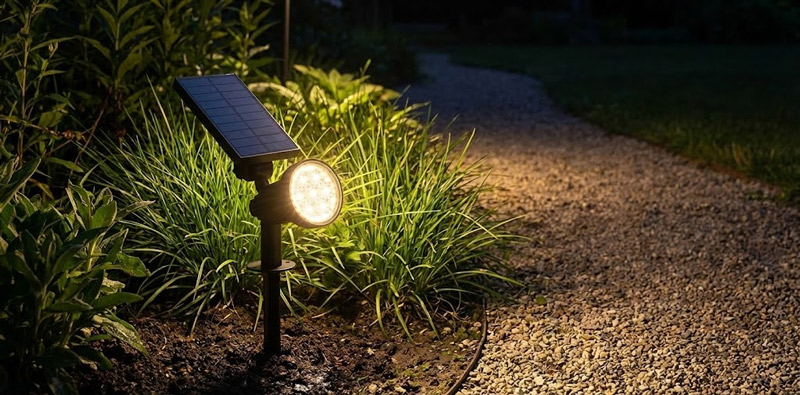
Image of the Lumetro LM-S9901 Model.
Solar is best when cabling is impractical: side paths, sheds, temporary landscaping, rentals, and low-stakes pathway marking. Solar in 2026 can be quite reliable for gentle illumination, but it still struggles with shaded areas, long winter nights, and high-output feature lighting.
Where it shines: quick installs, rentals, temporary beds, low-level pathway markers
Common mistake: expecting solar to perform like wired feature lighting under tree cover
Strong options in Australia (2026)
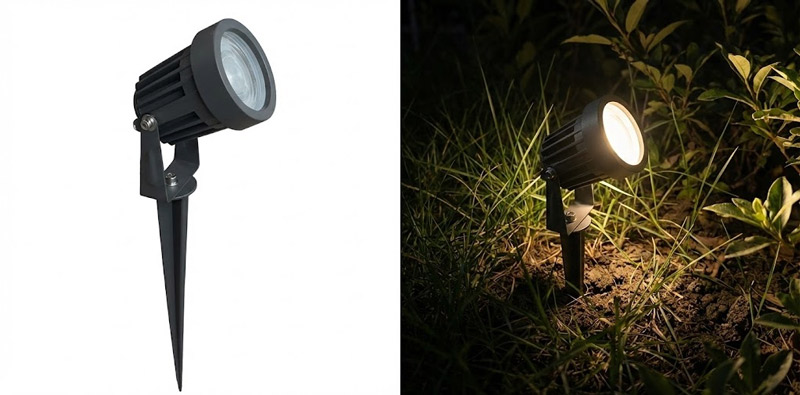
Lumetro LM-C0209 Model
A wired LED spike light, designed for flexible ground installation. Ideal for side passages, gates, shed approaches, and security or accent lighting where discreet, directional illumination is needed. Powered by a stable electrical connection for consistent performance regardless of weather or daylight conditions. Position carefully to avoid direct glare while ensuring optimal coverage of the target area.
Holman Warm White Garden Spotlight Value Pack (12V system)
A practical low-voltage starter kit for warm-white accent lighting. Designed for DIY installations, the modular system allows easy expansion as your landscape evolves. Performs best when lights are aimed to graze foliage and tree trunks while keeping glare out of main sightlines.
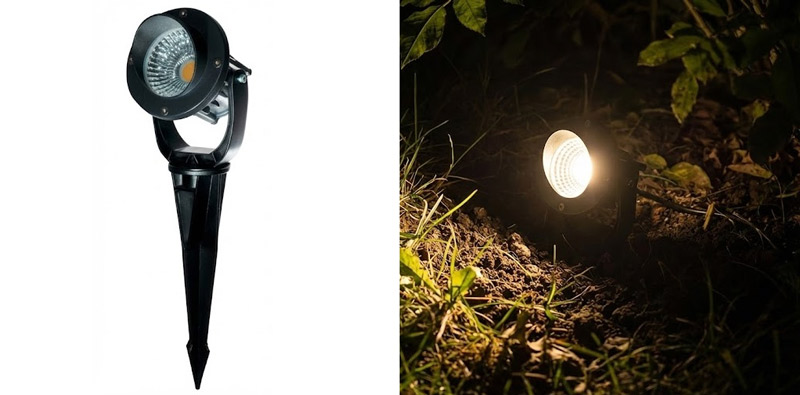
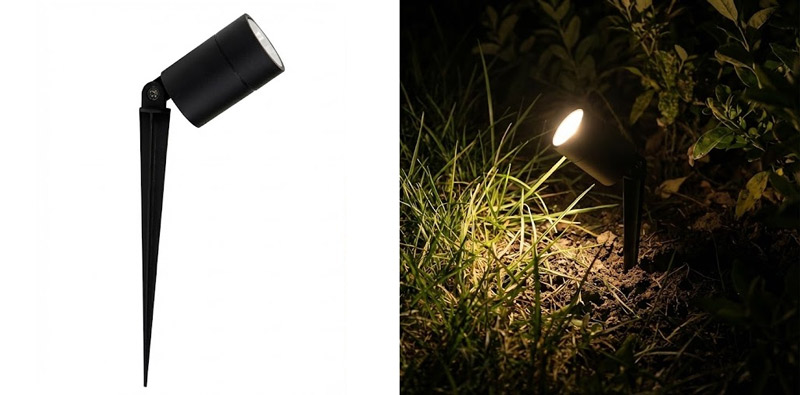
Havit LED Garden Spike Spotlight
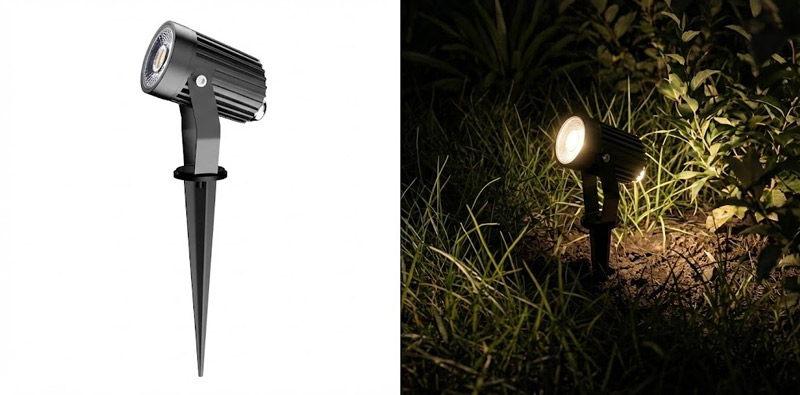
A more architectural-style spike spotlight often chosen for clean finishes and disciplined light distribution. Suitable for long-term outdoor exposure when you want reliable feature lighting for planting beds, fence lines, and entry landscaping with a more designed appearance.
Domus KIRA Garden Spike Light
A targeted and adjustable spike light designed for precise highlighting. Ideal when accurate aiming matters, such as illuminating a single statement plant, garden sculpture, or controlled uplighting on a tree trunk without excessive light spill into paths or windows.
Eglo Outdoor Bollard
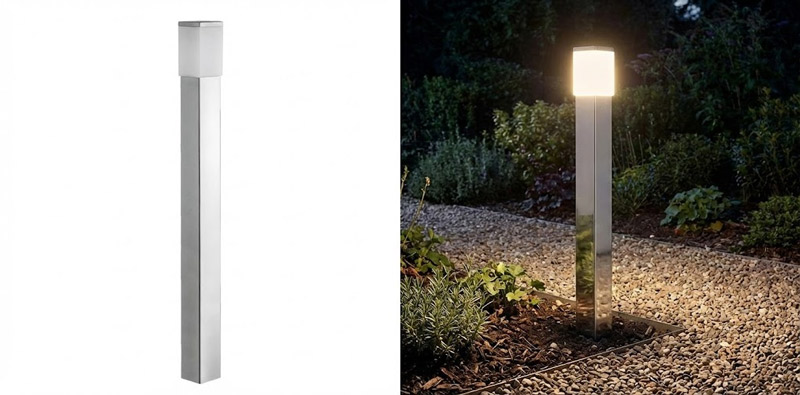
A strong option for permanent pathway definition. Outdoor bollards work best when they provide comfortable, low-glare guidance along walkways and entry points. Proper spacing and glare control help create an evenly guided path rather than a harsh, over-lit runway.
Philips Hue Lily Outdoor Spotlight
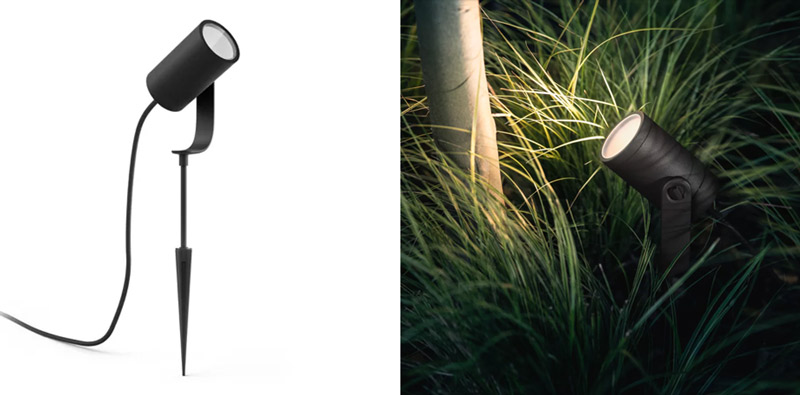
A high-end smart spotlight for feature trees and walls. Strong beam control, dimming, scenes, and scheduling make it ideal for everyday warm white lighting with the option to add colour when needed. Best used to create depth with a few well-aimed highlights rather than over-lighting the entire garden.
How to make your lighting look “professional” with fewer fixtures
A professional lighting plan is usually layered and restrained. Rather than evenly spacing lights everywhere, aim for hierarchy:
- Safety layer: softly define steps, edges, and main paths
- Feature layer: choose 2–4 hero elements (a tree, a textured wall, an entry statement)
- Ambient layer: subtle fill so the garden has depth, not just isolated bright spots
If you do only one thing right, do this: light “things,” not “spaces.” A path looks better when you light the edges and nearby planting softly, not when you blast the path surface with unshielded light.
Beam selection is a major differentiator:
- Narrow beams for trunks and vertical accents
- Medium beams for shrubs and layered beds
- Wide beams for wall washing or broad canopies
Colour temperature also defines the mood. Warm white (around 2700–3000K) tends to flatter planting and timber, feels relaxing, and generally suits entertaining. Neutral white can feel crisp but may look harsh if overused.
Practical bullet checklist (short, high-impact)
Use these checks when comparing products in-store or online:
- IP rating and sealing quality: higher protection for exposed locations and sprinkler zones
- Materials and finish: coastal areas benefit from corrosion-resistant construction and strong coatings
- Driver/transformer quality: stable output and longevity matter more than peak brightness
- Optics: beam angle choices and glare control (hoods, louvres, diffusers)
- Connector ecosystem: expansion is easier when cables and fittings are consistent within a system
- Warranty and service approach: understand what’s replaceable and what’s not
Suggested “best” setups for typical Australian homes (2026)
If you want a practical starting point that produces strong results without overspending, consider these scenario-based approaches:
1) The “Weekend Upgrade” (low-voltage modular warm-white)
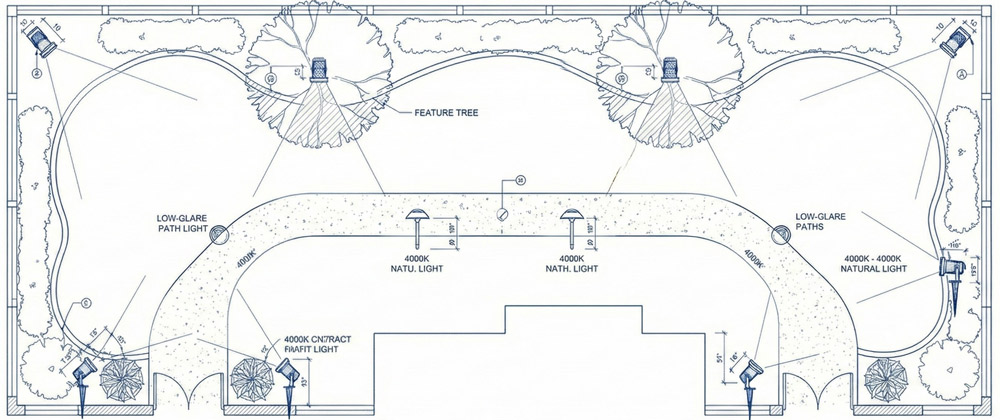
Start with 4–6 spike lights: 2 for entry planting, 2 for a feature tree, and 2 for a back corner or fence line. Add 2–4 low-glare path lights later once you know your walking routes. This approach is easy to expand and usually delivers the best improvement per dollar.
2) The “Entertainer” (smart scene lighting + warm-white base)
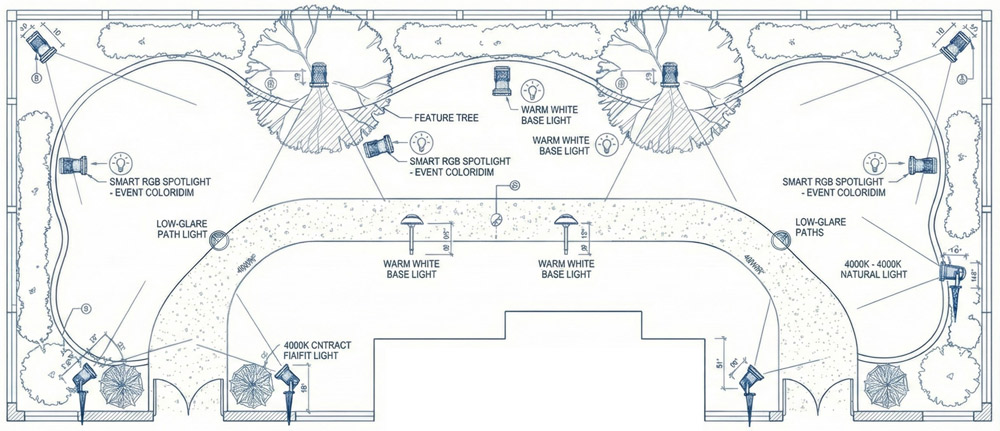
Use smart spotlights for feature trees and mood lighting near the entertaining area, but keep a warm-white base layer for everyday use. Schedule dimming late at night and reserve colour for events. This gives you flexibility without turning the garden into a permanent light show.
3) The “Designed Landscape” (architectural fixtures, fewer but better)

Choose a cohesive family of spikes/bollards/wall lights with consistent finishes. Use fewer fixtures, but place them precisely. This setup looks premium and tends to age better visually—especially when glare is controlled.
4) The “No-Cable Solution” (solar path markers + one hero zone)
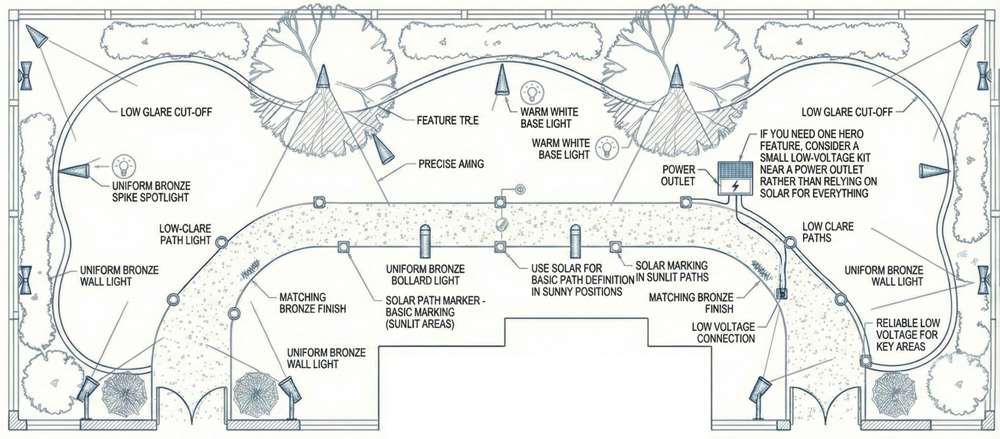
Use solar for basic path definition in sunny positions. If you need one hero feature, consider a small low-voltage kit near a power outlet rather than relying on solar for everything.
FAQs
Should I choose smart garden lighting or a standard 12V warm-white system?
Smart garden lighting is best when you value flexibility such as dimming, scheduling, and mood changes for entertaining or feature areas. A standard 12V warm-white system suits homeowners who prefer a simple, dependable setup that can be expanded over time without apps or software. In many Australian gardens, a mixed approach works best: use smart lighting selectively for key features, and rely on warm-white low-voltage lighting for everyday paths and background illumination.
For harsh Australian weather, what matters more: brand, IP rating, or materials?
All three matter, but sealing quality and materials usually determine long-term durability.
A high IP rating only performs as intended if housings, cable entries, and lens seals remain stable under UV exposure.
Architectural-grade fittings with robust materials tend to last longer in exposed gardens and coastal conditions.
How do I avoid glare with spike lights?
The goal is to light the object, not the viewer’s eyes.
Hide the light source from common viewing angles by placing spikes behind planting lines and avoiding aim paths that shoot across walkways or toward seating.
Use adjustability to fine-tune the beam so it highlights trunks or foliage without spilling light into windows.
Are bollards always better for paths than spike lights?
Not always. Bollards work well when you want a clean, architectural rhythm along primary paths, but they must have good glare control and proper spacing.
Spike lights can also work for paths when used indirectly—lighting planting or edges rather than aiming directly at the walking surface.
Many professional designs use bollards on main routes and spikes for softer background layers.
How should solar motion-sensor lights be used in a professional garden lighting plan?
Solar motion-sensor lights work best as a functional, on-demand layer rather than the main design lighting. They are ideal for side passages, gates, bin areas, and shed approaches where cabling is impractical and constant illumination isn’t needed. For professional results, place them where they receive strong daytime sun, set the detection angle carefully, and avoid aiming the light directly toward eye level or windows to prevent glare when motion is triggered.
