

PAR stands for Parabolic Aluminized Reflector. In general LED lighting, it identifies a family of directional lamps used to illuminate specific objects or areas. LED PAR bulbs commonly appear in track lighting, recessed fixtures, architectural accents, and outdoor spotlights.
The number following PAR, such as PAR20, PAR30, or PAR38, describes the lamp’s nominal diameter. Brightness, power consumption, and beam angle are separate specifications.
There is also a different meaning of PAR in plant lighting: Photosynthetically Active Radiation. Understanding the context helps you distinguish a bulb’s physical format from the light used for photosynthesis.
Why Do LED Bulbs Still Use the PAR Name?
Traditional PAR lamps use a parabolic reflector with an aluminum-coated surface to redirect light forward. A front lens helps establish the beam pattern, allowing the lamp to concentrate illumination on a particular area.
LED PAR bulbs retain this familiar designation, although their internal construction can differ substantially. Modern designs may use reflectors, optical lenses, or total internal reflection lenses to control the light produced by LEDs.
The PAR label therefore remains useful when identifying replacement lamps, but it does not guarantee that every LED model contains a traditional aluminized reflector. The product’s optical specifications describe how its beam actually performs.
What Do PAR16, PAR20, PAR30, and PAR38 Mean?
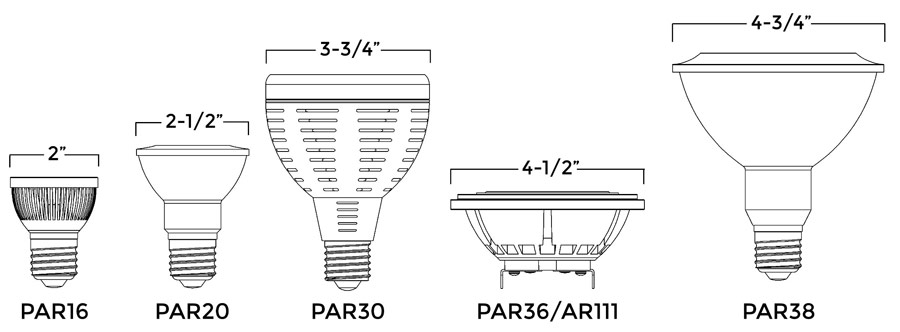
The number after PAR expresses the nominal lamp diameter in eighths of an inch.
The calculation is:
Nominal diameter in inches = PAR number ÷ 8
| Bulb designation | Nominal diameter in inches | Nominal diameter in millimeters |
|---|---|---|
| PAR16 | 2.00 | 50.8 |
| PAR20 | 2.50 | 63.5 |
| PAR30 | 3.75 | 95.3 |
| PAR36 | 4.50 | 114.3 |
| PAR38 | 4.75 | 120.7 |
For example, PAR38 means a nominal diameter of 38 ÷ 8, or 4.75 inches. These are naming dimensions; actual product measurements can vary slightly. Lumicrest LED Lighting
Diameter Does Not Establish Compatibility
A replacement lamp also needs the correct overall length, base, and electrical rating. PAR30 lamps, for example, are available in different neck configurations, which can affect their position inside a fixture.
Check the original lamp markings and the fixture specifications before choosing a replacement. Two lamps with the same face diameter can still have different installation requirements.
What Is the Difference Between PAR, BR, and MR Bulbs?
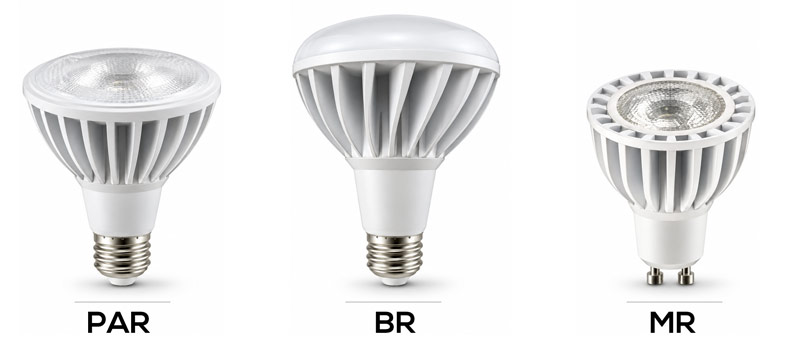
PAR, BR, and MR are lamp designations with different origins and common applications. All three families can be available with LED light sources.
| Lamp family | Meaning | Typical lighting characteristics | Common applications |
|---|---|---|---|
| PAR | Parabolic Aluminized Reflector | Controlled directional output, with beam width determined by the model | Accent lighting, displays, architectural features, outdoor spotlights |
| BR | Bulged Reflector | Typically broad illumination with softer transitions | General recessed lighting and wider room coverage |
| MR | Multifaceted Reflector | Compact directional format with several beam options | Small spotlights, display lighting, and compact accent fixtures |
PAR lamps are commonly selected when aiming and beam control matter. BR lamps are often chosen for broader, softer coverage. MR lamps are particularly useful where a compact directional source is required.
These descriptions are general tendencies. Modern LED optics create considerable variation, so compare the stated beam angle and dimensions rather than relying on the lamp family alone.
A PAR16 and an MR16, for example, both have a nominal diameter of two inches, but their bases and other specifications may differ.
How Does Beam Angle Affect LED PAR Lighting?
A narrower beam concentrates illumination within a smaller area. A wider beam distributes light across a larger surface.
For LED PAR lamps, available angles depend on the product. Some provide concentrated spot beams, while others offer wider flood distributions. A PAR designation does not impose one universal beam angle.
| Example beam angle | General effect | Possible application |
|---|---|---|
| 15° | Concentrated illumination | A small feature viewed from farther away |
| 25° | Defined accent beam | A sculpture, display, or architectural detail |
| 40° | Wider accent coverage | A larger object or part of a facade |
| 60° | Broad directional coverage | A wider surface or group of features |
These examples illustrate beam selection rather than fixed industry categories. Manufacturers can use different descriptions for “spot” and “flood.”
Distance Changes the Illuminated Area
For a circular beam aimed squarely at a flat surface three meters away, a simple geometric estimate gives:
- A 25° beam diameter of approximately 1.33 meters.
- A 40° beam diameter of approximately 2.18 meters.
Actual illumination extends beyond the nominal beam boundary. Beam angle is commonly based on the points where intensity falls to half the maximum, so it should not be interpreted as a sharply defined edge.
This is why mounting distance and aiming deserve as much attention as the bulb itself.
Does a Larger PAR Number Mean More Brightness?
A larger PAR number means a larger nominal lamp diameter. It does not establish light output.
To compare brightness, start with what lumens mean in light bulbs. Lumens describe visible light output, while watts describe electrical power consumption. Different LED lamps can produce similar output while consuming different amounts of electricity.
For directional lighting, also consider:
- Center beam candlepower, measured in candela: the intensity along the center of the beam.
- Illuminance, measured in lux: the light reaching a surface at a particular location.
Two lamps with similar lumen output can produce different results on the same object because they distribute their light differently. A concentrated beam can create a stronger central highlight, while a wider beam covers more of the surrounding surface.
When comparing replacements, use lumen output together with beam angle and available photometric data.
Where Are LED PAR Lights Used?

Indoor Accent and Display Lighting
LED PAR lamps are commonly used to highlight artwork, merchandise, textured surfaces, and architectural details. Their directional output allows a focal point to stand out within the surrounding space.
In recessed or track fixtures, the beam should suit the size of the object and the distance between the lamp and the target. An excessively concentrated beam can create a small bright patch, while an overly broad beam can weaken the intended emphasis.
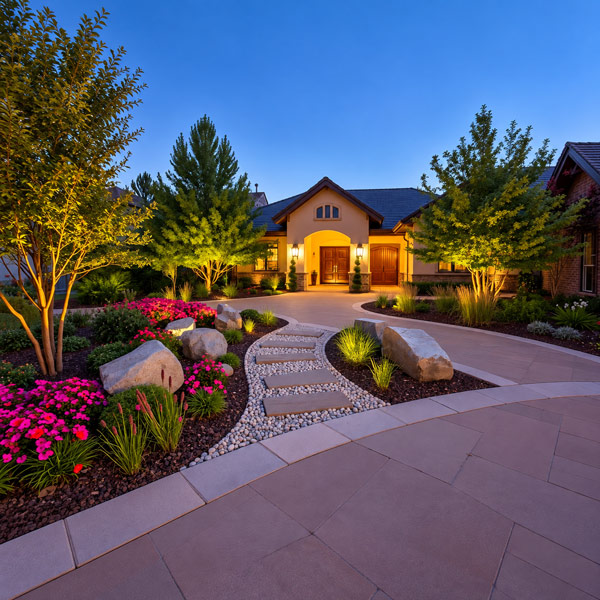
Garden and Exterior Lighting
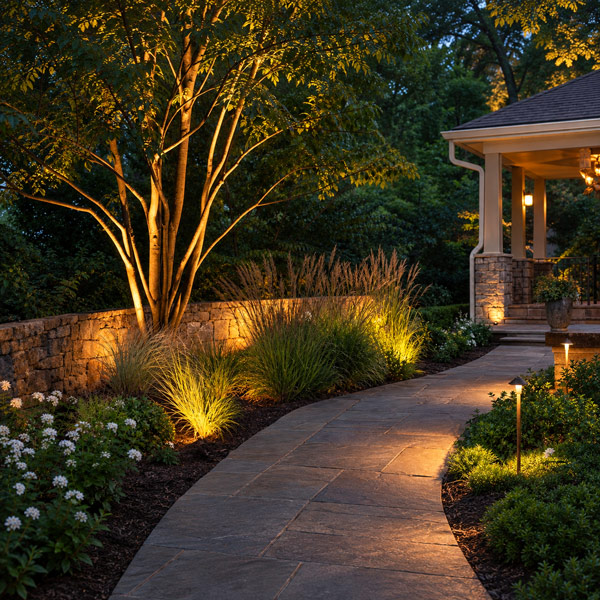
With suitable lamps and fixtures, PAR lighting can illuminate statues, entrance features, selected planting, and parts of a building facade.
For a garden feature, begin with the area you want to illuminate and the available mounting position. Then choose a beam that covers that feature without sending unnecessary light toward neighboring windows or normal viewing positions.
For pathways and shared outdoor areas, consider how the overall layout provides even coverage and comfortable visibility.
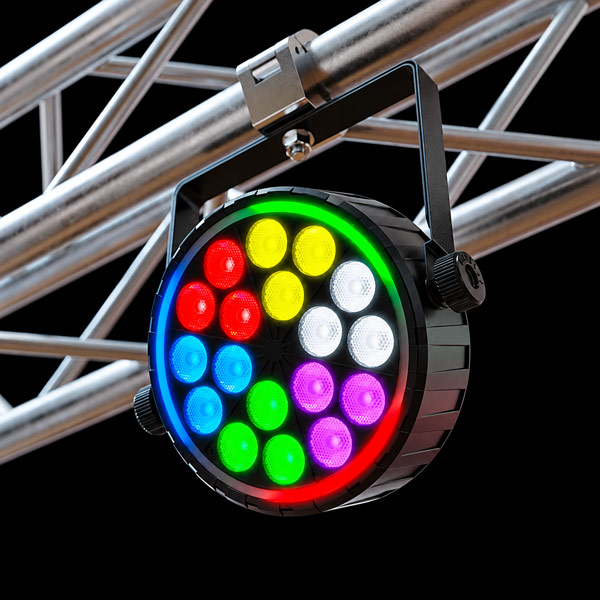
Stage and Event Lighting
In entertainment lighting, “LED PAR” can also describe a complete stage fixture. These products may contain multiple LEDs, color-mixing functions, and dedicated control connections.
A complete LED PAR stage fixture has different mounting, electrical, and control requirements from a replacement PAR bulb.
How to Choose the Right LED PAR Bulb
Check the Physical and Electrical Fit
Confirm the lamp designation, actual dimensions, base type, and supply voltage. Make sure the lamp fits the fixture’s opening and sits in the intended position.
The base and input voltage are separate specifications. Matching the appearance of the old bulb is insufficient to establish compatibility.
Match Output and Beam to the Task
Choose the required light output, then select a beam angle appropriate for the target and mounting distance.
For a replacement project, compare the original beam pattern as well as the new lamp’s lumens. A lamp with the desired output can still change the appearance of the installation if its beam is substantially different.
Choose Suitable Color Characteristics
Correlated color temperature, or CCT, describes the appearance of white light. Values around 2700K–3000K produce a warm appearance, while higher values produce a cooler appearance.
Color rendering index, or CRI, describes how a light source renders colors relative to a reference source. Consider it when illuminating artwork, foliage, stone, wood, or other materials whose appearance matters.
When several lamps illuminate the same area, consistent color characteristics help produce a coherent result.
Check Outdoor Suitability Separately
The PAR label does not establish weather resistance.
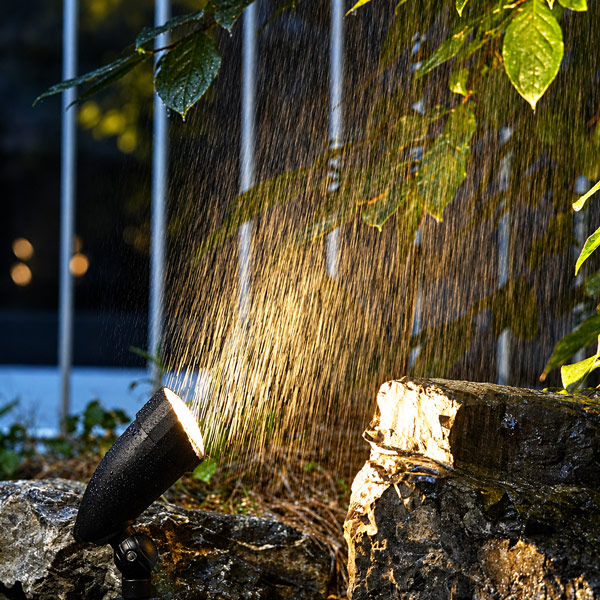
For locations exposed to rain, check the lamp’s wet-location approval and the fixture’s suitability for that installation. A damp-location product generally needs protection from direct weather exposure.
Where products specify ingress protection, understanding IP44 and IP65 ratings helps you assess the stated protection. Follow the complete product instructions, including requirements for installation position and connections.
Evaluate One Lamp Before Replacing a Group
For a larger installation, test a suitable sample in its intended position. Observe the coverage, color appearance, reflections, and visibility from normal viewing angles.
This practical check can reveal differences that are difficult to judge from a specification sheet alone.
What Does PAR Mean in LED Grow Lighting?
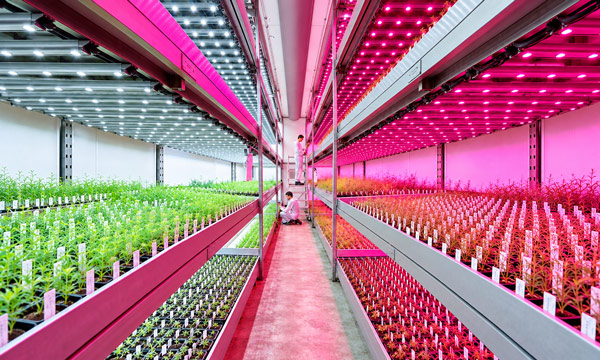
In horticultural lighting, PAR means Photosynthetically Active Radiation. It traditionally refers to radiation within the 400–700 nanometer wavelength range.
Here, PAR identifies a spectral range rather than a lamp shape. A related measurement, photosynthetic photon flux density, or PPFD, describes the number of photons within that range reaching a surface each second. Its unit is µmol/m²/s.
This distinction explains why a PAR38 label alone cannot tell you whether a bulb is suitable for growing plants.
When comparing grow lights and regular lights, consider the delivered plant light, spectrum, coverage, and operating schedule.
For grow-light comparisons, PPFD measurements should state the measurement distance and show coverage across the intended growing area. A high reading directly beneath the lamp can conceal much lower readings near the edges.
A grow lamp can therefore have a PAR-shaped housing while also producing radiation within the horticultural PAR range. The two uses of the abbreviation describe separate characteristics.
FAQs
1. Are All LED PAR Bulbs Dimmable?
No. LED PAR bulbs are available in dimmable and non-dimmable versions.
Choose a lamp explicitly marked dimmable and check its compatibility with the intended dimmer. Supported lamp quantities, load limits, and dimming range can vary between combinations.
2. Can LED PAR Bulbs Be Used in Fully Enclosed Fixtures?
Only when the specific lamp is approved for the intended enclosure and installed within its stated limits. Enclosed fittings can retain heat around the lamp’s electronics.
Check the enclosed-fixture rating and any restrictions on sealed covers, operating temperature, or installation position.
3. Do LED PAR Bulbs Need a Ballast?
Standard mains-voltage, screw-in LED PAR replacement bulbs generally contain their own electronic drivers and do not require an external fluorescent or HID ballast. LEDs use drivers to regulate their electrical supply.
Specialty retrofit products can have different requirements, so follow the instructions for the exact lamp.
4. How Long Do LED PAR Bulbs Last?
Rated life varies by product. Some models carry a 25,000-hour rating, which corresponds to approximately 11.4 years at six hours of use per day.
Actual service life depends on operating conditions and component reliability. LED output can gradually decline before the lamp stops operating.
5. Can LED PAR Bulbs Work With Motion Sensors?
Yes, when the sensor supports LED loads and the lamp meets its compatibility requirements. Check the sensor’s specific LED load limit and any stated minimum-load requirements.
Its incandescent or halogen wattage rating may be substantially higher than its permitted LED load.
