
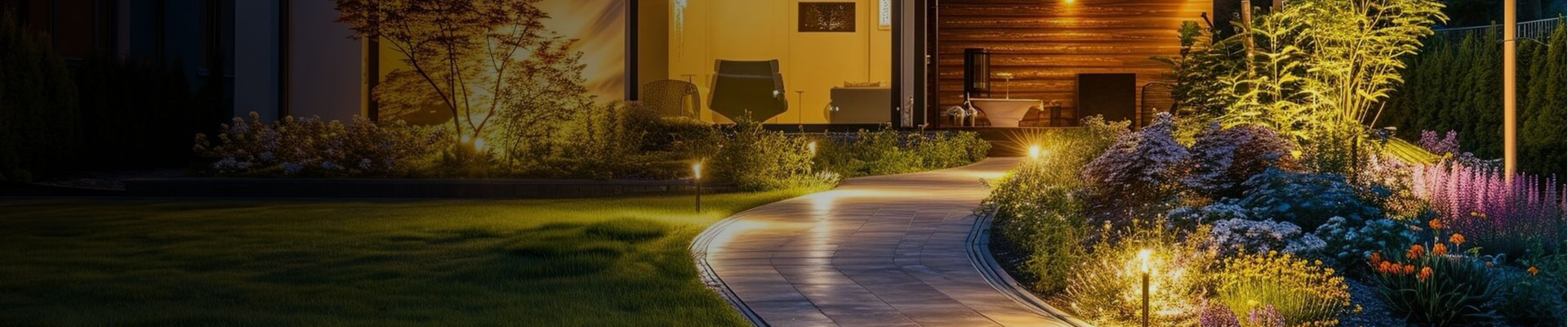
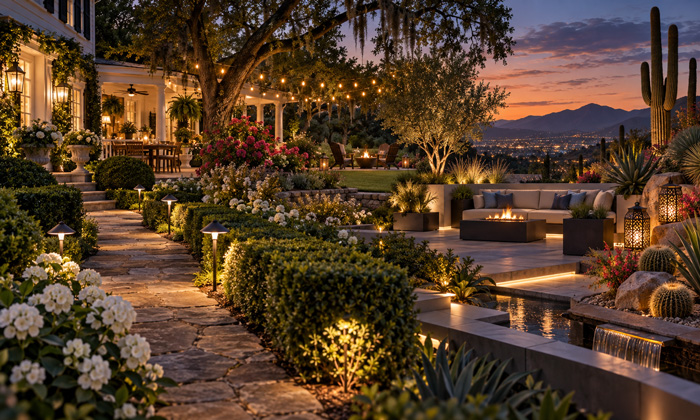
Across the United States, garden lighting reflects the relationship between landscape, climate, architecture, and local identity. From coastal gardens shaped by ocean environments to desert landscapes defined by stone and native plants, outdoor illumination transforms gardens after sunset through carefully designed layers of light and shadow.
American garden lighting is not simply about visibility. Each region develops its own nighttime language: warm Southern gardens emphasize hospitality, Western landscapes highlight natural textures, New England gardens preserve historic elegance, and Pacific gardens focus on harmony with forests and water.
New England Garden Lighting: Heritage, Forests, and Coastal Elegance
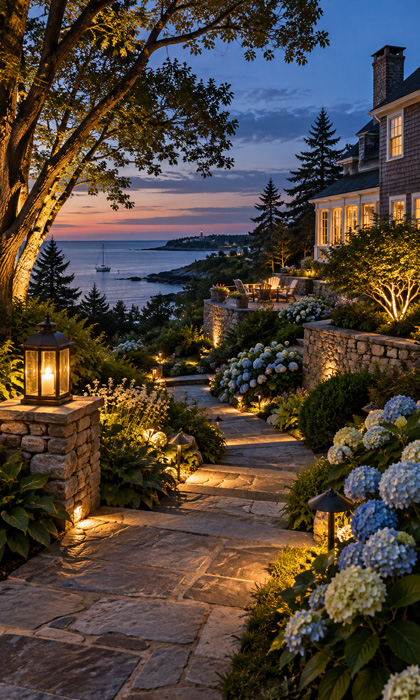
The northeastern states of Maine, New Hampshire, Vermont, Massachusetts, Rhode Island, and Connecticut share a garden lighting tradition influenced by historic homes, woodland landscapes, stone walls, and coastal scenery.
In Maine, garden lighting often follows the rhythm of coastal forests, using soft illumination on evergreen trees, stone paths, and natural materials.
New Hampshire and Vermont favor woodland-inspired lighting themes, while Massachusetts and Connecticut reflect colonial gardens with lantern-style fixtures and symmetrical pathways.
Southern Garden Lighting: Warmth, Hospitality, and Botanical Beauty
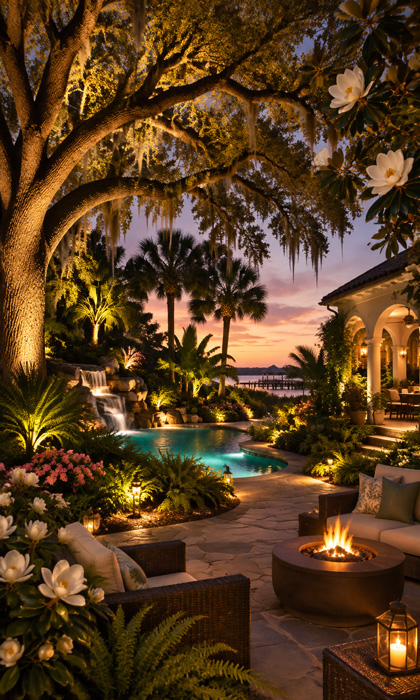
Southern garden lighting focuses on creating welcoming evening environments where mature trees, flowering plants, courtyards, and outdoor seating areas become central lighting elements.
Georgia and Alabama often highlight magnolia trees, oak canopies, and flowering gardens with warm uplighting. Florida develops tropical garden themes around palms, pools, and water features.
Louisiana emphasizes lush vegetation and atmospheric shadows, while Texas combines desert gardens, coastal landscapes, and outdoor living spaces.
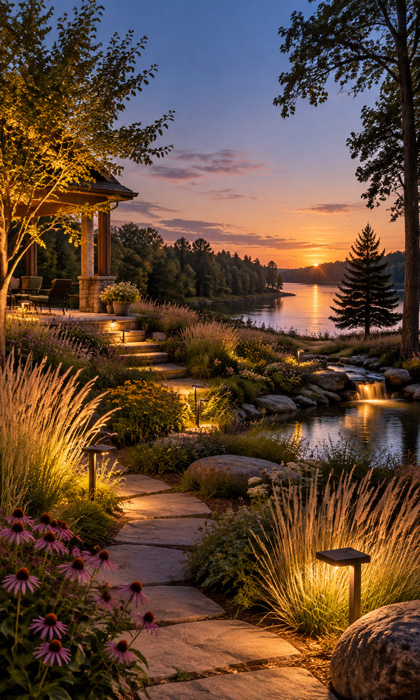
Midwest Garden Lighting: Prairie, Lakes, and Seasonal Landscapes
Midwest garden lighting is shaped by farmland, prairie ecosystems, forests, lakes, and changing seasons.
Illinois combines urban garden lighting with prairie-inspired landscapes. Michigan, Wisconsin, and Minnesota use lakeside and woodland themes around trees, water features, and outdoor spaces.
Prairie states favor simpler lighting approaches that enhance native grasses, open landscapes, and natural materials.
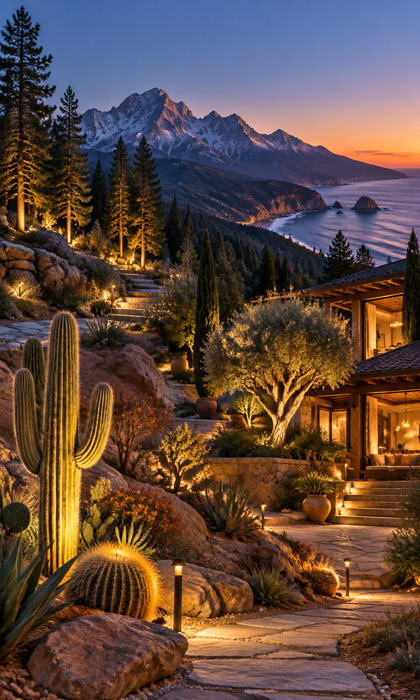
Western Garden Lighting: Mountains, Forests, and Open Landscapes
Western states represent diverse garden lighting environments, including mountains, deserts, forests, and coastal landscapes.
Mountain states emphasize natural materials with lighting focused on evergreen trees, rocks, pathways, and outdoor structures.
Desert regions use warm amber lighting to enhance cactus forms, sandstone textures, and native plants. California combines coastal gardens, modern landscapes, and Mediterranean styles.
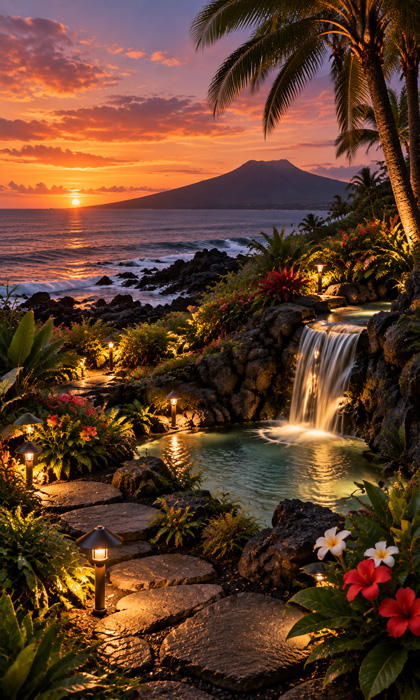
Pacific Garden Lighting: Forest Harmony and Coastal Landscapes
The Pacific region, including Washington, Oregon, Hawaii, and Alaska, creates distinctive garden lighting themes.
Washington and Oregon emphasize forests, rain gardens, moss, ferns, and water elements with soft layered lighting.
Alaska focuses on wilderness-inspired illumination, while Hawaii creates tropical island themes using palms, volcanic stone, flowers, and water features.
Creating Nighttime Garden Experiences
Garden lighting transforms outdoor spaces by revealing details that are often unnoticed during the day. Across the United States, regional landscapes provide different sources of inspiration, from coastal plants and woodland settings to desert textures and mountain scenery.
The most successful lighting designs allow gardens to maintain their original character after sunset. By combining soft illumination, carefully selected focal points, and natural shadow patterns, outdoor spaces gain a new visual identity while remaining connected to their surrounding environment.
FAQs
How do climate differences across U.S. states influence garden lighting design?
Climate conditions play an important role in selecting garden lighting styles and fixtures across the United States.
Humid areas often require lighting solutions that work well with dense vegetation and moisture exposure, while dry regions may focus on highlighting textures, stones, and drought-resistant landscapes. Cold-weather states typically require durable fixtures that can maintain reliable performance through seasonal changes.
What lighting techniques are commonly used to highlight plants and landscape features in American gardens?
Professional garden lighting often combines multiple techniques, including tree uplighting, pathway lighting, plant accent lighting, and architectural illumination.
The goal is to create depth, contrast, and visual interest rather than simply making the entire garden brighter. Proper fixture placement helps enhance natural shapes, textures, and shadows at night.
How do homeowners choose a garden lighting theme that matches their regional landscape?
A suitable garden lighting theme should reflect the local environment, landscape materials, plants, and architectural style.
Coastal gardens may benefit from relaxed atmospheric lighting, woodland landscapes often suit layered natural illumination, and desert gardens can emphasize textures, forms, and dramatic shadows through carefully planned lighting.
Why are warm lighting tones often preferred in residential garden designs?
Warm lighting tones are popular in residential gardens because they create a comfortable outdoor atmosphere and complement natural materials such as wood, stone, plants, and flowers.
Softer color temperatures help maintain visual balance and create a more inviting connection between outdoor spaces and nighttime surroundings.
How can garden lighting create a balance between beauty and environmental responsibility?
Modern garden lighting design focuses on efficient light control, reducing unnecessary brightness, and directing illumination only where it is needed.
Low-glare fixtures, targeted accent lighting, timers, smart controls, and energy-efficient LED systems can create attractive landscapes while helping reduce excessive nighttime light.
