

What Are H11 LED Bulbs?
H11 LED vs. Halogen vs. HID: A Comparison
Key Specifications to Consider for H11 LED Bulbs
Pros and Cons of H11 LED Bulbs
Installation Guide for H11 LED Bulbs
Comparison of Top-Rated H11 LED Bulbs (Example Models)
Use Cases
Industry Standards and Legal Compliance (DOT, ECE, etc.)
FAQs
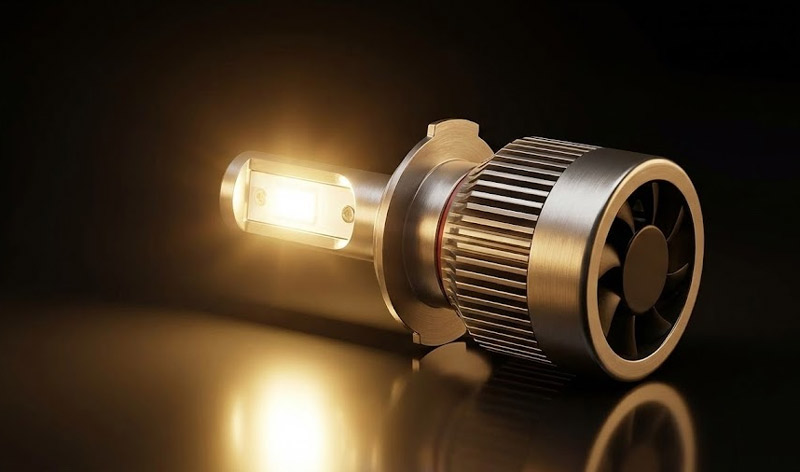
H11 LED bulbs have revolutionized automotive lighting upgrades, offering a bright and efficient replacement for traditional halogen headlights and fog lights. This comprehensive guide covers everything from what H11 LED bulbs are and how they compare to halogen and HID counterparts, to key specifications to look for, pros and cons, installation tips, top-rated product comparisons, use case scenarios, and important legal considerations. By the end, you’ll have a clear understanding of whether H11 LED bulbs are the right choice for your vehicle’s lighting needs.
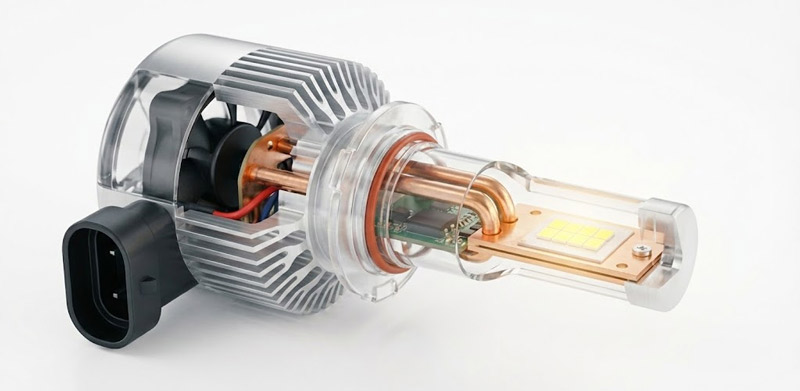
H11 refers to a specific type of single-filament automotive light bulb with an L-shaped base commonly used in vehicle low-beam headlights and fog lights. Originally, H11 bulbs were halogen by design, but today they are available in LED and HID (Xenon) formats as well. An H11 LED bulb is an LED-based lamp engineered to fit into the same socket as an H11 halogen, providing a modern, high-performance lighting upgrade.
- Typical Applications: H11 bulbs are most often found in low-beam headlight positions of cars and trucks, providing the primary illumination for night driving. They are also widely used in fog lights or auxiliary lamps, where their focused beam helps improve visibility in inclement weather. Some vehicles even use H11 for daytime running lights (DRLs) or, less commonly, for high beams or other lighting needs. Always refer to your vehicle’s manual or bulb finder to confirm where H11 bulbs are used in your specific model.
- Halogen vs. LED Construction: A halogen H11 bulb contains a tungsten filament that glows when heated, emitting a warm yellowish light. In contrast, an H11 LED bulb uses semiconductor LED chips that emit light when current passes through them, producing a crisp white beam. The LED’s diodes are mounted on a structure designed to mimic the filament’s position, ensuring compatibility with the reflector or projector optics of the headlamp. High-quality H11 LED bulbs often include additional components like heat sinks or cooling fans to manage heat, and built-in drivers to regulate power.
- Versatility: H11 bulbs (and their close cousins H8, H9, and H16 which share similar bases) are compatible with a wide range of vehicles – from compact cars and family sedans to trucks, motorcycles, and even some snowmobiles. This versatility, along with the growing popularity of LED technology, has made H11 LED bulbs a go-to upgrade for drivers seeking better lighting performance without changing the entire headlight assembly.
- In summary, an H11 LED bulb is a plug-and-play LED replacement for the standard H11 halogen bulb, intended to deliver greater brightness and efficiency while fitting into existing headlight or fog light housings. Next, we’ll compare how H11 LED bulbs stack up against their halogen and HID counterparts.
H11 LED vs. Halogen vs. HID: A Comparison
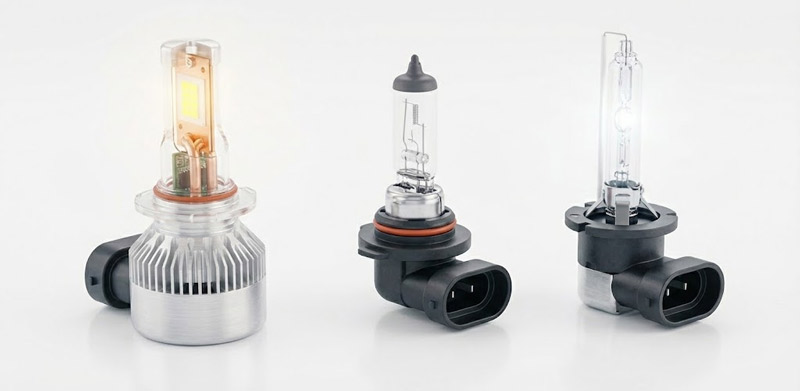
H11 bulbs come in three main technologies: Halogen, LED, and HID (High-Intensity Discharge). Each technology has distinct characteristics in terms of brightness, color, power consumption, lifespan, and other performance factors. The table below highlights key differences between H11 halogen, HID, and LED bulbs:
|
Feature |
Halogen H11 |
HID (Xenon) H11 |
LED H11 Retrofit |
|---|---|---|---|
|
Light Output (Lumens) |
~1,200 lumens (per bulb) – modest brightness |
~3,000–3,500 lumens (per bulb) – very bright |
3,000–6,000+ lumens (per bulb) – highly bright |
|
Color Temperature |
~3200 K (warm white, yellowish) |
4,300 K (OEM white) up to ~6,000 K (cool white) options |
5,000–6,500 K (cool white, daylight-like); some LEDs also available in 3,000 K yellow for fog |
|
Power Consumption |
~55 W (stock halogen) |
~35 W (OEM systems; some aftermarket up to 55 W) |
~15–25 W (typical LED kit); higher-watt LED kits (30–50 W) available |
|
Lifespan (Hours) |
~500–1,000 hrs (relatively short) |
~2,000–3,000 hrs (longer than halogen; some claim higher) |
~20,000–50,000 hrs (very long life) |
|
Warm-Up Time |
None – instant full brightness |
Yes – 1–3 seconds to reach full brightness |
None – instant on/off |
|
Heat Output |
High radiant heat; bulb gets very hot |
High heat from bulb and ballast |
Less forward heat; runs cooler at lens (may not melt snow/ice); heat concentrated at base (requires cooling) |
|
Technology & Parts |
Simple standalone bulb |
Needs external ballast (and igniter) |
LED chips + driver; may include fan or heat sink |
|
Beam Focus |
OEM beam pattern optimized for halogen filament |
Can work well but glare risk if housing not designed for HID |
Varies by design – good LEDs mimic filament position; poor LEDs cause glare if misaligned |
|
Cost |
Lowest |
Moderate to High |
Moderate to High |
|
Installation |
Easiest: plug-and-play |
More complex: mount ballasts/wiring |
Usually plug-and-play; may need CANbus decoder |
|
Advantages |
Cheap, proven, simple |
Very bright, efficient, decent lifespan |
Efficient, long life, modern white light, instant-on |
|
Disadvantages |
Short life, dimmer, yellowish |
Extra parts, warm-up, more failure points |
Cooling + electronics issues possible; legal restrictions in many regions |
Key Specifications to Consider for H11 LED Bulbs
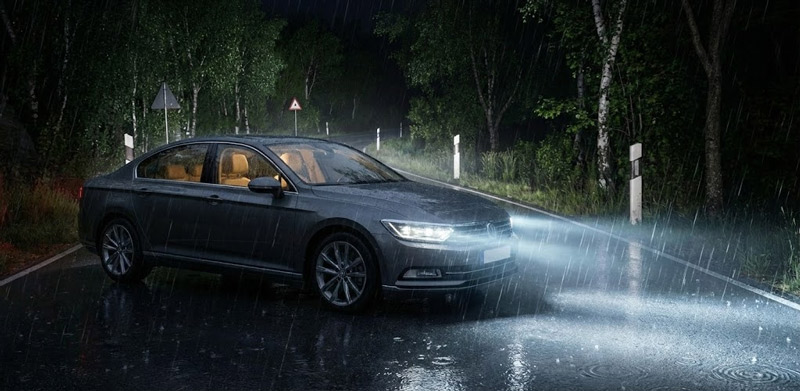
Brightness and Light Output
1. Lumens: Higher lumens generally mean brighter output, but don’t rely solely on marketing claims. Extremely high numbers are often exaggerated. Prefer products with measured performance and consistent reviews.
2. Color Temperature:
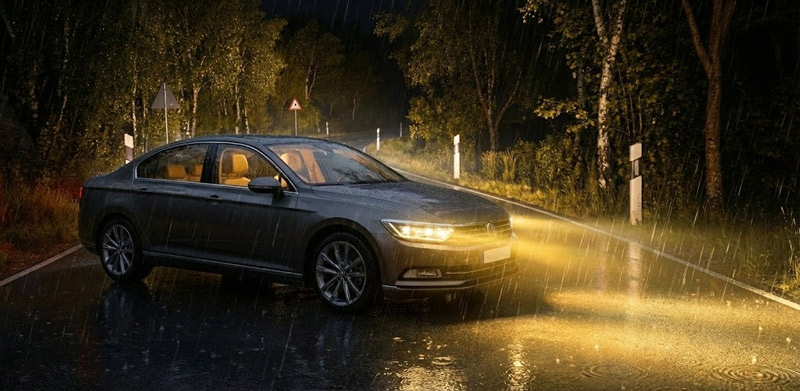
- 3000K: yellow (good for fog/rain/snow)
- 4300K–5000K: neutral white (balanced)
- 6000K: cool white (most common LED upgrade)
6500K: bluish (often worse in rain/fog and may draw legal attention)
3. Beam Pattern & Focus: The best H11 LEDs replicate the filament position and produce a clean cutoff line in low-beam use. Misalignment can create glare and reduce down-road visibility.
Heat Management and Cooling
- Fan Cooling: Usually supports higher output; can be noisier and has moving parts.
- Heat Sink (Fanless): Quiet and simpler, often with slightly lower maximum brightness.
- Thermal Design: Copper core/heat pipe, high-quality aluminum, and good airflow all matter. Overheating causes dimming and shortens life.
Compatibility and Installation
- Physical Fitment: Verify space behind the housing; LED bulbs can be longer due to cooling systems.
- CANbus Errors/Flicker: Some vehicles require decoders/load resistors to avoid warnings or flicker.
- Polarity: If the LED doesn’t light, flipping the connector sometimes fixes it.
- H8/H9/H11/H16: Many LED kits support multiple bases, but always verify application match.
Durability and Lifespan
- Realistic lifespan: 20,000–50,000 hours is common for quality designs (drivers/fans may fail earlier on cheap models).
- Vibration resistance: Important for trucks/off-road.
- Water/dust resistance: Prefer IP65/IP67 designs.
Warranty and Brand Reputation
Warranties range from 1 year to lifetime. In general, longer warranties correlate with better components and QC.
Pros and Cons of H11 LED Bulbs
Advantages
- Much brighter than halogen in many cases
- Crisp white light improves contrast and perceived clarity
- Lower power draw than halogen
- Long lifespan (often years of use)
- Instant full brightness
- More shock-resistant than filament bulbs
Disadvantages
- Higher initial cost
- Potential glare if bulb design or installation is poor
- Compatibility issues (flicker, errors) on some vehicles
- Less lens-warming heat can allow snow/ice buildup in winter
- Legality varies widely; many headlight retrofits are not formally approved for road use in some regions
Installation Guide for H11 LED Bulbs
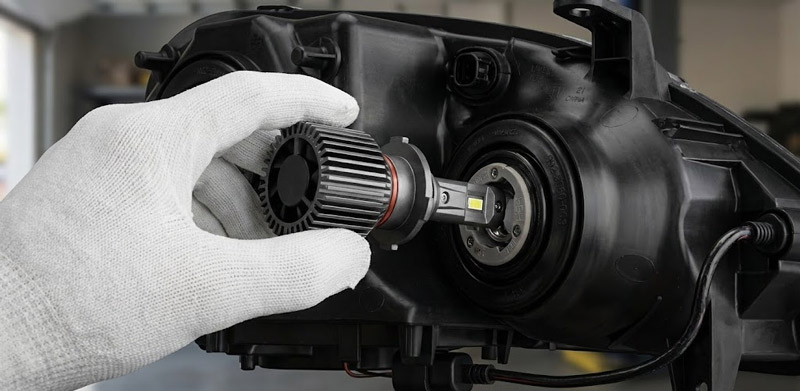
- Turn vehicle off; open hood.
- Remove dust cap/cover if present.
- Disconnect harness from old bulb.
- Twist old H11 bulb counterclockwise and remove.
- Insert LED bulb, twist to lock.
- Connect harness (and driver/decoder if included).
- Test function; if not lighting, check polarity.
- Verify beam pattern and cutoff; rotate/adjust if the bulb allows.
- Secure wiring/driver, reinstall dust cap.
- Night test and confirm proper aim.
Tip: If other drivers flash you, your beam may be too high or glare-heavy—recheck seating and aim.
Comparison of Top-Rated H11 LED Bulbs (Example Models)
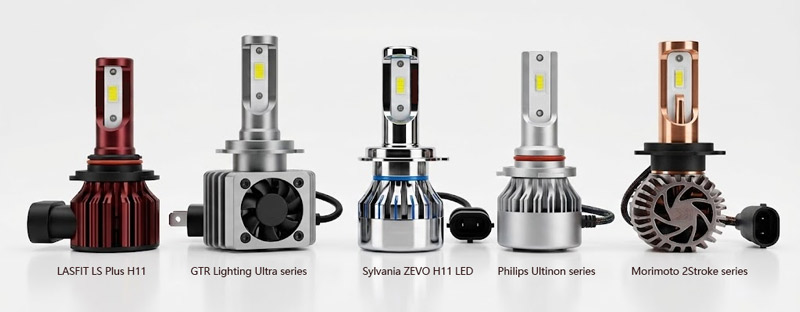
Note: Specifications vary by version and production batch. Always confirm with the latest product documentation.
|
Brand & Model |
Approx. Output |
Color Temp |
Cooling |
Warranty |
Typical Positioning |
Best For |
|---|---|---|---|---|---|---|
|
LASFIT LS Plus H11 |
Very high |
~6000K |
Fan + heat pipes |
~2 years |
Performance upgrade |
Maximum brightness seekers |
|
GTR Lighting Ultra series |
High |
~5700K |
Fan |
Lifetime (varies) |
Premium segment |
Long-term durability + performance |
|
Sylvania ZEVO H11 LED |
Moderate |
~6000K |
Fanless |
Up to 5 years |
OEM-style output |
Reliability and controlled beam |
|
Philips Ultinon series |
Moderate |
~6000K |
Fanless heat sink |
Multi-year |
OEM engineering |
Beam control and longevity |
|
Morimoto 2Stroke series |
Balanced |
~5500K |
Fan + heat sink |
Multi-year |
Enthusiast grade |
Beam pattern accuracy + quality |
- Night commuters: improved clarity and sign visibility
- Highway driving: better forward illumination (choose bulbs known for focus/throw)
- Rural roads: wider spread helps detect animals/pedestrians earlier
- Off-road/overlanding: durability and brightness, vibration resistance matters
- Fog/rain/snow: consider yellow (3000K) fog LEDs; avoid overly blue headlights
- Winter climates: be aware LEDs may not melt snow/ice on lenses like halogens
Industry Standards and Legal Compliance (DOT, ECE, etc.)
Legal compliance varies by region. In many places, the headlight assembly is certified as a system, and changing the bulb type can make it non-compliant even if it fits physically. Some markets now allow specific homologated LED retrofit bulbs under regulated standards, but many aftermarket kits remain “off-road use” in practice. If you want strict compliance, consider:
- Using LEDs primarily in fog lights where regulations may be less strict.
- Choosing certified/homologated retrofit bulbs available in your region.
- Replacing the entire headlight housing with a certified LED headlamp assembly rather than swapping bulbs.
- Ensuring proper aim and beam cutoff to reduce glare and improve safety.
Do H11 LED bulbs affect headlight photometric performance over time?
Yes. Unlike halogen bulbs, whose output remains relatively stable until failure, LED bulbs experience gradual lumen depreciation as the LED chips age.
This reduction in output is primarily caused by thermal stress over extended operating periods.
High-quality H11 LED bulbs mitigate this effect through advanced thermal management, including copper substrates, optimized heat pipes, and intelligent drivers that regulate current to maintain consistent photometric performance throughout the bulb’s service life.
Can H11 LED bulbs be used in vehicles with adaptive or auto-leveling headlight systems?
H11 LED bulbs can function electrically in vehicles equipped with adaptive or auto-leveling headlights, but optical compatibility is not guaranteed.
These systems are calibrated around the original halogen filament geometry. If the LED emitter placement deviates from the designed focal point, beam shaping, dynamic bending, or leveling accuracy may be compromised.
For such vehicles, LED bulbs engineered with precise emitter positioning and tight dimensional tolerances are strongly recommended.
How does LED driver quality influence the performance of an H11 LED bulb?
The LED driver is a critical but often overlooked component.
A high-quality driver ensures stable current delivery, protects against voltage spikes, and minimizes electromagnetic interference (EMI).
Inferior drivers may cause flickering, radio interference, inconsistent brightness, or premature failure.
Professional-grade H11 LED bulbs typically use constant-current drivers with integrated thermal and voltage protection to ensure reliable long-term performance under real-world automotive electrical conditions.
Are H11 LED bulbs sensitive to ambient engine bay temperatures?
Yes. Although LED bulbs are more energy-efficient than halogen, they are more sensitive to elevated ambient temperatures.
In tightly sealed engine bays or turbocharged vehicles, high under-hood temperatures can reduce cooling efficiency and accelerate LED degradation.
Premium H11 LED bulbs are designed with high-temperature–rated components and thermal throttling algorithms that reduce output when necessary to prevent damage, prioritizing system stability over sudden failure.
Can H11 LED bulbs impact vehicle electrical diagnostics or onboard monitoring systems long-term?
Yes, if improperly matched.
In vehicles with advanced electrical monitoring, low-load operation without proper load simulation may trigger fault logging, adaptive voltage changes, or unnecessary diagnostic checks.
Professionally designed H11 LED bulbs or dedicated load-balancing solutions help maintain expected electrical signatures, preventing abnormal data accumulation in the vehicle’s body control module (BCM) during long-term use.
