
Why Solar Shed Lights Are a Smart Choice in 2026
Key Factors to Consider When Choosing Solar Powered Shed Lights
- Brightness (Lumens)
- Solar Panel Quality
- Battery Capacity
- Weather Resistance
- Control Options
- Installation Flexibility
Recommended Solar Powered Garden Shed Lights (2026)
- Premium & High-Performance Options
- Best for Workshops and Garages
- Best Budget-Friendly Solutions
- Best All-in-One Solar Lighting Systems
- Best Motion-Activated Security Lighting
- Best Ultra-Bright Solar Floodlights
- Best Portable Solar Lighting
Comparison Table: Best Solar Powered Garden Shed Lights (2026)
Professional Installation and Maintenance Tips
FAQs
Solar powered garden shed lights have become one of the most practical outdoor upgrades in 2026. Thanks to advancements in LED efficiency, solar panel technology, and battery storage, today’s solar shed lights are brighter, longer-lasting, and far more reliable than earlier generations.
For homeowners, gardeners, and DIY enthusiasts, solar shed lighting offers a compelling combination of zero electricity cost, easy installation, and environmental sustainability. Whether your shed is used for storage, gardening tools, a workshop, or even as a small studio, a well-chosen solar light can dramatically improve usability and safety without the need for wiring or professional installation.
Why Solar Shed Lights Are a Smart Choice in 2026
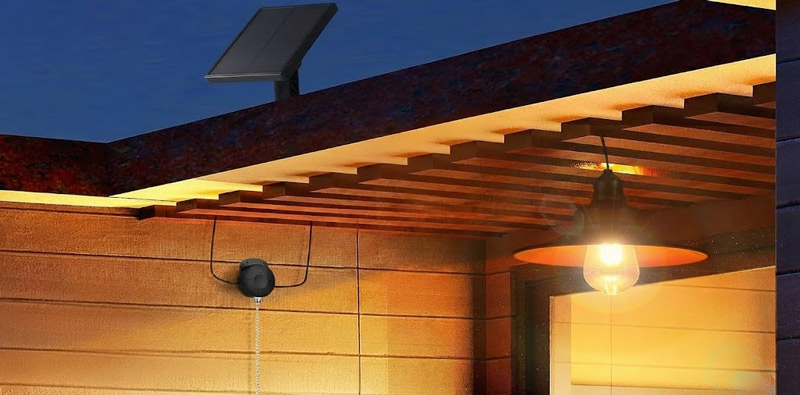
In recent years, solar lighting has shifted from being a “backup option” to a primary lighting solution for outdoor structures. In 2026, several trends make solar shed lights particularly attractive:
- Higher lumen output with lower energy consumption
- Improved lithium battery lifespan, often exceeding 1,000 charge cycles
- Smarter controls, including motion sensors, remotes, and timer modes
- Better weather resistance, allowing year-round outdoor use
- Lower overall cost, making premium features accessible at mid-range prices
Unlike wired lighting, solar shed lights eliminate trenching, electrical permits, and ongoing utility costs. Once installed, they operate autonomously, charging during the day and illuminating your shed at night with no user intervention required.
Key Factors to Consider When Choosing Solar Powered Shed Lights
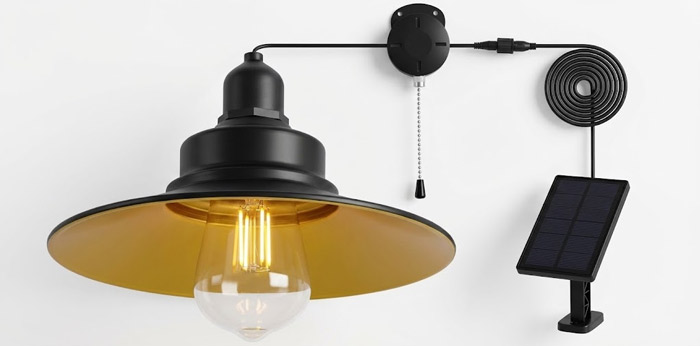
Before selecting a model, it’s important to evaluate how the light will be used and under what conditions.
Lumens determine how bright the light will be.
- 300–500 lumens: Small sheds, storage access
- 800–1,200 lumens: Medium sheds, general work areas
- 1,500+ lumens: Large sheds, workshops, barn-style buildings
Higher lumens are ideal for task lighting, but they also consume more battery power.
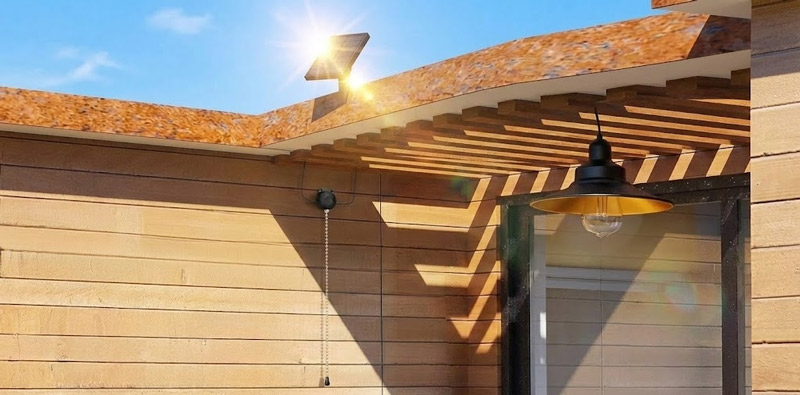
Efficient solar panels ensure reliable charging even on cloudy days. Look for:
- Monocrystalline panels for best efficiency
- Panel wattage matched to light output (larger lights need larger panels)
- Adjustable panel angles for better sun exposure
Battery size determines how long the light can operate after sunset.
- Lithium-ion batteries offer longer lifespan and faster charging
- Larger battery capacity is essential for winter or low-sun regions
- Multiple lighting modes help extend runtime
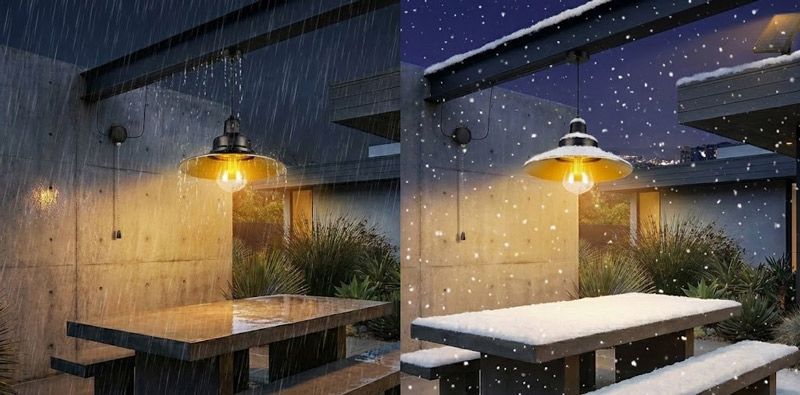
Outdoor lighting must withstand rain, dust, heat, and freezing temperatures.
- IP65 or higher ratings are strongly recommended
- UV-resistant housings improve long-term durability
- Modern solar shed lights offer flexible control methods:
- Motion sensors for automatic operation
- Pull cords for simple manual control
- Remote controls for convenience
- Timer and brightness adjustment modes
Consider cable length, mounting options, and whether drilling is required. Longer cables allow optimal solar panel placement even if the shed itself is shaded.
Recommended Solar Powered Garden Shed Lights (2026)
1. Premium & High-Performance Options
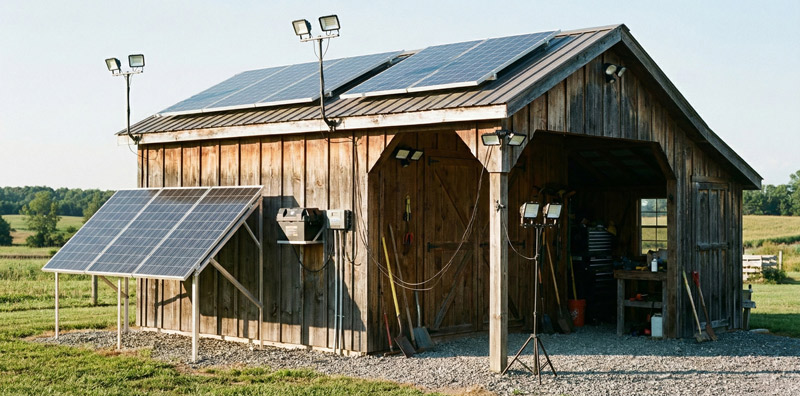
- Multi-head solar shed kits with separate panels and dual or quad lights
- Excellent for workshops and large sheds
- High brightness with stable, even illumination
- Durable construction and long battery life
2. Best for Workshops and Garages
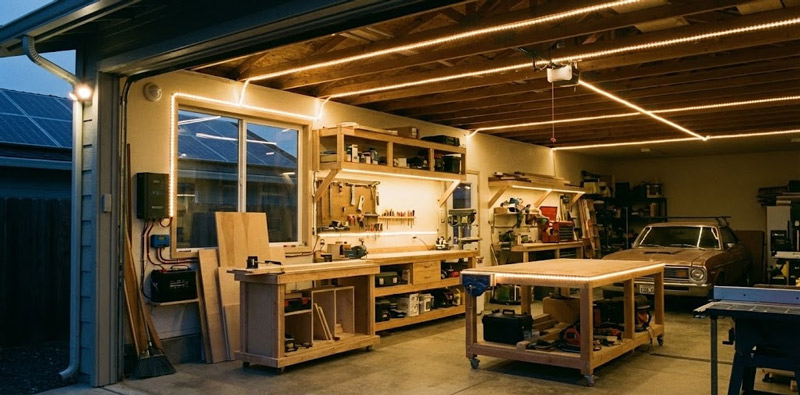
- Solar shop lights with long LED strips
- Wide light distribution
- Motion-activated options ideal for hands-free use
- Designed for extended indoor operation
3. Best Budget-Friendly Solutions
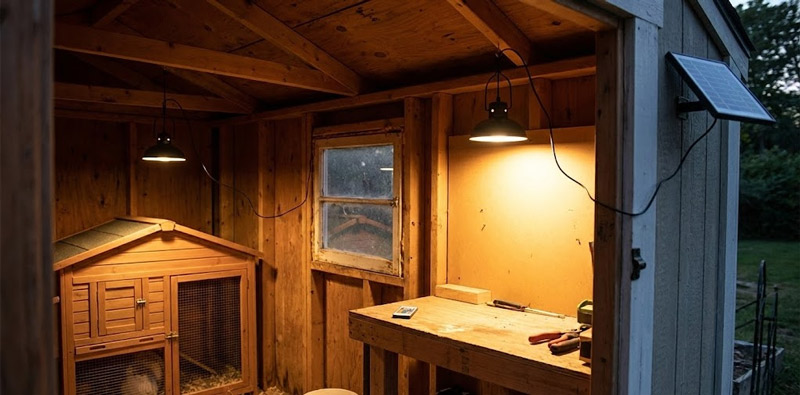
- Dual pendant solar lights
- Compact but surprisingly powerful
- Remote-controlled with multiple lighting modes
- Ideal for small sheds, coops, or storage areas
4. Best All-in-One Solar Lighting Systems
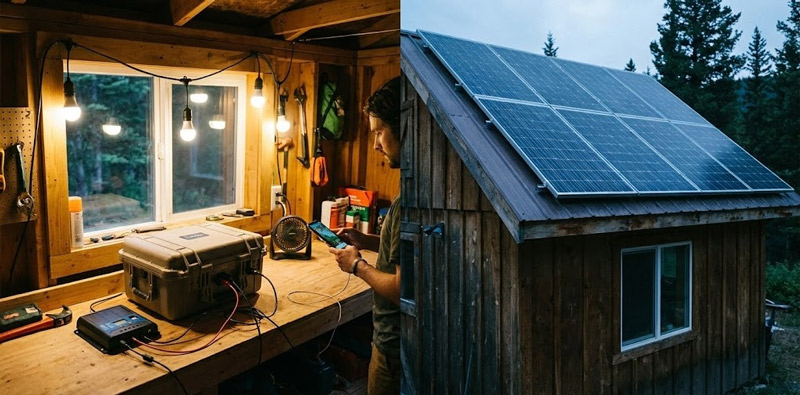
- Integrated battery boxes with multiple bulbs
- Can power lights and small devices
- Suitable for off-grid or emergency lighting
- Higher upfront cost, but maximum versatility
5. Best Motion-Activated Security Lighting
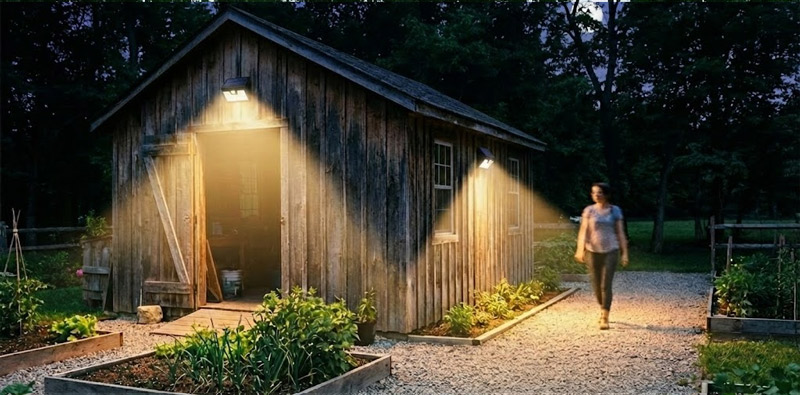
- Wall-mounted solar lights
- Wide-angle motion detection
- Excellent for shed entrances and pathways
- Extremely easy installation
6. Best Ultra-Bright Solar Floodlights
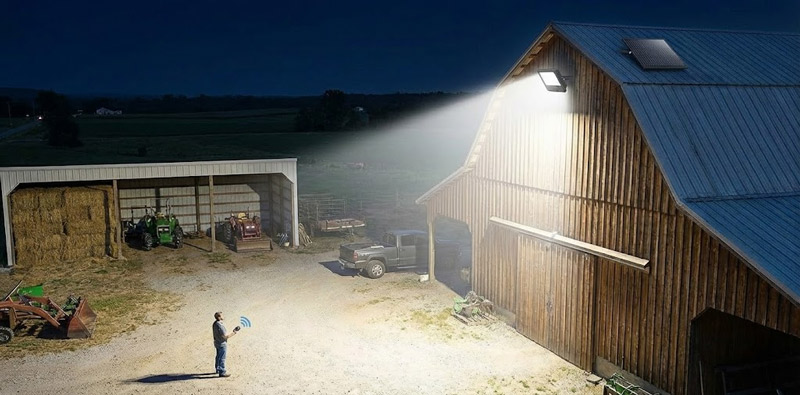
- Designed for barns, large sheds, and outdoor work areas
- Adjustable heads and long detection range
- Remote-controlled brightness and timing
- Ideal where wired floodlights are impractical
7. Best Portable Solar Lighting
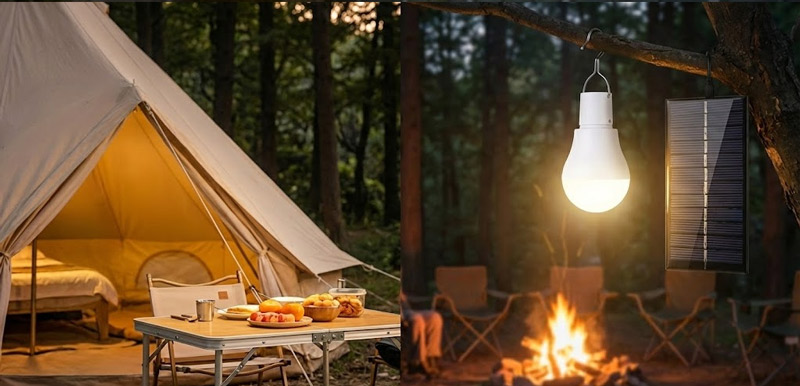
- Solar LED bulbs with built-in batteries
- Can be moved, hung, or stored easily
- Useful for temporary lighting and emergencies
Comparison Table: Best Solar Powered Garden Shed Lights (2026)
|
Category |
Brightness Range |
Battery Type |
Waterproof Rating |
Control Type |
Typical Runtime |
Price Level |
|---|---|---|---|---|---|---|
|
Basic Shed Light |
300–500 lm |
Ni-MH / Li-ion |
IP65 |
Pull cord |
3–5 hours |
Low |
|
Dual Pendant Light |
800–1,000 lm |
Li-ion |
IP65 |
Remote |
6–8 hours |
Low–Mid |
|
Workshop Strip Light |
1,000–1,500 lm |
Li-ion |
IP65 |
Motion / Remote |
5–6 hours |
Mid |
|
Multi-Light Solar Kit |
1,000+ lm total |
High-capacity Li-ion |
IP65 |
Switch / Remote |
10–14 hours |
Mid–High |
|
Motion Security Light |
900–1,600 lm |
Li-ion |
IP65 |
Motion sensor |
All night (triggered) |
Mid |
|
Solar Floodlight |
1,500–5,000 lm |
Li-ion polymer |
IP65–IP66 |
Remote + Timer |
6–10 hours |
High |
|
Portable Solar Bulb |
150–300 lm |
Li-ion |
Indoor / Light rain |
Button / Remote |
4–8 hours |
Low |
Note: Runtime varies depending on sunlight exposure, season, and selected lighting mode; motion-activated models conserve energy by operating only when movement is detected.
Professional Installation and Maintenance Tips
- Maximize sunlight exposure by positioning panels away from shade
- Clean solar panels every few months to maintain charging efficiency
- Use motion or dim modes in winter to extend battery life
- Replace rechargeable batteries every 2–3 years if performance drops
- Secure cables neatly to avoid wear and accidental damage
Proper installation and minimal maintenance can keep solar shed lights operating efficiently for many years.
Can solar powered shed lights be used during the daytime?
Yes. Many modern solar shed lights released in 2026 support daytime operation.
While older models only activate automatically at dusk, newer designs allow users to override the light sensor using a remote control or manual switch.
This feature is especially useful for sheds, garages, or workshops that receive limited natural daylight.
How do solar shed lights perform in winter or low-sunlight conditions?
Winter performance depends primarily on solar panel efficiency and battery capacity.
High-quality panels can still generate power on cloudy days, though total charging time increases due to shorter daylight hours.
For reliable winter use, it is recommended to choose lights with:
- Larger battery storage
- Multiple power-saving modes
- Motion-activated operation
These features help maintain consistent lighting even during periods of reduced sunlight.
Are solar powered shed lights safe for enclosed or wooden structures?
Yes. Solar shed lights are generally very safe for enclosed or wooden structures.
LED light sources produce minimal heat compared to traditional bulbs, significantly reducing fire risk.
Because they operate on low-voltage DC power and require no grid wiring, they also eliminate many electrical hazards associated with conventional lighting systems.
How long do solar shed lights typically last before needing replacement?
The overall lifespan depends on individual components:
- LEDs typically last 30,000–50,000 hours
- Solar panels can remain effective for 15–20 years
- Rechargeable batteries usually require replacement after 2–3 years
With proper maintenance and periodic battery replacement, a quality solar shed light can remain functional for many years.
Can one solar panel power multiple shed lights?
Yes. Some advanced solar shed lighting systems are designed to power multiple fixtures from a single solar panel.
These systems typically use a central battery unit or controller that distributes power to several lights.
This configuration is ideal for larger sheds, barns, or multi-room outdoor structures where uniform lighting coverage is needed.
